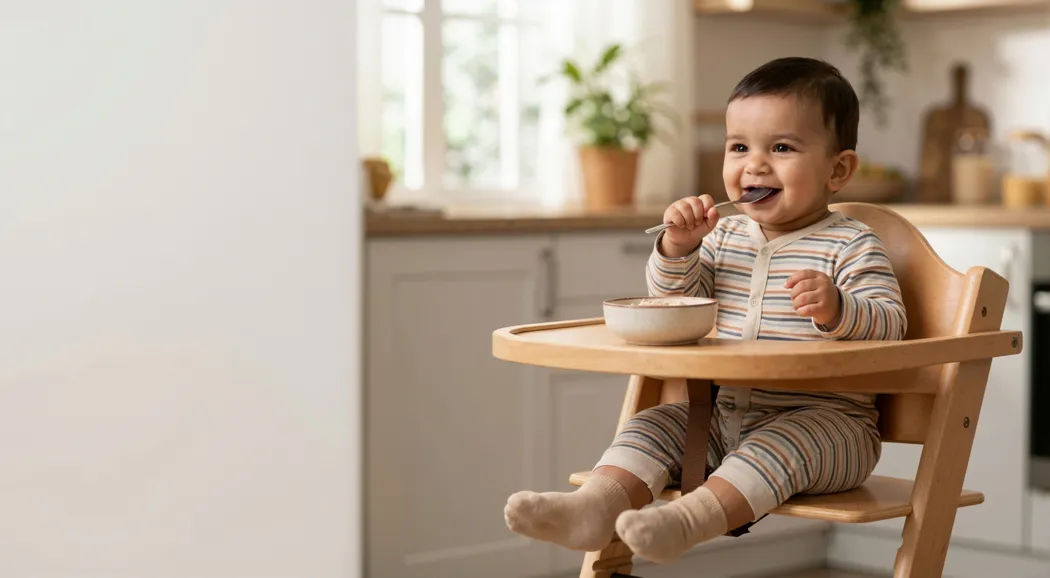
Infant Food Chart: A Month-by-Month Feeding Guide for Babies
Explore an infant food chart by month, covering breast milk, formula, complementary foods, textures, portions, feeding frequency, and safe food choices.
Dr. Rohini priyanaka
Feeding a baby in the first year is one of the most common sources of parental worry, and for good reason. What your baby eats, and when, directly shapes their growth, immunity, and relationship with food for life. This infant food chart breaks down exactly what to offer at each stage, from birth through the first birthday, so you always know what is age-appropriate and safe. Whether you are just starting out or trying to make sense of conflicting advice, a clear baby food chart by month takes the guesswork out of daily feeding decisions.
How to Use This Infant Food Chart Safely?
This guide follows the general recommendation that babies receive exclusive breast milk or formula for the first six months of life, with no solids or water needed before that point. After six months, solid foods are introduced gradually alongside continued breastfeeding.
A few ground rules before you start:
This infant food chart is general guidance, not a substitute for personalised medical advice.
Every baby develops at a slightly different pace. Some may be ready for solids closer to six months; others may need a little more time.
If your baby was born preterm, has a diagnosed allergy risk, or has any digestive condition, speak with your paediatrician before starting solids.
Introduce one new food at a time, wait two to three days, and watch for any reaction before offering the next new food.
When should I start giving my baby solid food?
Most babies are ready around six months, once they can hold their head steady, sit with support, and show genuine interest in food. Starting before four months is not recommended, as the gut and swallowing reflex are not mature enough to handle anything other than milk.
0-6 Months: Breast Milk or Formula Only
For the first six months, breast milk alone provides everything a healthy, full-term baby needs, including the right balance of protein, fat, carbohydrates, and immune factors. If breastfeeding is not possible, an appropriate infant formula is the complete alternative. No other food, water, or juice is necessary during this phase.
How often and how much?
Newborns typically feed 8 to 12 times in 24 hours, roughly every two to three hours.
By around two months, feeds usually settle to 6 to 8 times a day.
By four to five months, many babies feed 5 to 6 times a day as each feed becomes more efficient.
Formula-fed babies generally take about 150 ml per kilogram of body weight per day as a rough guide, spread across feeds. Your paediatrician will adjust this based on your baby's weight gain and growth curve, not a fixed brand recommendation.
Alongside feeding, learning newborn care basics alongside feeding helps you build a confident daily routine from the very start.
Can newborns have water or solids before 6 months?
No. Breast milk and formula contain all the fluid a healthy baby needs. Adding water or juice can dilute nutrients and stress immature kidneys. Solids before four months pose a choking risk and can interfere with nutrient absorption.
6-8 Months: First Foods and Portion Sizes
This is the stage most parents search for when they look up a weaning food chart for babies. Starting solids at six months is exciting, but the process needs to be gradual. Breast milk or formula remains the main nutrition source throughout this phase, with solids playing a supporting role.
What to Offer
Good first foods for babies are smooth, easy to swallow, and simple in flavour. Indian pantry staples work very well here, and there is no need to buy commercial pouches.
Start with one to two teaspoons per meal and build up over a few weeks to two to three tablespoons per meal. Offer solids twice a day, keeping the texture smooth and runny at first. Breast milk or formula continues 4 to 6 times a day alongside.
Following a structured baby feeding schedule during this phase, where solids come after a milk feed rather than replacing it, helps your baby stay well-nourished while they learn to eat.
What is the first food to give a 6-month-old baby?
A single-ingredient puree such as mashed banana, cooked and pureed sweet potato, or thin ragi porridge is an ideal starting point. Keep it plain, with no salt, sugar, or spices, so your baby learns natural flavours before anything more complex is introduced.
The 6 month baby food chart can be summarised simply: one new food every two to three days, smooth textures, small amounts, and always watch how your baby responds.
9-11 Months: Textures, Finger Foods and Nutrition Needs
By nine months, most babies have better tongue control and some have their first teeth. This is the time to move beyond purees and introduce lumpy, mashed, and soft finger foods. A more varied baby feeding schedule takes shape here, with structured meal and snack times helping your baby develop hunger and fullness cues.
Texture and Meal Structure
Move from smooth purees to soft mashed or minced consistencies.
Offer three meals a day plus one to two small snacks.
Breast milk or formula continues, typically three to four times a day.
Mashed egg yolk, well-cooked and mashed chicken or fish, mashed lentils
Grains
Soft-cooked rice, small soft chapati pieces, oats porridge
Dairy
Small amounts of full-fat yoghurt, paneer mashed into food
Iron intake becomes particularly important now because stores from birth begin to deplete around six months. Including iron-rich first foods for babies, such as lentils, dark leafy greens cooked very soft, and egg yolk, every day is worthwhile.
Baby Food Portion Size by Age: 9 to 11 Months
Each meal: roughly three to four tablespoons of a mixed dish, or a combination of a grain, a protein, and a vegetable in similar amounts.
Snacks: one to two tablespoons of soft fruit or plain full-fat yoghurt.
What finger foods can a 9-month-old eat?
Soft-cooked vegetables cut into short strips, ripe banana, avocado cubes, small pieces of well-cooked egg, and soft-cooked pasta are all suitable. Always stay nearby while your baby eats, and cut pieces small enough to avoid choking.
By the first birthday, most babies can eat modified versions of what the rest of the family eats. The focus shifts from special baby purees to soft, low-salt, low-sugar family meals shared at the table.
What Changes at 12 Months
Whole cow's milk can be introduced as a drink, replacing formula if you choose, though breastfeeding can continue as long as you and your baby wish. Three meals a day plus one to two snacks form the main pattern. Breast milk or cow's milk: roughly 300 to 400 ml per day is adequate alongside a varied diet.
Portion Guide Per Meal at 12 Months
Food Group
Approximate Amount Per Meal
Grains (rice, chapati, oats)
3 to 4 tablespoons or half a small chapati
Vegetables
2 to 3 tablespoons, soft-cooked
Protein (dal, egg, chicken, paneer)
2 tablespoons
Fruit
2 tablespoons or a few small pieces
Can a 1-year-old eat the same food as adults?
Not exactly the same. Family food is fine as a base, but meals for a one-year-old should still be low in added salt and sugar, soft enough to chew safely, and free of whole nuts or hard raw vegetables. Spices can be introduced gradually based on tolerance.
Foods to Avoid and Choking Hazards by Age
Some foods are unsafe or unsuitable throughout the first year, regardless of how keen your baby seems.
Foods to avoid in the first 12 months:
Honey: risk of infant botulism, a serious bacterial illness, before 12 months.
Cow's milk as a main drink: not suitable before 12 months because of its protein and mineral load on immature kidneys. Small amounts in cooking are fine from six months.
Added salt and sugar: immature kidneys cannot handle excess sodium, and early sugar exposure sets unhelpful taste preferences.
Whole nuts and large chunks of hard food: significant choking hazard at any age under five.
Whole grapes, cherry tomatoes, and large pieces of raw carrot: cut these into small pieces or quarters.
Unpasteurised dairy, raw or undercooked eggs, and raw shellfish: infection risk. Caffeinated drinks, including tea and coffee.
Baby food portion size by age matters, but so does texture. Even age-appropriate foods become hazards when they are too large or too firm.
Contraindications and When to Consult a Doctor
This infant food chart applies to healthy, full-term babies. Certain groups need individualised guidance before starting solids.
Speak with your paediatrician before introducing solid foods if:
Your baby was born before 37 weeks. Corrected age, not birth age, guides readiness for solids in preterm infants.
There is a family history of severe food allergies, eczema, or asthma. Early introduction of allergenic foods such as peanut, egg, and wheat may actually be protective, but the approach should be discussed with a specialist.
Your baby has a diagnosed digestive condition such as gastro-oesophageal reflux disease, a metabolic disorder, or has had gut surgery.
Growth faltering, persistent vomiting, or loose stools raise questions that need clinical review before or during weaning.
Report adverse events, including allergic reactions, choking incidents, or unexpected symptoms after introducing a new food, to your healthcare provider or the relevant regulatory authority.
Conclusion
An infant food chart can help parents understand how feeding typically progresses as babies grow, but feeding should be guided by developmental readiness rather than age alone. Breast milk or appropriate infant formula remains the primary source of nutrition during the first year, while complementary foods are generally introduced around 6 months when a baby is ready. As babies develop, parents can gradually introduce a variety of iron-rich foods, vegetables, fruits, grains, proteins, and other age-appropriate foods while progressing from smooth textures to thicker and more varied consistencies. Foods should be prepared appropriately to reduce choking risks, and added salt, sugar, honey before 12 months, and other unsuitable foods should be avoided. Every baby develops differently, so parents should consult a paediatrician for personalised feeding guidance, particularly if there are concerns about allergies, growth, feeding difficulties, or nutritional needs.
FAQS
How much food should a 7-month-old eat in a day?
At seven months, aim for two to three tablespoons per meal, twice a day, alongside 4 to 5 breast milk or formula feeds. Appetite varies between babies, so let your baby's hunger and fullness cues guide you rather than pushing a fixed quantity.
Is banana a good first food for babies?
Yes, banana is one of the most practical first foods for babies. It is naturally soft, easy to mash, requires no cooking, and is well tolerated by most babies. Start with a small amount and watch for any reaction.
How many times a day should I feed my 8-month-old?
At eight months, two to three solid meals a day is typical, with breast milk or formula continuing three to five times a day. A consistent baby feeding schedule with regular mealtimes helps your baby develop a healthy appetite rhythm.
Can I give my baby cow's milk at 10 months?
Small amounts of full-fat cow's milk can be used in cooking or mixed into food from six months, but it should not replace breast milk or formula as a main drink until after the first birthday. Cow's milk given too early as a drink is linked to iron deficiency in infants.
What signs show my baby is ready for solids?
The main signs are: sitting with minimal support, good head and neck control, loss of the tongue-thrust reflex (no longer automatically pushing food out of the mouth), and showing clear interest in food when others eat. Most babies show these signs around six months.