logo
0

Infant Food for 6 Months: First Foods & Portion Guide

Learn the best infant food for 6 months, including first foods, portion sizes, feeding frequency, safe textures, foods to avoid, allergen introduction, and water guidance.

article image

Dr.Rohini priyanaka

Infant Food for 6 Months: First Foods, Portions & Introduction

Starting solid foods is one of the most exciting milestones in your baby's first year, and getting it right matters. Choosing the right infant food for 6 months sets the foundation for healthy eating habits, steady growth, and a positive relationship with food that lasts well beyond infancy. Breast milk or formula stays your baby's primary nutrition source throughout this stage. Solids at 6 months are about exploration and learning, not replacing milk feeds.

Signs Your 6-Month-Old Is Ready for Solid Foods

Not every baby is ready the moment the calendar hits six months. Look for a cluster of readiness cues before you begin.

Physical signs that suggest readiness:

  • Holding the head steady and upright without support
  • Sitting with minimal help, without slumping, in a high chair or on a lap
  • Showing interest in food when others eat, opening the mouth or reaching toward plates
  • Ability to move food from a spoon into the mouth and swallow it rather than repeatedly pushing it out with the tongue
  • Bringing objects to the mouth confidently

If your baby shows most of these signs baby ready for solids cues, it is a reasonable time to start. Complementary foods are generally introduced around 6 months. Starting solids too early is not recommended, as infants may not yet have the developmental skills needed for safe feeding. WHO recommends starting complementary foods at about 6 months.. If you are unsure, a quick check-in with your pediatrician removes the guesswork entirely.

Explore Cerelac Rice Baby Cereal

First Foods to Introduce at 6 Months

The best first foods for baby are smooth, single-ingredient, and easy to swallow. Keep things simple for the first few weeks.

Good starting options for Indian families:

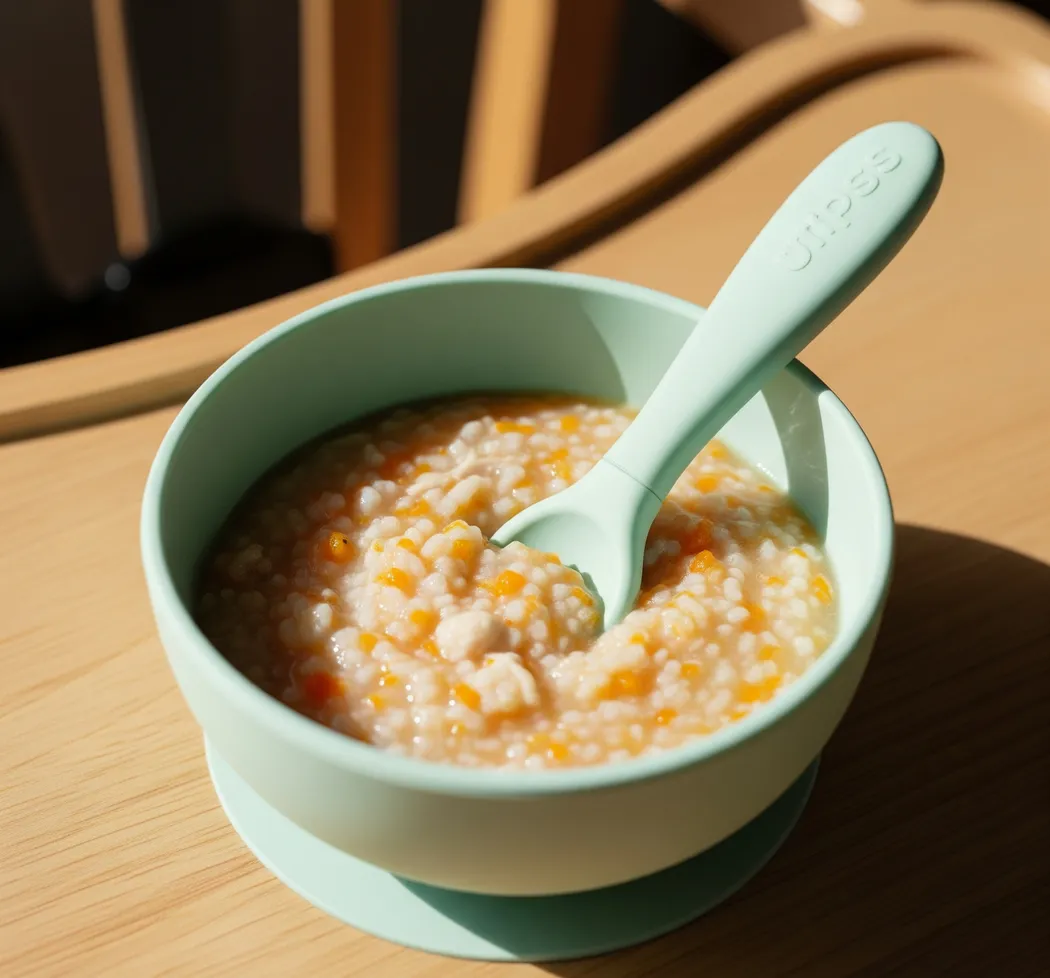
  • Rice porridge or rice cereal cooked to a thin, almost liquid consistency is gentle on tiny digestive systems and easy to prepare
  • Moong dal water or thin dal soup provides protein without heaviness
  • Mashed ripe banana requires no cooking, is naturally soft, and most babies accept it well
  • Sweet potato puree is rich in beta-carotene and usually well received
  • Ragi (finger millet) porridge thinned with breast milk or formula is a nutrient-dense traditional weaning food for 6 month olds
  • Steamed and blended apple or pear puree offers gentle fiber

Offer each new food for 3 to 5 days before introducing the next one. This approach lets you spot any reaction clearly before moving on.

Age-Appropriate Food Introduction Schedule (6-8 Months)

A gradual texture and variety progression helps your baby adapt at a comfortable pace. The 6 month baby food chart below is a broad framework; individual babies vary and that is perfectly normal.
                                                      

WeekStageTexture Example Foods
1 to 2First tastesThin purees, almost liquidRice porridge, moong dal water, banana puree
3 to 4Early varietySmooth, slightly thicker pureesSweet potato, ragi porridge, pear puree
5 to 6  Expanding varietyThicker pureesCarrot puree, mashed potato, apple puree
7 to 8 Mixed textures Soft mashed with small lumpsDal khichdi, mashed vegetables, curd
9 to 10Combination foodsSoft mashed or finely minced  Khichdi with ghee, soft-cooked vegetables


The One-Food-at-a-Time Rule

Introduce one new food, wait 3 to 5 days, and watch for rashes, vomiting, diarrhea, or unusual fussiness before moving on. This step is non-negotiable for allergen monitoring and applies to baby led weaning first foods as much as it does to purees.

If your baby rejects a food, try again in a week or two. Repeated exposure without pressure works better than persistence in a single sitting.

Portion Size Recommendations for 6-Month-Olds

Many parents worry about how much food for 6 month baby is appropriate. The honest answer is: very little, and that is completely normal.

General portion guidance by stage:

  • Week 1: start with 1 to 2 teaspoons per sitting
  • Weeks 2 to 4: aim for 2 to 4 teaspoons per meal as tolerance grows
  • By 8 months: work toward 2 to 4 tablespoons per meal, offered twice a day

Offer breast milk or formula before solids at every feed during this stage. Milk remains the main source of calories and nutrients. Milk intake varies considerably between babies and depends on whether the baby is breastfed, formula-fed, or both. Breast milk or infant formula should remain the main source of nutrition during the first year, while complementary foods are gradually added. For formula-fed babies, the AAP notes that around 6 months some infants take about 180–240 mL per feed across 4–5 feeds in 24 hours, but individual needs vary.

Watch your baby's cues. Turning the head away, closing the mouth firmly, or losing interest are signs to stop. Forcing extra bites works against building a healthy feeding relationship.

Foods to Avoid and Contraindications

Certain foods carry genuine risks for babies under 12 months and must be avoided entirely. This is a mandatory contraindications section for your baby's safety.

Do not offer any of the following:

  • Honey: Do not give honey to babies younger than 12 months because it can cause infant botulism, a serious form of food poisoning.
  • Cow's milk as a main drink: Do not use cow's milk as the main drink before 12 months. Breast milk or infant formula should remain the main source of milk and nutrition during this period. Small amounts of pasteurized dairy foods such as plain yogurt can be introduced as complementary foods when developmentally appropriate.
  • Added salt and sugar: infant kidneys cannot process extra salt, and early sugar shapes taste preferences in ways that are hard to reverse
  • Whole nuts and seeds: a choking hazard; smooth nut butters thinned to a paste may be introduced carefully for allergy testing if there is no family history of nut allergy
  • Large pieces, whole grapes, cherry tomatoes, raw hard vegetables: all choking hazards regardless of how capable the baby seems
  • Unpasteurized cheeses and raw or undercooked eggs: food safety risks
  • Caffeinated drinks and fruit juices with added sugar: no benefit at this stage

For families with a strong history of food allergy, discuss the timing and method of allergen introduction with your pediatrician before starting. Common allergenic foods do not need to be routinely delayed once complementary foods are introduced. Evidence is strongest for peanut and egg, with early, age-appropriate introduction associated with a lower risk of food allergy, particularly in infants at increased risk. Infants with severe eczema or existing egg allergy should receive individualized medical advice about peanut introduction.

Report adverse events to your healthcare provider or the relevant regulatory authority.

When to Consult a Pediatrician

Most babies take to solids without difficulty, but certain signs warrant a call to your doctor promptly.

Seek medical advice if your baby shows:

  • Hives, swelling of the face or lips, vomiting, or difficulty breathing after a new food (these are signs of an allergic reaction and require immediate attention)
  • Persistent refusal to feed lasting more than two weeks, with poor weight gain
  • Consistent gagging or choking on soft purees, beyond the normal gagging reflex
  • Blood in stools, persistent diarrhea, or extreme constipation after introducing solids
  • Any regression in developmental milestones alongside feeding difficulties

For general reassurance, the well-baby check-up schedule is a reliable opportunity to raise feeding questions. If you are also looking for guidance on other early care milestones, the newborn care essentials guide covers foundational topics for the first year.

Conclusion

Starting complementary foods at around 6 months is an important step in your baby's development. Begin with soft, nutritious, age-appropriate foods and gradually increase variety and texture as your baby develops feeding skills. Breast milk or infant formula should remain the main source of nutrition during the first year, while solids complement milk feeds rather than replace them. Avoid foods that pose choking, infection, or other safety risks, including honey before 12 months, and introduce common allergens in an age-appropriate way without unnecessary delay. Follow your baby's hunger and fullness cues, and speak with your pediatrician if your baby has feeding difficulties, poor weight gain, or signs of an allergic reaction.

FAQ

Can I give water to a 6-month-old baby?

Once complementary foods begin around 6 months, small amounts of water can be offered from a cup alongside meals. Breast milk or infant formula should remain the main source of nutrition and fluids during this stage, and water should not replace milk feeds.

Is banana good for a 6-month-old baby?

Yes. Ripe mashed banana is one of the easiest first foods for baby: no cooking required, soft texture, and easy to digest. It provides potassium and natural energy. Introduce it for 3 to 5 days on its own before combining it with other foods to check for any reaction.

How many times should I feed solids to my 6-month-old?

Start with one small solid meal a day in the first few weeks, then move to two meals a day as your baby adjusts, usually by 7 to 8 months. Milk feeds remain the priority and should not be reduced to fit in more solid meals at this stage.

Can 6-month-old babies eat curd?

Plain, unsweetened, full-fat curd (yogurt made from pasteurized milk) is generally well tolerated from around 6 to 7 months and is a good source of protein and probiotics. Introduce it gradually and observe for any signs of sensitivity. Do not add sugar or flavoring.

What is the ideal consistency of food for 6-month-olds?

Food should be smooth, lump-free, and thin enough to fall off a spoon easily in the first few weeks. Think of the texture of thin porridge. As your baby gains experience over the following weeks, you can gradually thicken purees and eventually introduce soft mashed textures with small lumps.

Apollo 247 Floating Action Button