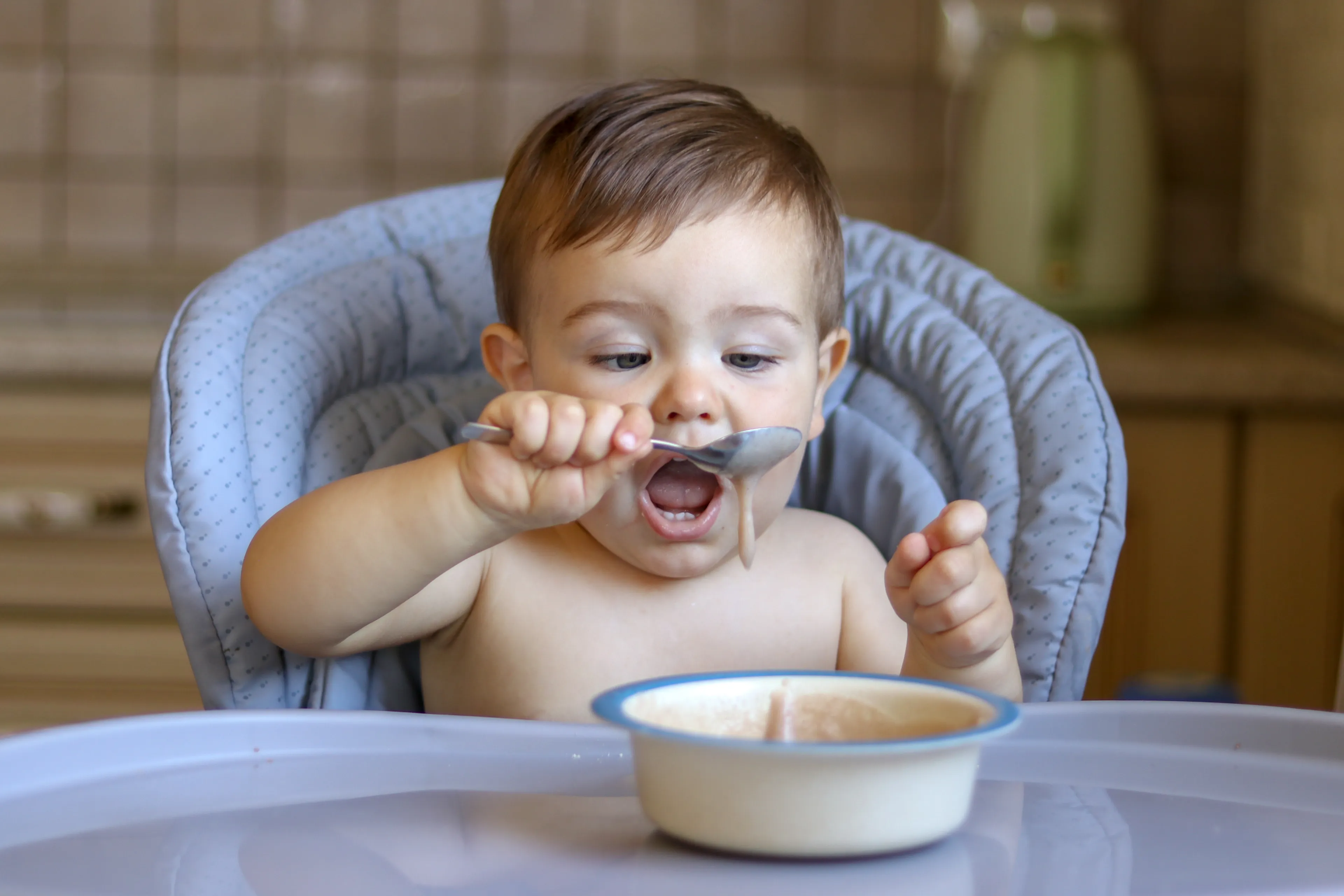
Choosing Between Oatmeal, Rice Cereal, and Fortified Grains
When introducing infant cereals, oatmeal, rice cereal, and other fortified grains can provide different nutritional benefits, so choosing the right option depends on your
Nutrition Profile Comparison
For years, white rice cereal was the default first food. It is bland, easy to digest, and mixes smoothly, which makes it appealing to parents learning how to introduce solids to baby. However, rice naturally accumulates inorganic arsenic from soil and water, and processing does not remove it entirely. Relying on rice cereal for babies as the only grain over many months can lead to higher arsenic exposure than is considered ideal. Small, occasional amounts are not harmful, but an exclusive rice-cereal diet is not recommended.
Infant oatmeal offers a nutritionally stronger alternative:
- It contains more fibre, supporting digestive regularity.
- Its protein content is higher than that of white rice cereal.
- When fortified, it delivers iron comparable to or better than iron fortified baby cereal made from rice.
- Oats carry a lower arsenic burden than rice.
Indian grains such as ragi (finger millet) and jowar (sorghum) are excellent first foods as well. Ragi is particularly rich in calcium and iron and has been used in traditional weaning foods across India for generations. Variety from the start is always preferable to a single-grain approach.
Fortified cereal for infants is not strictly mandatory if your baby's overall diet includes enough iron from other sources. For most families just starting out, though, a fortified cereal is the simplest way to meet iron needs reliably.
Storage and Safety Guidelines
Prepare infant cereal fresh at each meal when possible, since cooked cereal left at room temperature can allow bacteria to multiply. If you need to store mixed cereal, refrigerate it immediately and use within 24 hours. Keep dry, unmixed cereal in a sealed container away from moisture. Always check the expiry date on packaged cereals before use.