logo
0

Infant Formula: A Complete Guide for Indian Parents

Learn about infant formula for Indian parents, including types, preparation, feeding guidance, safety, storage, choosing formula, and when to seek medical advice.

article image

Dr. Nallapu Siri

Choosing the right infant formula for a baby can be an anxiety-filled decision for new parents. With numerous infant formula options available, parents often have questions about ingredients, nutritional composition, age suitability, safety and how to choose an appropriate product. This guide explains what infant formula contains, how different formulations may vary, and what Indian parents should know before selecting or using one.

What Is Infant Formula?

Infant formula is a specially formulated milk substitute designed to provide the nutrients needed by babies when breastfeeding is not possible, insufficient or when a healthcare professional recommends supplementation. Most standard infant formulas are based on cow's milk proteins, although specialised formulas may use hydrolysed proteins, amino acids or other protein sources.

Infant formulas are available in different stages or formulations designed for specific age groups. Depending on the product, these may include formulas intended for babies from birth to 6 months, follow-on formulas for older infants, and products for toddlers.

What differentiates infant formulas is their carefully regulated nutritional composition. Manufacturers modify the proportions of proteins, fats, carbohydrates, vitamins and minerals to meet the nutritional requirements of infants.

Composition: What Does Infant Formula Contain?

Infant formula contains a combination of nutrients designed to support normal growth and development during infancy.

The exact composition varies between products and stages, but standard infant formula may contain:

  • Milk proteins or other approved protein sources
  • Lactose or other permitted carbohydrate sources
  • A blend of fats and oils providing essential fatty acids
  • DHA, an omega-3 fatty acid important for brain and visual development
  • Vitamins and minerals required for infant nutrition
  • Prebiotics or other additional ingredients in some formulations
  • Other nutrients permitted under applicable infant-formula regulations

Some formulas are designed with specific characteristics, such as reduced lactose, hydrolysed proteins, added prebiotics or specialised fat blends.

Parents should not assume that the presence or absence of an individual ingredient makes one formula universally better than another. The nutritional adequacy, regulatory compliance and suitability for the individual baby are more important considerations.

Availability of Infant Formula in India

Infant formula is available in India through pharmacies, supermarkets, healthcare facilities and authorised online retailers. However, parents should pay attention to the source from which they purchase formula.

When purchasing infant formula, check:

  • The manufacturer's name and product information
  • The batch or lot number
  • The manufacturing and expiry dates
  • The packaging for signs of damage or tampering
  • Storage instructions
  • Whether the product is appropriately authorised for sale in India

Parents should avoid purchasing formula from unverified sellers because improper storage, damaged packaging, expired products or counterfeit products can pose safety risks.

India has specific regulations governing the production, supply, distribution, marketing and promotion of infant milk substitutes and infant foods. Parents should therefore rely on appropriately regulated products and seek professional advice when selecting formula.

For guidance on early newborn care and feeding decisions, Apollo's newborn care essentials guide is a useful starting point for new parents.

Different Types of Infant Formula: How to Choose

Parents may encounter several types of infant formula when choosing a product for their baby.

FactorStandard Infant FormulaSpecialised Infant Formula
Protein sourceUsually intact cow's milk proteinsMay contain hydrolysed proteins or amino acids
Primary carbohydrateOften lactose May vary depending on the formulation
Fat sourceBlend of approved fats and oils May contain a modified fat blend
DHAUsually included Usually included, depending on formulation
Intended useHealthy term infantsSpecific medical or nutritional needs
AvailabilityWidely availableUsually selected with healthcare guidance

There is no single infant formula that is universally suitable for every baby. The appropriate choice depends on the baby's age, nutritional requirements, tolerance, medical history and any diagnosed conditions.

If a baby is growing well and tolerating the current formula, parents should not change formulas simply because another product contains a particular ingredient or is marketed as premium, organic or closer to breast milk. Any formula change should be discussed with a paediatrician when there are medical or feeding concerns.

Who Should Not Use Standard Infant Formula?

Standard cow's-milk-based infant formula is not appropriate for every baby. Medical guidance is particularly important in the following situations:

  • Babies with cow's milk protein allergy (CMPA) may require an extensively hydrolysed or amino-acid-based formula rather than a standard cow's-milk-based formula.
  • Babies with galactosaemia may not be able to process galactose and require a specialised lactose-free feeding plan under medical supervision.
  • Babies with confirmed lactose intolerance may require a lactose-free alternative, although true lactose intolerance is uncommon in young infants.
  • Premature or low-birth-weight babies may have additional nutritional requirements and may need a specialised formula or feeding plan.
  • Babies with specific metabolic, gastrointestinal or other medical conditions may require a formula selected by a paediatrician or paediatric dietitian.

If a baby develops persistent vomiting, diarrhoea, blood in the stool, a rash, feeding difficulties or poor weight gain after starting formula, parents should contact a paediatrician promptly.

Safety and Regulatory Considerations

Infant formula is a food product and is subject to food-safety and infant-feeding regulations. Parents should purchase formula from reliable sources and follow the manufacturer's preparation, storage and feeding instructions carefully.

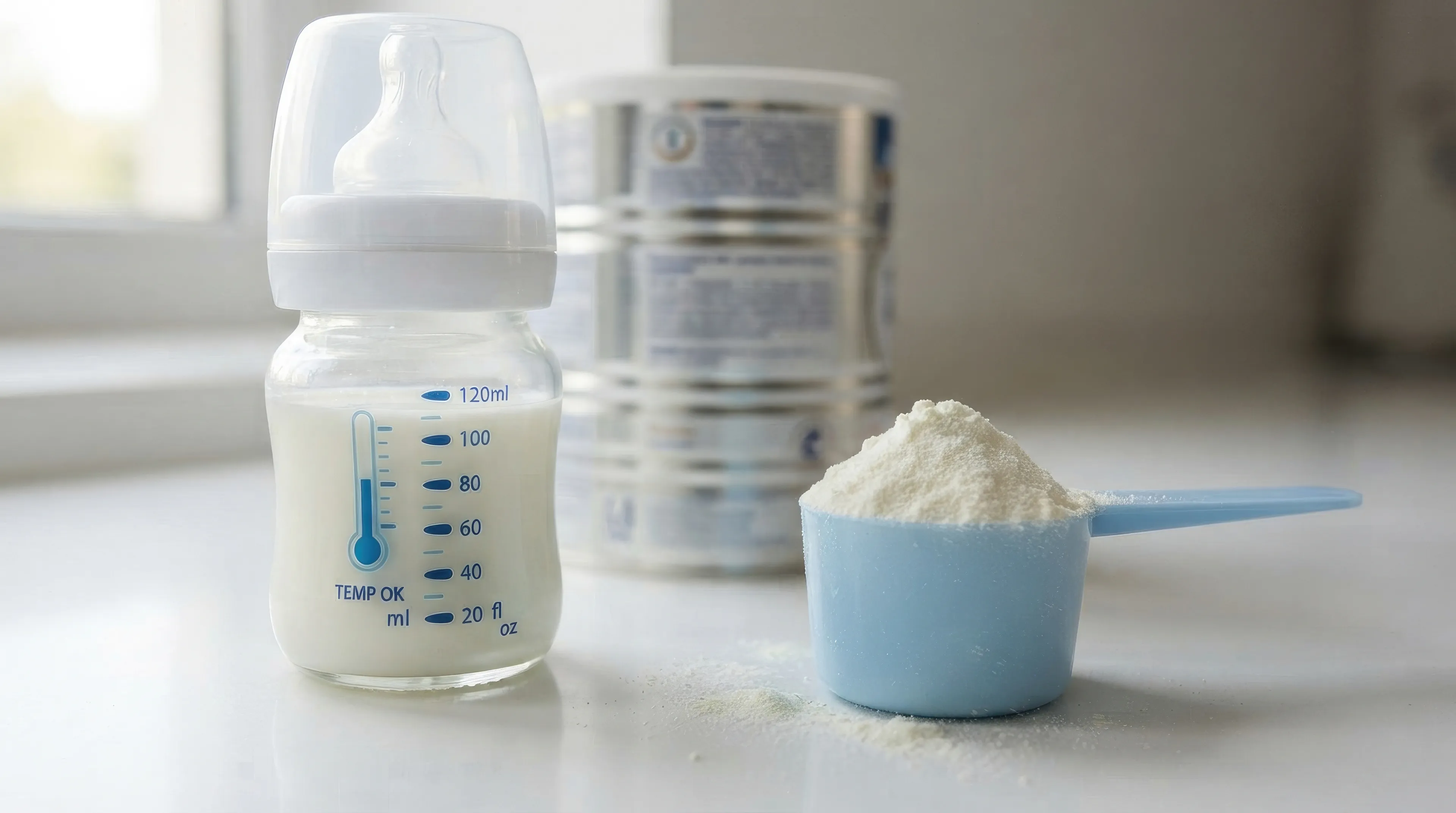
Correct preparation is particularly important. Formula should be prepared using the recommended quantity of water and powder. Adding extra powder can result in an excessively concentrated feed, while adding too much water can reduce its nutritional value.

Parents should also:

  • Wash their hands before preparing feeds.
  • Use clean and appropriately sterilised feeding equipment, particularly for young infants.
  • Follow the manufacturer's instructions for preparation and storage.
  • Prepare feeds using safe water.
  • Avoid keeping prepared formula for longer than recommended.
  • Discard leftover formula from a feed rather than reusing it.
  • Check the packaging and expiry date before use.

If a baby develops a suspected adverse reaction to a formula, stop and seek medical advice. Any severe reaction, such as breathing difficulty, facial or throat swelling or significant lethargy, requires immediate medical attention.

Conclusion

Infant formula can provide appropriate nutrition for babies when breastfeeding is not possible, is insufficient, or formula feeding is chosen with professional guidance. Parents should select a formula suitable for the baby's age and nutritional needs and prepare it exactly according to the manufacturer's instructions, using safe water and clean feeding equipment. Avoid changing the powder-to-water ratio, adding extra ingredients, or storing prepared formula in ways that are not recommended. Feeding needs vary by age, growth, health, and individual appetite, so guidance from a paediatrician can be helpful, particularly for premature babies or infants with allergies, feeding difficulties, poor weight gain, or other medical concerns. Safe preparation, hygiene, correct storage, and appropriate feeding practices are essential for reducing the risk of contamination and supporting healthy growth.

FAQs

Is infant formula suitable for newborns?

Yes. Standard infant formulas may be designed for use from birth, but the specific product should be appropriate for the baby's age and nutritional needs. Parents should follow the product's instructions and discuss formula feeding with a healthcare professional, particularly for premature babies or babies with medical conditions.

What is special about infant formula composition?

Infant formula is designed to provide a controlled combination of proteins, carbohydrates, fats, vitamins, minerals and other nutrients required during infancy. Different formulas may vary in their protein source, fat blend, carbohydrate source and additional ingredients.

Does infant formula contain DHA?

Many infant formulas contain DHA, an omega-3 fatty acid that contributes to normal brain and visual development. The amount and source can vary between products, so parents should check the product label.

Is infant formula suitable for babies with cow's milk protein allergy?

Standard cow's-milk-based infant formula is generally not suitable for babies diagnosed with cow's milk protein allergy. Depending on the severity and type of allergy, a paediatrician may recommend an extensively hydrolysed or amino-acid-based formula.

How do I switch my baby to a new formula safely?

A formula change should ideally be discussed with your paediatrician, particularly for young infants or babies with medical conditions. If a healthcare professional recommends a change, follow their instructions on introducing the new formula. Monitor the baby for changes in feeding, stools, vomiting, skin symptoms or other reactions.
How should infant formula be prepared?

Prepare infant formula exactly according to the manufacturer's instructions. Use the specified amount of water and formula powder, and do not dilute or concentrate the feed. Use clean feeding equipment and follow recommended storage and discard times.

Apollo 247 Floating Action Button