logo
0

Makhana for Babies: Benefits, Safety, and Easy Recipes

Is makhana good for babies? Discover the health benefits, age-by-age safety guidelines, and easy makhana baby food recipes for your little one.

article image

Dr.Mayank

Introducing solid foods is a thrilling milestone for parents. You want to offer your little one foods that are gentle on their sensitive tummies but packed with the nutrients they need to grow strong. Among the traditional superfoods gaining global popularity, fox nuts, commonly known as makhana, stand out. But is makhana good for babies?

The short answer is yes! In this comprehensive guide, we will explore why makhana is good for babies, when to introduce it, and how to safely prepare it.

What is Makhana?

Makhana, also known as phool makhana, lotus seeds, or fox nuts, comes from the Euryale ferox plant. These puff-like seeds are traditionally roasted and eaten as a healthy snack.

But is phool makhana good for babies? Absolutely. It is gluten-free, low in sodium, and packed with essential minerals like calcium, magnesium, and phosphorus.

When choosing ingredients for your child, you might wonder which makhana is good for babies. Always opt for plain, organic, raw, and unflavoured phool makhana. Avoid pre-packaged salted, spiced, or processed varieties, as an infant's kidneys cannot safely process excess sodium and artificial additives.

Nutritional Benefits: Why Is Makhana Good for Babies?

Parents often ask why makhana is good for babies compared to other commercial baby cereals. The answer lies in its rich nutritional profile.

Here are the key makhana food benefits for babies that make it an excellent choice for growing infants:

  • Promotes Bone Development: Makhana is highly rich in calcium, which is critical for the development of your baby's bones and teeth.
  • Supports Muscle Growth: It contains high-quality plant-based protein, which helps in muscle development and overall physical growth.
  • Easy on the Digestive System: Makhana is gluten-free and highly digestible. It is incredibly gentle on a baby's developing digestive tract.
  • Rich in Antioxidants: These seeds possess natural antioxidant properties that help strengthen your baby's immune system.
  • Provides Sustained Energy: The healthy carbohydrates in makhana provide a steady release of energy to keep your active baby going throughout the day.

Using makhana food for baby meals is a wonderful way to provide energy without empty calories, showing why makhana is good for babies. The makhana baby food benefits extend beyond nutrition; its natural, neutral taste makes it easy to blend into various purées and porridges.

When to Introduce Makhana to Your Baby?

Knowing when to introduce makhana to baby meals is crucial for a safe transition to solids. Most paediatric associations, including the World Health Organization (WHO), recommend introducing solid foods around 6 months of age.

If you are asking yourself, can I give makhana to my baby?, the answer is yes, starting right from the 6-month mark.

Age-by-Age Breakdown

At 6 Months: Can I give makhana to my 6-month baby? Yes, but only in a completely smooth, powdered form cooked into a runny porridge. Whole makhana is a severe choking hazard.

At 7 Months: Can I give makhana to my 7-month baby? Yes. At this stage, you can thin the porridge slightly less or mix it with fruit purées like apple or pear.

At 9 Months: Can I give makhana to my 9-month baby? Yes. You can transition to slightly textured porridges or combine makhana with other grains like oats or flattened rice (poha).

At 12 Months (1 Year): Can I give makhana to my 1-year-old baby? Yes! Toddlers can enjoy lightly roasted, finely chopped, or crushed makhana as a soft finger food, as well as delicious milk-based puddings.

Safe Portion Sizes: How Much Makhana to Eat in a Day

While makhana is highly nutritious, moderation is key to preventing digestive issues.

  • For Babies (6 to 12 months): Start with 1 teaspoon of makhana powder mixed into porridge once a day. Gradually increase this to 1 to 2 tablespoons of powder per day as your baby grows and adapts to solids.
  • For Toddlers (1 to 2 years): If you are wondering how much makhana to eat in a day for a 2-year-old baby, a small handful (about 10 to 15 grams or half a cup) of soft-roasted, crushed makhana is sufficient.

How to Prepare Makhana Powder (The Base for Baby Food)?

Before diving into recipes, you need to prepare makhana powder baby food, also referred to as roasted makhana powder baby food or makhana powder for baby food. This acts as a highly versatile base for almost any baby food makhana dish.

Step-by-Step Instructions

  1. Inspect the Makhana: Take 1 cup of organic phool makhana. Cut each seed in half to check for worms or black inner residue.
  2. Dry Roast: Place a heavy-bottomed pan on low heat. Add the makhana and dry roast them without oil or ghee. Stir continuously for 5–7 minutes until they become crispy and easily crush between your fingers.
  3. Cool: Transfer the roasted makhana to a clean plate and let them cool completely.
  4. Grind: Place them in a blender and grind into a super-fine powder.
  5. Store: Sift the powder to remove any large pieces. Store this makhana for baby food base in an airtight container for up to 3 to 4 weeks.

Easy & Healthy Makhana Recipes for Babies

Now that you have your nutritional powder ready, here are several nutrient-dense makhana baby food recipes tailored to your baby's age.

1. Simple Makhana Porridge (For 6 Months +)

This classic makhana porridge for a 6-month baby, also called makhana porridge for 6 months baby, is the perfect introductory solid food.

Ingredients:

  • 2 teaspoons of prepared makhana powder
  • 1/2 cup of water
  • A splash of breast milk or formula (optional)

How to Make:

  1. In a small saucepan, mix the makhana powder with water until no lumps remain.
  2. Cook on low heat, stirring continuously, for 3–5 minutes until the mixture thickens into a smooth makhana porridge baby food.
  3. Remove from heat. Once warm, stir in breast milk or formula to achieve a smooth consistency. This makhana purée for a 6-month baby is highly digestible and gentle on the stomach.

Alternative names for this recipe include makhana porridge baby, makhana porridge for baby, and makhana powder baby porridge.

2. Apple and Makhana Purée (For 7 Months +)

If you want a flavorful makhana recipe for 7 month baby, this recipe combines the goodness of fresh fruit with fox nuts.

Ingredients:

  • 2 teaspoons of makhana powder
  • 1/2 apple (peeled and chopped)
  • 1/2 cup of water

How to Make:

  1. Steam the chopped apple until it is completely soft. Blend it into a smooth apple purée.
  2. In a pan, mix the makhana powder with water and cook on low heat to make a basic makhana porridge for 7 month baby.
  3. Stir the apple purée into the warm porridge. This makhana apple purée for a baby is a sweet, nutritious snack your baby will love.

3. Poha Makhana Porridge (For 8 Months +)

This hearty makhana recipe for an 8-month baby introduces a blend of wholesome grains.

Ingredients:

  • 1 tablespoon of makhana powder
  • 1 tablespoon of powdered poha (flattened rice)
  • 1 cup of water
  • 1/4 teaspoon of ghee (optional)

How to Make:

  1. In a pan, combine the makhana powder and poha powder with water.
  2. Whisk thoroughly to avoid lumps. Cook on low heat for 5 minutes, stirring continuously.
  3. Once cooked, turn off the heat and stir in a tiny drop of ghee. This poha makhana recipe for baby makes for a very filling and energising breakfast.

Note: This recipe also works wonderfully as a makhana porridge for an 8-month baby.

4. Makhana and Oats Porridge (For 10 Months +)

This rustic makhana recipe for a 10-month baby adds prebiotic-rich oats to aid healthy digestion.

Ingredients:

  • 1 tablespoon of rolled oats powder
  • 1 tablespoon of makhana powder
  • 1 cup of water
  • A pinch of cinnamon powder

How to Make:

  1. Combine the oats powder and makhana powder with water in a pan.
  2. Cook on a medium-low flame for 6 minutes while stirring frequently.
  3. Add a tiny pinch of cinnamon for flavour. This comforting makhana and oats recipe for baby is perfect for cold mornings.

5. Makhana Kheer (For 1 Year / 12 Months +)

A delicious sweet treat, this makhana recipe for 1 year baby is a great milestone recipe.

Ingredients:

  • 2 tablespoons of coarsely crushed roasted makhana
  • 1 cup of whole cow's milk (only for babies over 1 year)
  • 1 date (soaked in warm water and puréed)
  • A pinch of cardamom powder

How to Make:

  1. Bring the cow's milk to a boil in a heavy-bottomed pan.
  2. Add the coarsely crushed makhana and simmer on low heat for 8–10 minutes until the makhana turns soft and mushy.
  3. Stir in the date purée for natural sweetness and a pinch of cardamom. Let this rich makhana kheer baby food cool before serving.

Important Safety and Dietary Guidelines

While makhana is a highly nutritious addition to your baby makhana recipe rotation, safety should always come first. Keep these essential tips in mind:
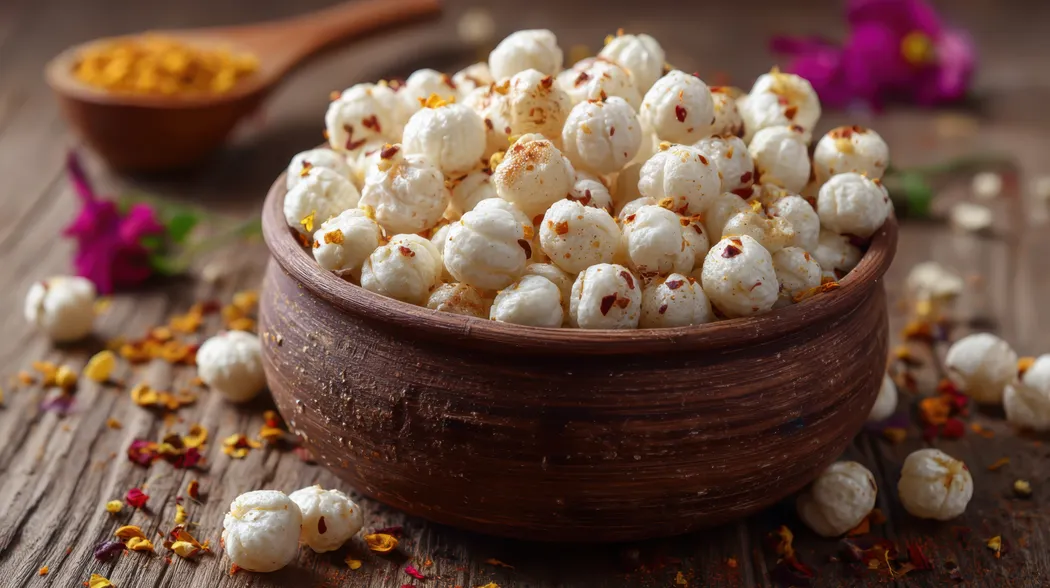
Is Makhana Safe for Babies? Yes, but only if prepared correctly. Whole makhana is extremely spongy and hard to chew, posing a severe choking hazard. Never feed whole or half-roasted makhana to infants.

  • The 3-Day Rule: Whenever you introduce any new makhana recipe baby meal, feed it to your baby for three consecutive days. Monitor closely for signs of allergies, such as rashes, swelling, vomiting or diarrhoea.
  • Hydration: Makhana is rich in fibre. Ensure your baby is getting enough breast milk, formula or water (if over 6 months) to help digest the fibre easily.

Can I Give Makhana to My Baby in Loose Motion? Yes, you can. Plain, oil-free makhana cooked with water is easy to digest and has mild anti-diarrhoeal properties. If your baby is experiencing diarrhoea, a simple, warm makhana powder porridge for babies made without ghee, milk, or sugar can help soothe their digestive system.

Conclusion

Makhana can be a nutritious addition to a baby’s complementary diet when introduced at the appropriate stage and prepared in a safe, age-appropriate texture. It provides carbohydrates, protein, minerals, and other nutrients that can contribute to a varied diet. Whole, hard, or crunchy makhana should not be offered to babies because it may be difficult to chew and can pose a choking risk. Instead, it can be softened, cooked, finely ground, or prepared as a smooth porridge or suitable mash. By introducing makhana gradually and offering it alongside a variety of other nutrient-rich foods, parents can include it safely as part of a balanced feeding routine.

FAQS

Can I Use Ghee to Roast Makhana for a 6-Month-Old Baby?

For a 6-month-old, it is best to dry roast the makhana without ghee or oil. A baby's digestive tract is still maturing and may find processed fats heavy to digest. You can introduce a few drops of ghee after 8 months.

Can Makhana Cause Constipation in Babies?

While makhana is rich in dietary fibre, which aids digestion, overfeeding it without offering enough fluids can sometimes lead to mild constipation. Keep portion sizes small and ensure your baby remains well-hydrated.

Which Makhana is Best for Babies?

Always buy organic, plain phool makhana. Avoid buying pre-flavoured, salted or spiced packages, as these contain high levels of sodium and preservatives that are harmful to an infant's kidneys.

Can I Store Cooked Makhana Porridge in the Fridge?

It is highly recommended to serve makhana baby food recipe dishes fresh. However, you can store the dry, roasted makhana powder in an airtight container at room temperature for up to 1 month to make fresh porridge instantly.

Can I Sweeten Makhana Porridge for My 7-Month-Old?

Do not add refined sugar, honey or salt to baby food for infants under 1 year. Instead, you can naturally sweeten the porridge using fresh fruit purées, such as apple, pear or banana.

Apollo 247 Floating Action Button