logo
0

Milk Protein Allergy Newborn: Symptoms & Diagnosis Guide

Learn about cow's milk protein allergy in newborns, its symptoms, diagnosis, treatment options and suitable formula alternatives, including extensively hydrolysed and amino acid-based formulas.

article image

Dr. Ezhilrasan

Feeding problems, frequent vomiting, eczema or changes in stools can be worrying when you have a newborn. Some of these symptoms may be linked to cow's milk protein allergy (CMPA), an immune reaction to proteins in cow's milk.

CMPA can occur in breastfed as well as formula-fed babies, but many of its symptoms overlap with common infant problems such as reflux, colic and normal changes in stools. Recognising the possible signs is useful, but a proper assessment is important before changing your baby's formula or your own diet.

What Is Milk Protein Allergy in Newborns?

Cow's milk protein allergy is an immune reaction to proteins found in cow's milk. The proteins involved include casein and whey proteins. When a baby with CMPA is exposed to these proteins, the immune system can trigger symptoms affecting the skin, digestive system or, less commonly, the respiratory system.

CMPA is different from lactose intolerance. Lactose intolerance occurs when the body has difficulty digesting lactose, the natural sugar in milk, because of insufficient lactase enzyme activity. It is not an immune reaction.

True primary lactose intolerance is uncommon in young infants. However, temporary lactose intolerance can occur after certain gastrointestinal illnesses.

Because CMPA and lactose intolerance have different causes, they require different approaches. A lactose-free formula is not a treatment for CMPA because it can still contain cow's milk proteins.

What Are the Symptoms of Milk Protein Allergy in Infants?

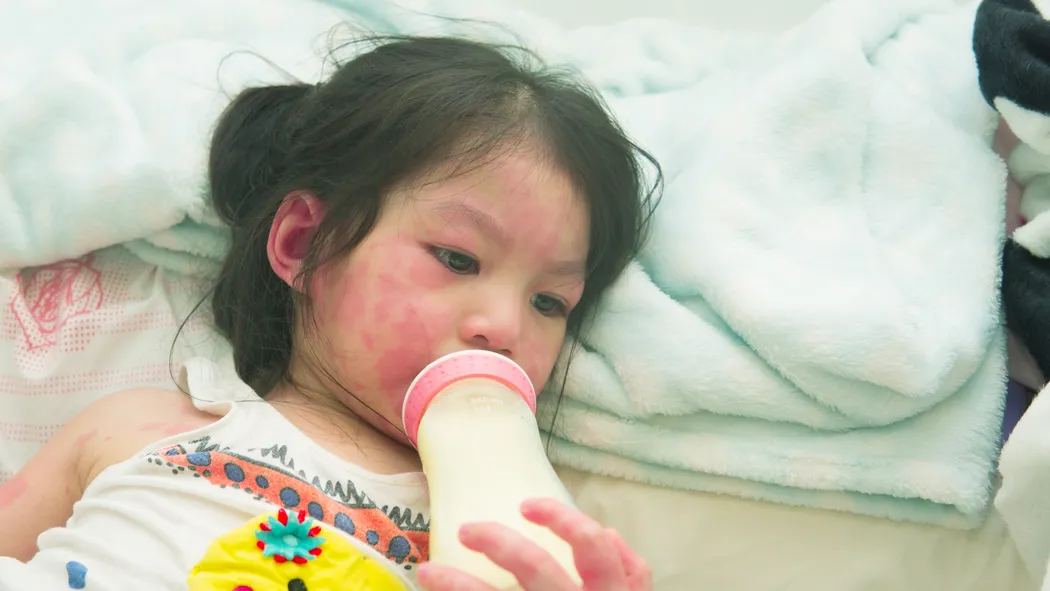
Symptoms can vary depending on the type of immune reaction. Some reactions occur soon after exposure, while others develop more gradually.

Possible immediate symptoms include:

  • Hives or raised, itchy patches on the skin
  • Swelling of the lips, face or around the eyes
  • Vomiting soon after feeding
  • Coughing, wheezing or breathing difficulty
  • Sudden pallor or marked lethargy in a severe reaction

Delayed symptoms may include:

  • Blood or mucus in the stool
  • Persistent loose stools
  • Repeated vomiting
  • Feeding difficulties or refusal
  • Eczema or persistent skin inflammation
  • Significant irritability
  • Poor weight gain

Not every baby with reflux, colic, eczema or changes in bowel movements has CMPA. These symptoms are common in infancy and can have several causes. The pattern, timing and combination of symptoms are important when a paediatrician assesses your baby.

How Is Milk Protein Allergy Diagnosed?

No single test can diagnose every type of CMPA. Diagnosis usually involves looking at your baby's symptoms, feeding history, growth and response to removing and then reintroducing cow's milk protein when appropriate.

Your paediatrician may:

  • Ask when symptoms started and how they relate to feeds.
  • Review whether your baby receives breast milk, formula or both.
  • Examine your baby's skin and overall health.
  • Assess weight and growth.
  • Consider a medically supervised elimination of cow's milk protein for a limited period.
  • Recommend reintroduction to determine whether symptoms return.
  • Use skin-prick testing or specific IgE blood tests when an immediate allergic reaction is suspected.

Allergy tests are not useful for every type of CMPA. A negative test does not necessarily exclude a non-IgE-mediated reaction.

Because symptoms can have several possible causes, avoid diagnosing CMPA based only on an online symptom list. Unnecessary dietary restrictions or repeated formula changes can affect nutrition and make it harder to identify the actual cause of your baby's symptoms.

What Formula Alternatives Are Available for Milk Protein Allergy?

When a formula-fed baby has confirmed CMPA, the appropriate formula depends on the severity and type of reaction and should be selected with medical guidance.

The main specialised options are extensively hydrolysed formulas and amino acid-based formulas.

Extensively Hydrolysed Formulas

Extensively hydrolysed formulas contain cow's milk proteins that have been broken down into much smaller protein fragments. Many babies with CMPA tolerate these formulas.

They are commonly used as a first-line specialised formula for many babies with confirmed CMPA, depending on the clinical situation.

Amino Acid-Based Formulas

Amino acid-based formulas provide protein in the form of individual amino acids rather than intact milk proteins or larger protein fragments.

They may be recommended when:

  • Symptoms continue despite an appropriate trial of an extensively hydrolysed formula.
  • The reaction to cow's milk protein was severe.
  • A baby has certain complex food-allergic or gastrointestinal conditions requiring specialised nutrition.

These formulas are specialised medical nutrition products and should be used according to advice from a paediatrician or paediatric dietitian.

What About Partially Hydrolysed or Soy Formula?

Partially hydrolysed formulas are not considered suitable treatment for confirmed CMPA. Although their proteins are partially broken down, they are not sufficiently hydrolysed for babies who need a hypoallergenic formula.

Soy formula is also not routinely the first choice for young infants with CMPA because some babies with cow's milk allergy may also react to soy. The choice of formula should therefore be individualised.

Goat's milk formula is not a suitable alternative for CMPA. Goat's milk proteins are similar to cow's milk proteins and can also cause an allergic reaction.

What Should You Keep in Mind When Changing Formula?

A suspected milk allergy should not lead to repeated or unnecessary formula changes. Keep these points in mind:

  • Do not switch to a specialised formula solely because your baby has ordinary reflux, colic or unsettled behaviour.
  • Do not use a partially hydrolysed or standard "comfort" formula to treat confirmed CMPA.
  • Do not change the formula concentration to manage symptoms.
  • Do not prepare homemade infant formula as an alternative to commercial infant formula.
  • Do not use lactose-free formula as a substitute for a hypoallergenic formula when CMPA is suspected or confirmed.
  • If your baby has had a severe allergic reaction, seek urgent medical assessment and follow the emergency plan provided by your healthcare team.

If a breastfeeding mother is advised to eliminate cow's milk protein from her diet, she should receive appropriate dietary guidance to maintain her own nutritional intake.

Can a Breastfed Baby Have Milk Protein Allergy?

Yes. A breastfed baby can develop symptoms of CMPA after exposure to cow's milk proteins present in the mother's diet, although this is not the same as the mother having a milk allergy.

If CMPA is suspected in a breastfed baby, a paediatrician may recommend a temporary maternal elimination of cow's milk protein followed by planned reintroduction. Do this with appropriate dietary support, particularly if the elimination needs to continue.

Breastfeeding does not usually need to be stopped simply because CMPA is suspected.

When Should You Seek Medical Help?

Some symptoms require urgent attention.

Seek emergency medical care if your baby develops:

  • Difficulty breathing or wheezing
  • Swelling of the tongue, lips or throat
  • Sudden marked paleness or limpness
  • Collapse or loss of consciousness
  • A rapidly developing allergic reaction involving more than one body system

Speak with your paediatrician promptly if your baby has:

  • Repeated blood in the stool
  • Persistent vomiting
  • Ongoing feeding difficulties or refusal
  • Poor weight gain or weight loss
  • Persistent eczema or other significant skin symptoms
  • Frequent symptoms that consistently occur after feeding

Early assessment can help distinguish CMPA from other common infant conditions and prevent unnecessary dietary restrictions or inappropriate formula changes.

How Long Does Milk Protein Allergy Last?

Many children eventually outgrow cow's milk protein allergy, although the timing varies. Some children become tolerant during early childhood, while others continue to have symptoms for longer.

Your paediatrician can review your baby's progress and advise when and how cow's milk protein should be reintroduced. Do not attempt reintroduction at home if your baby has previously experienced a severe or immediate allergic reaction unless your healthcare team has specifically advised you to do so.

Conclusion

Cow's milk protein allergy can cause symptoms involving the skin, digestive system and, in some cases, the respiratory system. However, many of these symptoms are also common in babies without an allergy, so diagnosis should be based on the overall clinical picture rather than a single symptom.

If CMPA is confirmed, an appropriate feeding plan can usually provide the nutrition your baby needs while avoiding the triggering protein. Depending on your baby's symptoms and medical history, this may involve continued breastfeeding with dietary support or a specialised formula such as an extensively hydrolysed or amino acid-based formula.

FAQS

Can a breastfed baby have milk protein allergy?

Yes. Cow's milk proteins from the mother's diet can pass into breast milk and may cause symptoms in a baby with CMPA. If CMPA is suspected, your paediatrician may recommend a temporary dairy-free diet for the breastfeeding mother, with appropriate nutritional guidance and planned reintroduction.

How long does milk protein allergy last in babies?

Many children outgrow CMPA during early childhood, but the timing varies from one child to another. Your paediatrician can monitor your baby's symptoms and growth and advise when it is appropriate to assess whether cow's milk protein can be reintroduced.

What should a breastfeeding mother avoid if her baby has CMPA?

If CMPA is confirmed and your paediatrician recommends a maternal elimination diet, you may need to avoid cow's milk and foods containing milk proteins. A dietitian can help you identify hidden sources and maintain adequate nutrition while following the diet.

Does milk protein allergy go away on its own?

Many babies eventually develop tolerance to cow's milk protein, but this should be assessed individually. Your paediatrician can advise when reintroduction is appropriate. Babies who have experienced a severe allergic reaction should not attempt reintroduction without specific medical guidance.

Is milk protein allergy dangerous for newborns?

CMPA can range from mild or delayed symptoms to a severe immediate allergic reaction. Difficulty breathing, swelling of the lips or tongue, marked paleness, limpness, or collapse requires emergency medical care. Prompt assessment and an appropriate feeding plan can help manage the condition safely.
Apollo 247 Floating Action Button