logo
0

Mixing Formula Safely: Water, Hygiene & Storage Guide

Learn how to mix infant formula safely, including water temperature, hygiene, sterilisation, storage and precautions for high-risk babies.

article image

Dr.J.T.Hema Prathima

Mixing Formula Correctly: A Step-by-Step Safety Guide for Parents

Bringing a newborn home means making dozens of small decisions every day, and mixing formula is one that carries real health consequences. Done correctly, formula preparation gives your baby a safe, nutritious feed. Done carelessly, it can introduce harmful bacteria like Cronobacter sakazakii, which can cause serious illness in infants. This guide walks you through safe formula preparation from start to finish, covering water safety, hygiene, and storage so you can feed your baby with confidence.

Why Does Correct Formula Preparation Matter?

Powdered infant formula is not a sterile product. The powder may contain low levels of bacteria, including Cronobacter, and when combined with unsafe water, unclean equipment, or incorrect preparation, those bacteria can multiply quickly.

Infants, particularly those who are very young, premature, or have weakened immune systems, are especially vulnerable to foodborne illness. Fever, vomiting, diarrhoea, or lethargy after a feed should prompt an immediate call to your doctor. The steps below are designed to minimise every point of contamination risk.

What Do You Need Before You Start?

Gathering everything before you begin reduces the chance of shortcuts that compromise hygiene.

  • A freshly sterilised feeding bottle and teat
  • A sterilised scoop (usually included with the formula tin)
  • Freshly boiled water that has been allowed to cool to the temperature recommended for your formula
  • A clean, dry surface wiped with a food-safe disinfectant
  • A clean cloth or paper towel for drying your hands

Avoid preparing formula on surfaces where raw food has been handled. Check the formula tin's expiry date before every use, and follow the manufacturer's instructions for how long the tin can be used after opening. Most powdered infant formulas should be used within one month of opening, but always check the label.

For more on newborn care essentials for new parents, the Apollo Pharmacy resource library covers topics from cord care to feeding basics.

Step-by-Step: How to Mix Formula Safely

Follow these steps in order every time you prepare a feed. Skipping even one step can introduce risk.

  1. Wash your hands thoroughly with soap and water for at least 20 seconds. Dry with a clean towel.
  2. Boil fresh water. Use fresh water from a safe source. Bring it to a full rolling boil. Do not use water that has been boiled before.
  3. Check the formula water temperature. For powdered infant formula, WHO guidance recommends using water at no less than 70°C when reconstituting the powder, unless the formula manufacturer's instructions state otherwise. After boiling, allow the water to cool for no more than 30 minutes before adding the powder. This temperature helps reduce the risk from bacteria that may be present in powdered formula.
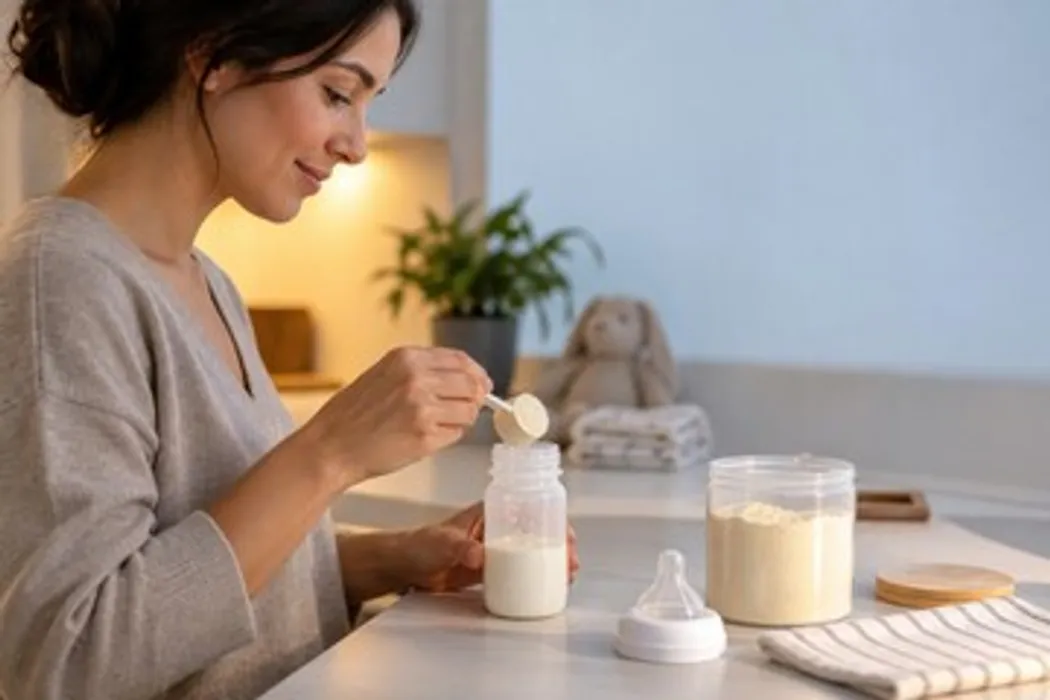
  4. Measure the powder. Use only the scoop provided with your specific tin. Level it according to the manufacturer's instructions.Never heap or compress the powder; an off-ratio mix can cause nutritional imbalance, and too little water can place additional strain on your baby's kidneys and digestive system.
  5. Add powder to water, not the other way around. This helps ensure the correct water-to-powder ratio.
  6. Cap the bottle and mix. Swirl or gently shake until the powder dissolves fully. Follow the instructions on your formula packaging for the recommended mixing method.
  7. Cool to feeding temperature. Hold the bottle under cool running water or place it in a bowl of cold water until it reaches a safe feeding temperature. Test a few drops on the inside of your wrist before feeding.
  8. Feed immediately or store according to the guidelines below. 

<Shop Formula Milk>

Water Safety Guidelines

The water you use when mixing formula matters as much as the technique itself.

Boiling kills microorganisms that may be present in the water. For powdered infant formula, WHO and NHS guidance recommends using freshly boiled water that has cooled to no less than 70°C before the powder is added. NHS guidance specifically advises allowing freshly boiled water to cool for no more than 30 minutes.

Safe water sources:

  • Municipal tap water that is known to be safe and has been freshly boiled
  • Commercially bottled water from a reliable source, where appropriate for infant feeding and prepared according to local and manufacturer guidance

Water sources to avoid:

  • Untreated well water or borewell water without confirmed safe testing
  • Water from roadside vendors or unknown sources
  • Water with high levels of minerals or sodium that is not intended or recommended for infant feeding
  • Hot water straight from a tap or dispenser, which may not have reached a safe boiling temperature

There is no single universal sodium threshold that can be applied to all bottled or drinking water for infant formula preparation. Check the mineral composition and local guidance when choosing bottled water, particularly for regular use.

Hygiene and Sterilisation Best Practices

Ordinary washing does not eliminate all bacteria that may contaminate feeding equipment. Sterilising baby bottles and feeding equipment is especially important for young infants and can help reduce the risk of infection. WHO guidance identifies cleaning and sterilisation of feeding and preparation equipment as an important prerequisite for safe preparation of powdered infant formula.

How to sterilise bottles:

  • Wash bottles, teats, and lids in hot soapy water and rinse thoroughly before sterilising.
  • Steam sterilising using an electric or microwave steriliser is widely used and reliable when carried out according to the manufacturer's instructions.
  • Cold-water chemical sterilising uses sterilising tablets or solution; items must be fully submerged for the recommended contact time.
  • Boiling can also be used for sterilisation. Follow the equipment manufacturer's instructions for the required boiling time. Some official guidance recommends boiling feeding equipment for 5 minutes rather than the 10 minutes stated in the original draft.

After sterilising, store bottles assembled and covered until use. Handwashing is not optional even at home, because bacteria can transfer easily from hands to teats and bottle rims.

Keep your preparation surface clean by wiping it with a suitable food-safe disinfectant before each feed.

Storing Prepared Formula Correctly

Prepared formula is a nutrient-rich environment where bacteria can multiply. Following formula storage guidelines protects every feed you prepare in advance.

  • Freshly prepared formula that is not needed immediately should be refrigerated promptly at or below 5°C. WHO guidance recommends cooling it quickly and using it within 24 hours.
  • Refrigerated formula should be used within 24 hours. After that, discard it.
  • Formula left at room temperature for more than two hours should be discarded. If feeding has already started, the prepared formula should be used within one hour from the start of feeding.
  • Never save leftover formula from a bottle your baby has already fed from. Saliva can introduce bacteria and encourage bacterial growth.
  • When warming refrigerated formula, stand the bottle in warm water or hold it under warm running water. Never use a microwave, which can create hot spots that may burn your baby's mouth.

Contraindications: When to Avoid Certain Practices?

Standard formula preparation methods are appropriate for most healthy, full-term infants. There are situations where your paediatrician will give you different instructions.

  • Preterm or low birth weight infants may have a higher risk of serious infection from Cronobacter. Ready-to-feed liquid formula is sterile and is generally the safer option for infants at higher risk when formula feeding is required. Speak to your neonatal team about the most appropriate formula and preparation method for your baby.
  • Specialty or prescribed formulas for metabolic conditions, severe allergies, or other medical conditions may have different preparation instructions, including specific water or temperature requirements. Follow the specific instructions given by your doctor or dietitian.
  • Infants with compromised immunity may need extra precautions around sterilisation and formula type. Your specialist will advise.
  • Known allergy or intolerance to a formula's protein base, for example cow's milk protein, requires a medical review before switching products.

If you notice any rash, unusual crying, blood in stools, or respiratory symptoms after a feed, stop that formula and contact your doctor promptly. Report adverse events to your healthcare provider or the relevant regulatory authority.

Conclusion

Correct formula preparation is an important part of keeping your baby safe from foodborne illness. Powdered infant formula is not sterile, so careful handwashing, clean and sterilised feeding equipment, safe water, accurate measurements, and appropriate storage all matter.

Always follow the instructions on your specific formula tin because preparation and storage requirements can vary between products. For babies at higher risk of serious infection, including premature infants and very young babies, your paediatrician or neonatal team may recommend additional precautions or sterile ready-to-feed formula.

FAQ

Can I use tap water to mix formula?

Yes, if the tap water is from a safe source. Follow local guidance on water safety and use freshly boiled water at the temperature recommended for your formula. For powdered infant formula, WHO and NHS guidance recommends using water at no less than 70°C when adding the powder.

How long can mixed formula sit out?

Prepared formula should generally be used within two hours of preparation and within one hour from the start of feeding. If it is not going to be used within two hours, refrigerate it promptly and use it within 24 hours.

Can I reuse leftover formula from a bottle?

No. Once your baby has fed from a bottle, saliva enters the formula and can allow bacteria to grow. Any remaining formula should be discarded after the feed.

Do I need to sterilise bottles after every use?

Feeding equipment should be thoroughly cleaned after each use and sterilised according to current guidance and the equipment manufacturer's instructions. Sterilisation is particularly important for young infants because they are more vulnerable to infections.

Is it safe to use warm water straight from the tap for formula?

No. Warm tap water has not necessarily reached a temperature sufficient to reduce bacteria that may be present in powdered formula. Use water from a safe source and follow the recommended boiling and temperature instructions for preparing the formula.

How long can I use powdered formula after opening the tin?

Follow the manufacturer's instructions on the tin. Most powdered infant formulas should be used within one month of opening, although the exact period can vary by product. Store the opened tin tightly closed in a cool, dry place and never use formula beyond its use-by date.

Apollo 247 Floating Action Button