logo
0

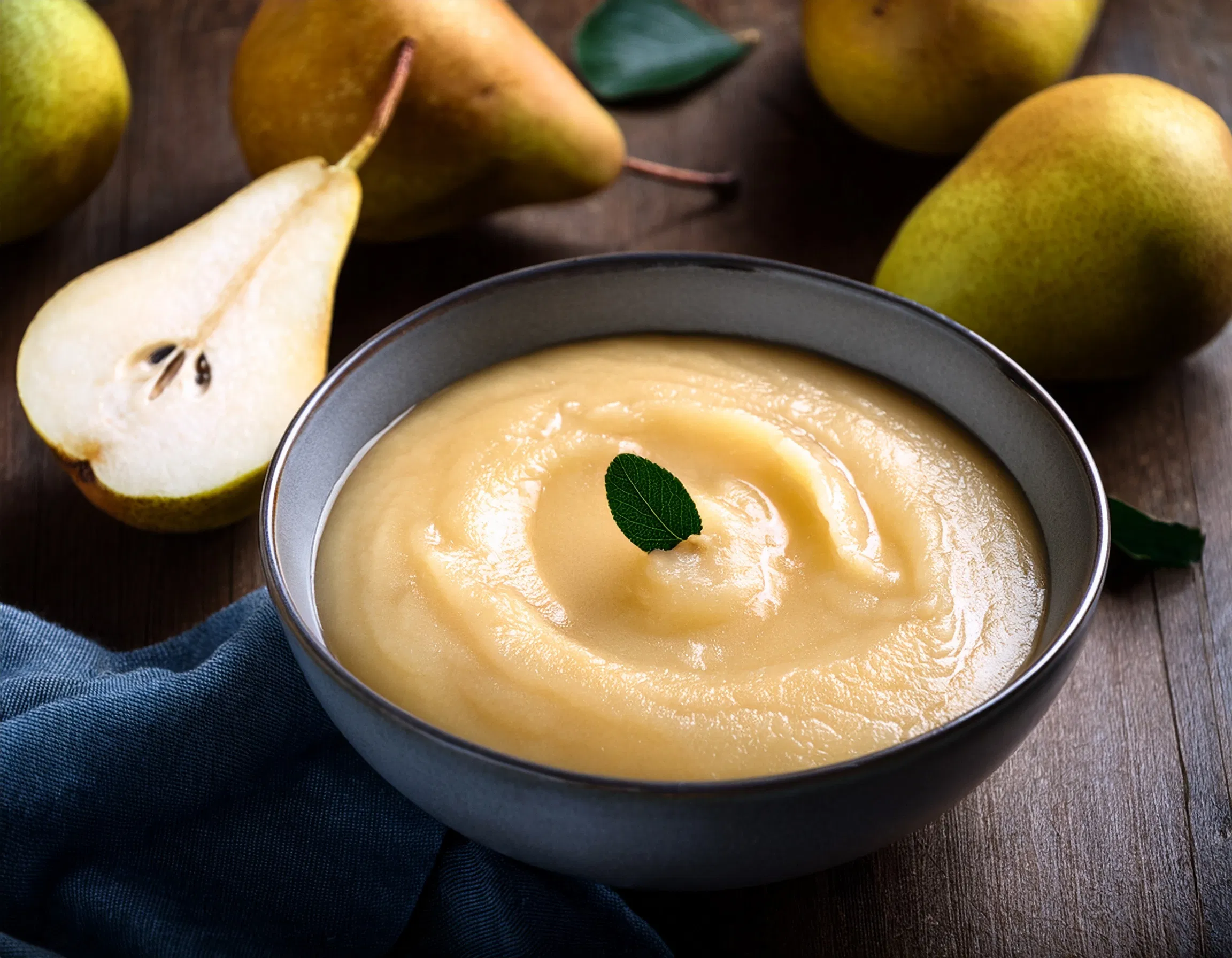
Pear Puree for Babies

Learn how to make pear purée for babies with an easy homemade recipe. Discover the benefits, age-appropriate textures, safe preparation, pear combinations, and storage tips.
 

article image

Dr. Vasantha Sree

Introducing solid foods is one of the most exciting milestones in your child’s first year of life. According to the World Health Organization (WHO), babies should begin eating safe and nutritionally adequate complementary foods starting at around six months of age. If you are looking for a gentle, naturally sweet, and highly nutritious starter baby food, preparing a pear puree baby blend is an excellent choice.

This classic pear puree for baby is easy to prepare and can be adapted as your baby's feeding skills develop. In this comprehensive guide, we will explore why pear baby food can be a useful complementary food, walk you through how to make pear puree for baby step-by-step, and share delicious pear puree for baby combinations to help your little one explore different flavours.
 

The Health Benefits: Is Pear Good for Babies?

When starting solids, many parents ask: is pear good for babies? The short answer is yes. Pears are nutritious, naturally sweet, and can be included as part of a varied complementary diet.
Some of the key pear puree for baby benefits include:

  • Gentle Digestion: Pears contain dietary fibre, particularly pectin, which can support normal digestive health.
  • Natural Constipation Relief: Pears contain sorbitol and water, which may help soften stools. Pear purée can be included as part of an age-appropriate diet when a baby has mild constipation.
  • Essential Nutrients: Pears provide nutrients such as vitamin C, potassium, and copper, which contribute to overall health and normal bodily functions.
  • Hydration: With their high water content, pears can contribute to overall fluid intake as your baby transitions to solid foods.


Using sweet, ripe pears for baby food provides a natural way to introduce sweetness without added sugars.
 

Introducing Pear Puree for a 6-Month-Old Baby

At around six months of age, most infants can begin complementary foods when they show appropriate developmental signs of readiness. Introducing a nutritious pear puree for 6 month baby can help them explore new tastes and textures as they develop their feeding skills.
Before introducing pear purée, look for signs such as good head and neck control, the ability to sit with support, an interest in food, and the ability to move food into the mouth and swallow it rather than consistently pushing it back out with the tongue.

Transitioning Textures

When your child is just starting out, texture is particularly important. Use the following progression as a general guide:
 

  • Stage 1 (Smooth): Initially, serve a silky-smooth pear puree baby smooth consistency. You can achieve this texture using a blender or food processor, with a splash of breast milk, prepared infant formula, or water if needed.
  • Stage 2 (Mashed): As your child's oral motor skills advance, you can transition from a completely smooth purée to a thicker pear mash baby food or mashed pear baby food.
  • Stage 3 (Chunky): Over time, as your baby becomes comfortable with more textured foods and develops appropriate feeding skills, you can move towards softer, more textured pear preparations.

Baby-Led Weaning (BLW) Alternative

For families practising baby-led weaning rather than spoon-feeding, you do not have to stick strictly to purées. You can offer soft pear slices in a baby-led weaning style. Using a highly ripe pear or lightly steaming a soft pear wedge can make it easier for your infant to grasp and self-feed.
Always ensure the pear is soft enough to mash easily between your fingers and supervise your baby closely while eating.
 

Raw vs. Steamed Pear Puree Baby Food: Which is Best?

When preparing homemade meals, you might wonder: can I give raw pear puree to my baby?
The answer depends on the ripeness of the fruit, your baby's developmental stage, and the texture of the finished food.

  • Raw Pear Puree: If you have an extremely soft, juicy, and fully ripe pear, you can make a quick ripe pear puree baby or ripe pear puree for baby without cooking it first. Simply peel, core, mash, or blend. Hard raw pear is not appropriate for a young baby because of its firm texture.
  • Steamed Pear Puree: For younger babies around six months old, preparing a steamed pear puree baby or a steamed pear puree for baby is a practical option. Cooking softens the pear and makes it easier to mash or blend into an age-appropriate consistency.

Cooking the pear softens its texture, making steamed pear baby food easier for a young baby to manage. It can also make the fruit easier to blend into a smooth consistency.
 

How to Prepare Pear Puree for Baby: A Simple Recipe

Making your own pear puree baby homemade meals is simple, cost-effective, and allows you to control the ingredients and consistency. Here is an easy pear puree recipe for baby food.

Ingredients and Equipment

  • 2 organic, ripe pears (Bartlett, Anjou, or Bosc work beautifully)
  • A splash of breast milk, infant formula, or water (for blending)
  • A vegetable peeler and sharp knife
  • A steamer basket and pot
  • A blender or food processor (for a homemade pear puree baby finish)


Step-by-Step Instructions

Follow these steps to prepare a smooth pear purée suitable for a baby who is developmentally ready for complementary foods:

  • Wash and Peel: Thoroughly wash the pears under cool running water. Peel the skin off completely with a vegetable peeler.
  • Core and Dice: Cut the pears in half, remove the seeds and tough inner core, and chop the flesh into small, uniform chunks.
  • Steam: Place the pear chunks into your steamer basket over boiling water. Cover and steam for approximately 8 to 10 minutes, or until the chunks are easily pierced with a fork.
  • Blend or Mash: Transfer the warm pear pieces into your blender. Blend until you achieve a smooth consistency. If the mixture is too thick, add a small amount of breast milk, prepared infant formula, or water to adjust the consistency.
  • Cool and Serve: Allow the purée to cool to a safe temperature before serving it to your baby.

Here is a quick comparison of suitable pear varieties:

Pear Variety

Texture Profile

Best For

Bartlett

Extremely sweet, soft, and juicy

Smooth raw purées and quick mashing

Anjou

Mildly sweet, firm yet smooth

Steaming, baking, and baby-led weaning

Bosc

Sweet-spicy flavour, crisp

Steaming, roasting, and blending


Creative Pear Puree Combinations

Once your little one has tried plain pear and shown no signs of an allergic reaction, you can start experimenting with flavour pairings. Pears have a mild, sweet taste that complements many other fruits, vegetables, and grains.
If you are wondering what you can mix with pear puree for baby meals, here are some excellent, nutrient-dense pear combination for baby food ideas:

1. Pear and Banana Puree

A classic pear and banana puree for baby or pear banana puree baby mix is a simple combination. Bananas add a creamy texture and extra potassium, while pears add water and fibre.

2. Apple and Pear (Pear Fruit Puree for Baby)

Combine equal parts steamed apples and steamed pears. This comforting pear fruit puree for baby provides a naturally sweet flavour and nutrients such as vitamin C.

3. Creamy Pear and Avocado

Mix avocado with your pear purée. This pear puree combinations for baby meal provides healthy monounsaturated fats as part of a balanced diet.

4. Oatmeal Pear Mash

Stir your finished pear purée into warm, iron-fortified baby oatmeal. This pear combinations for baby food option adds natural sweetness without refined sugar, while an iron-fortified infant cereal can contribute iron to the meal.

Summary of Flavor Mixes

Here are some simple combinations to help you introduce greater variety:

  • Sweet Fruits: Apple, banana, peach, plum, or blueberry.
  • Mild Vegetables: Sweet potato, butternut squash, courgette, or spinach.
  • Healthy Fats & Proteins: Plain whole-milk Greek yoghurt, avocado, or oatmeal.

Using these diverse pear combination baby food ideas can help your infant become familiar with different tastes and textures as complementary feeding progresses.
 

Storing and Freezing Homemade Pear Baby Food

Preparing baby food in batches saves time and energy. Fortunately, pear purée can be stored safely when handled and stored appropriately.
Here are some useful storage tips to help maintain the quality and safety of homemade pear purée:

  • In the Refrigerator: Keep fresh pear purée in a clean, covered container and refrigerate promptly. Use homemade baby food within 1–2 days for best safety and quality.
  • In the Freezer: Spoon the purée into clean silicone ice cube trays or suitable freezer containers and freeze. Once frozen, transfer the portions to a labelled, freezer-safe
  • bag or container. Follow appropriate freezer-storage guidance for homemade baby food.
  • Thawing: Thaw frozen purée safely in the refrigerator or using an appropriate reheating method. Stir thoroughly and check the temperature before feeding your child.
  • Discard Leftovers: If your baby has eaten directly from a bowl or spoon, discard any remaining portion rather than returning it to storage.
     

FAQS

Can pear puree help with my baby's constipation?

Pears contain water, fibre, and sorbitol, which may help soften stools. Pear purée can therefore be included as part of an age-appropriate diet when a baby has mild constipation. If constipation is persistent, severe, or accompanied by other concerning symptoms, speak with your paediatrician.

Do I need to peel pears before making baby food?

Peeling pears is useful when preparing smooth purée for younger babies because it removes the tougher skin and makes it easier to achieve a smooth consistency. As your baby develops and becomes comfortable with more textured foods, appropriately prepared pear with the skin may be introduced if it is soft enough to manage safely.

Which pear variety is best for making baby food?

Bartlett, Anjou, and Bosc pears can all be used. Bartlett pears are particularly soft and sweet when ripe, while Anjou and Bosc pears are firmer and can work well when steamed.

Can I freeze pear puree made with breast milk or formula?

It is simpler to freeze plain pear purée and add breast milk or prepared infant formula immediately before serving. If you use breast milk or formula in the purée, follow the appropriate storage and freezing guidance for that milk or formula.

How do I know if my baby is allergic to pears?

Pears are not among the major food allergens commonly highlighted in infant-feeding guidance, but an allergic reaction is still possible. When introducing pears for the first time, offering it without other new foods can make it easier to identify a possible reaction. Watch for symptoms such as hives, swelling, vomiting, or breathing difficulties. Seek emergency medical care if your baby develops difficulty breathing or significant swelling.
Apollo 247 Floating Action Button