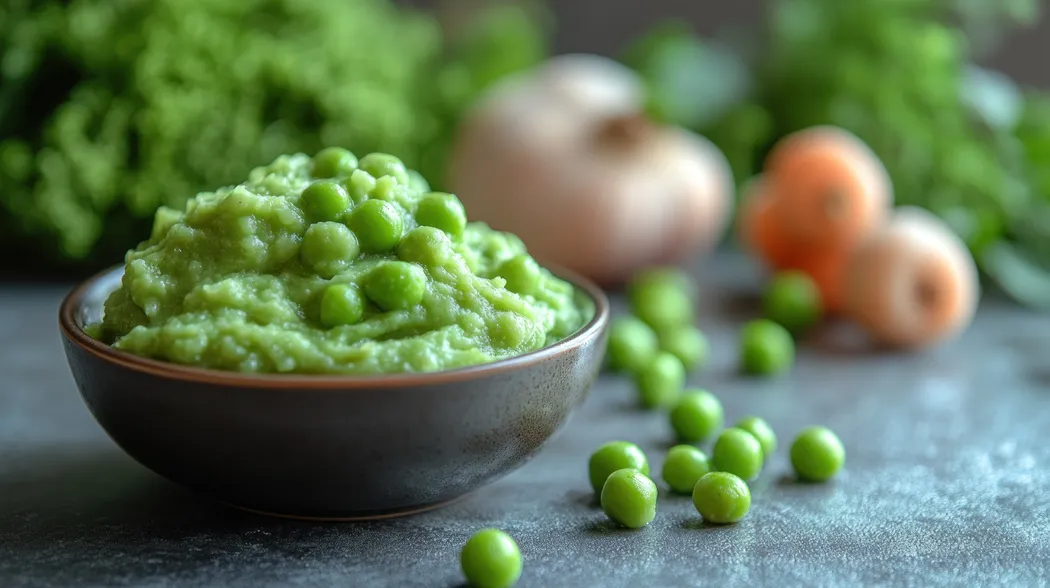
Peas for Babies: Easy Peas Puree for Baby Recipe & Guide
Discover how to make a nutritious green pea puree for a baby. Learn benefits, recipes, combinations, and tips for using fresh or frozen peas safely.
Dr.Ezhilrasan
Starting your little one on solid foods is an exciting milestone for every parent. It is a time of curiosity, exploration, and building the foundation for a lifetime of healthy eating habits. When introducing complementary foods alongside breast milk or formula, finding ingredients that are highly nutritious, easy to digest, and gentle on tiny tummies is key.
Among the best first vegetables you can offer, green peas stand out as an exceptional choice. Naturally sweet, vibrant in colour, and packed with vital nutrients, a simple peas puree for baby is one of the best first foods you can introduce around six months of age.
You might wonder, is peas good for babies? The short answer is a resounding yes! In this comprehensive guide, we will explore why green peas are an ideal choice, the health benefits they offer, how to safely prepare them, and delicious ways to introduce this vibrant green veggie to your growing infant.
Amazing Peas Puree for Baby Benefits
When introducing solids, you want to ensure your baby receives a dense concentration of vitamins and minerals. Let’s dive into the peas puree for baby benefits.
Firstly, is green peas good for babies?
Yes, they are highly nutritious and offer several developmental advantages:
Rich in Plant-Based Protein: Unlike many other vegetables, green peas contain a notable amount of protein, which supports rapid cellular growth and muscle development.
High in Dietary Fibre: Fibre is essential for maintaining healthy digestion. It helps prevent constipation, a common issue when infants transition from an all-liquid diet to solid foods.
Loaded with Essential Vitamins: Peas are a fantastic source of Vitamin A (which supports healthy vision), Vitamin C (which strengthens the immune system and enhances iron absorption), and Vitamin K (which is vital for bone health and proper blood clotting).
Packed with Minerals: Green peas provide essential minerals like iron, calcium, magnesium, and potassium, which are crucial for oxygen transport and bone development.
Antioxidant Support: Peas contain phytonutrients and antioxidants that help protect cells from damage and support overall cellular health.
Furthermore, the naturally sweet flavour of peas makes them highly palatable to babies, helping them transition smoothly to green vegetables without the resistance often associated with bitter greens.
When to Introduce Peas to Your Little One
According to the World Health Organization (WHO) and the Centers for Disease Control and Prevention (CDC), it is recommended to introduce complementary solid foods around 6 months of age. At this stage, your baby’s iron stores begin to deplete, and breast milk or formula alone is no longer sufficient to meet all their nutritional needs.
A smooth green peas puree for 6 month baby is a classic first food because of its gentle profile. Signs that your baby is ready for solid foods include:
Good head and neck control.
The ability to sit upright with minimal support.
The disappearance of the tongue-thrust reflex (which automatically pushes food out of their mouth).
Showing curiosity about what you are eating.
This gentle pea baby food is easy on the digestive tract and serves as a wonderful introduction to the texture of pureed vegetables.
As a busy parent, convenience is highly valuable. When preparing homemade peas baby food, you might ask: Can I use frozen peas for baby food?
Absolutely! In fact, you can confidently tell other parents, "Can I give frozen peas to my baby? Yes, because they are flash-frozen at peak freshness."
Frozen peas are harvested and frozen within hours, which locks in their nutritional value, sometimes even better than fresh peas that have spent days in transit to the grocery store. Just ensure you purchase frozen peas with no added salt, sugar, or preservatives.
How to Make Peas Puree for Baby
If you want to know how to make peas puree for baby, you'll be pleased to learn how simple it is. This easy peas recipe for baby requires minimal prep time and only a few basic kitchen tools.
Below is a classic, single-ingredient green peas recipe for baby that preserves nutritional value and ensures a silky texture.
Ingredients
1 cup of fresh shelled peas or high-quality frozen green peas (no added sodium)
1–2 tablespoons of breast milk, prepared infant formula, or the cooking liquid (to adjust consistency)
Step-by-Step Instructions
1. Rinse the Peas: If using fresh peas, shell them and rinse them thoroughly in cold water. If using frozen peas, place them in a colander and rinse with cool water to remove any frost.
2. Steam to Preserve Nutrients: When you prepare a fresh peas puree for baby, steaming is highly recommended over boiling. Steaming keeps water-soluble vitamins, such as Vitamin C and B-complex vitamins, inside the peas rather than leaching them into the cooking water. Place the peas in a steamer basket over boiling water, cover, and steam for about 5 to 7 minutes until they are bright green and tender enough to mash easily between two fingers.
3. Cool Slightly: Remove the peas from the heat and let them cool for a couple of minutes. Reserve some of the steaming water if you plan to use it for thinning.
4. Blend to a Smooth Puree: Transfer the steamed peas to a blender or food processor. Blend on high until the mixture is as smooth as possible.
5. Adjust the Consistency: Add breast milk, formula, or the reserved cooking water one tablespoon at a time to reach a runny, completely smooth consistency. Young babies swallowing solids for the first time require a very thin, liquid-like puree.
6. Strain (Optional): Pea skins can sometimes remain slightly textured even after blending. For very young babies or those sensitive to textures, you can press the puree through a fine-mesh strainer to remove any remaining skin fragments.
Using these steps yields a vibrant, smooth peas puree baby food that is ready for your baby's high chair. Let's make a delicious pea puree for baby today!
Nutrient
Benefit
Rich in Vitamin A
Supports healthy eye development
High in Vitamin C
Boosts immune function
Plant-Based Protein
Aids cellular and muscle growth
Dietary Fibre
Helps Prevents constipation
Transitioning Textures: From Purees to Mashed Peas
As your baby grows and develops better oral motor skills, they will transition away from a silky pea puree baby texture to a slightly chunkier mashed peas baby food.
This transitional green peas puree baby recipe can be adjusted easily by reducing the blending time or skipping the blender entirely. By adjusting how long you blend, you can customize your peas puree baby texture to match your baby's feeding stage:
Stage 1 (6 Months): Silky, thin, strained puree.
Stage 2 (7-8 Months): Thicker, unstrained puree with a slight texture.
Stage 3 (8-10 Months): Soft, coarsely mashed green peas baby food. This coarser texture helps babies practice moving food around their mouths with their tongues and develops their chewing reflex.
Stage 4 (10-12 Months): Whole, thoroughly steamed peas can be offered as a finger food, provided they are soft enough to be squashed easily between your thumb and forefinger to prevent choking.
What to Mix With Pea Puree for Baby
Once your child tolerates plain peas, you can explore what to mix with peas for baby food to expand their palate and introduce new flavour combinations. Creating multi-ingredient green peas baby food dishes is a great way to introduce variety and ensure a balanced intake of nutrients.
If you are looking for ideas on what to mix with pea puree for baby, there are many nutritious options that pair beautifully with the natural sweetness of peas:
Root Vegetables: You can blend this classic green peas puree for baby with other root veggies like sweet potato, carrots, or butternut squash.
Fruits: Peas pair surprisingly well with sweet, smooth fruits. Try mixing pea puree with unsweetened applesauce, pear puree, or mashed ripe bananas.
Herbs and Spices: Introduce mild herbs early! A tiny pinch of fresh mint, dill, or basil blended into the peas adds a wonderful depth of flavour.
Healthy Fats: Mix in a teaspoon of olive oil, avocado oil, or unsalted butter. Healthy fats are crucial for your baby's rapid brain development.
Proteins: For older babies, blend cooked chicken, turkey, or tofu directly into the green peas to create a hearty, protein-rich meal.
Storage and Meal Prep Tips
Making homemade baby food in batches saves time and money. Here is how to safely store your green peas puree:
Refrigeration: Store fresh pea puree in an airtight, BPA-free container in the refrigerator for up to 48 hours.
Freezing: Spoon the puree into clean silicone ice cube trays and freeze until solid. Once frozen, transfer the cubes into a freezer-safe bag labeled with the date. Frozen pea puree keeps well for up to 3 months.
Thawing: Thaw frozen cubes in the refrigerator overnight, or warm them gently in a heat-safe bowl set inside a warm water bath. Always stir thoroughly and test the temperature on the inside of your wrist before feeding your baby.
Conclusion
Introducing green peas can be a nutritious way to help your baby explore new flavours, textures, and foods from around six months, when they are developmentally ready for solid foods. Whether you choose a smooth peas puree, a vegetable blend, or mashed peas as your baby progresses to thicker textures, peas provide plant-based protein, fibre, vitamins, and minerals that can support your baby’s growth and development. By cooking peas thoroughly, serving them in an age-appropriate texture, avoiding added salt and sugar, and storing homemade baby food safely, you can make peas an enjoyable part of your baby’s feeding journey. Always follow your baby’s readiness and feeding cues, and consult your paediatrician if you have concerns about introducing peas or other new foods.
FAQS
Can peas cause gas in babies?
Yes, because peas are legumes and are rich in fibre and complex carbohydrates, they can occasionally cause mild gas in some babies, especially when first introduced. To minimize this, introduce peas in small quantities, ensure they are thoroughly cooked, and keep your baby upright for 15–20 minutes after feeding.
Are peas a common allergen for babies?
No, peas are not among the top nine common food allergens (such as milk, eggs, peanuts, tree nuts, wheat, soy, fish, shellfish, and sesame). However, a baby can theoretically be allergic to any food. Always introduce new foods one at a time, waiting 3 to 5 days before introducing another new ingredient to monitor for any adverse reactions, such as skin rashes, vomiting, or diarrhoea.
Do I need to peel the skins off peas before pureeing?
You do not need to peel individual peas, which is incredibly time-consuming. Instead, steam the peas thoroughly, blend them on high speed, and then press the puree through a fine-mesh strainer to easily remove any tough skin fragments.
Can I feed my baby raw peas?
No, raw peas are a significant choking hazard and are far too tough for babies to digest. Peas must always be thoroughly cooked (preferably steamed) and pureed or mashed until they are soft and safe for your baby to consume.
How long does homemade green peas puree last in the freezer?
When stored in an airtight, freezer-safe container or bag, homemade green peas puree can be safely frozen for up to 3 months. Always label your storage bags with the preparation date. Parents can easily incorporate peas puree for baby into their diet using these convenient freezing methods.