logo
0

Pineapple for Babies: Benefits, Safety and Feeding Guide

Learn when babies can eat pineapple, its nutritional benefits, safe serving methods, age-by-age feeding guidance, preparation tips, and potential risks.

article image

Dr. Nallapu Siri

Introducing solid baby food to your little one is an exciting milestone full of fun reactions, messy faces, and brand-new flavours. As you start exploring the colourful world of fruits, you might find yourself eyeing tropical options. Pineapple is sweet, juicy, and packed with nutrients, but its naturally acidic nature and fibrous texture can cause parents to hesitate. You might wonder: Is pineapple good for babies?

The short answer is yes, but there are some important age guidelines, safety precautions, and preparation steps you should keep in mind. In this comprehensive guide, we will break down everything you need to know about serving this delicious tropical fruit to your baby safely.

Is Pineapple Good for Babies? The Health Benefits

When you are looking to diversify your baby’s palate, you want to ensure the foods you offer are nutrient-dense. If you are asking yourself if pineapple good for babies is a nutritional reality, you will be happy to know that pineapple provides several important vitamins and minerals.

Here are some of the key health benefits that pineapple offers to growing babies:

  • Immune System Support: Pineapple is rich in vitamin C, which supports normal immune function and healthy skin.
  • Enhanced Iron Absorption: Vitamin C also helps your baby’s body absorb non-haem iron, the type of iron found in plant-based foods such as spinach, lentils, and fortified infant cereals.
  • Healthy Digestion: Pineapple contains dietary fibre, which supports normal bowel function as part of a varied diet. It also contains an enzyme called bromelain.
  • Hydration: With its high water content, pineapple contributes to fluid intake as part of a varied diet.
  • Bone Health: Pineapple contains manganese, a trace mineral that contributes to normal bone development and metabolic function.

So, is pineapple good for babies? Yes. When introduced at an appropriate stage and prepared correctly, it can be a nutritious addition to their diet.

When Can I Introduce Pineapple? An Age-by-Age Guide

The World Health Organization (WHO) recommends introducing complementary foods alongside breast milk or formula at around 6 months of age, when babies show signs of developmental readiness. Because pineapple is acidic and fibrous, preparing it appropriately is particularly important for younger babies.

Is Pineapple Good for Babies at 6 Months?

Many parents ask, is pineapple good for babies at 6 months? Babies can generally begin complementary foods at around this age when they are developmentally ready.

If you want to introduce pineapple at this stage, cook the fruit until soft and blend it into a smooth pineapple puree for baby meals. The cooked, smooth texture may be easier for a young baby to manage.

Can Babies Eat Pineapple at 7 Months?

By this stage, your baby’s feeding skills are developing. So, can babies eat pineapple at 7 months? Yes. A smooth pineapple puree baby mixture can be offered when your baby is ready for it.

To help ease the acidity and tartness, try blending cooked pineapple with milder foods such as bananas, pears, or avocados, provided these foods have already been introduced safely.

Can Babies Eat Pineapple at 8 Months?

As your baby reaches the 8-month mark, they are likely beginning to develop a pincer grasp and showing interest in different textures. Can babies eat pineapple at 8 months? Yes, when it is prepared appropriately.

At this stage, you can transition from ultra-smooth purees to slightly textured mashed pineapple. You can also mix finely minced cooked pineapple into oatmeal, unsweetened yoghurt, or infant cereal.

Safe Preparation: How to Make Pineapple Safe for Babies

If you are wondering, "Is pineapple safe for babies?", the answer depends partly on how it is prepared. Raw pineapple can be tough, fibrous, and slippery, making the texture difficult for young infants to manage safely.
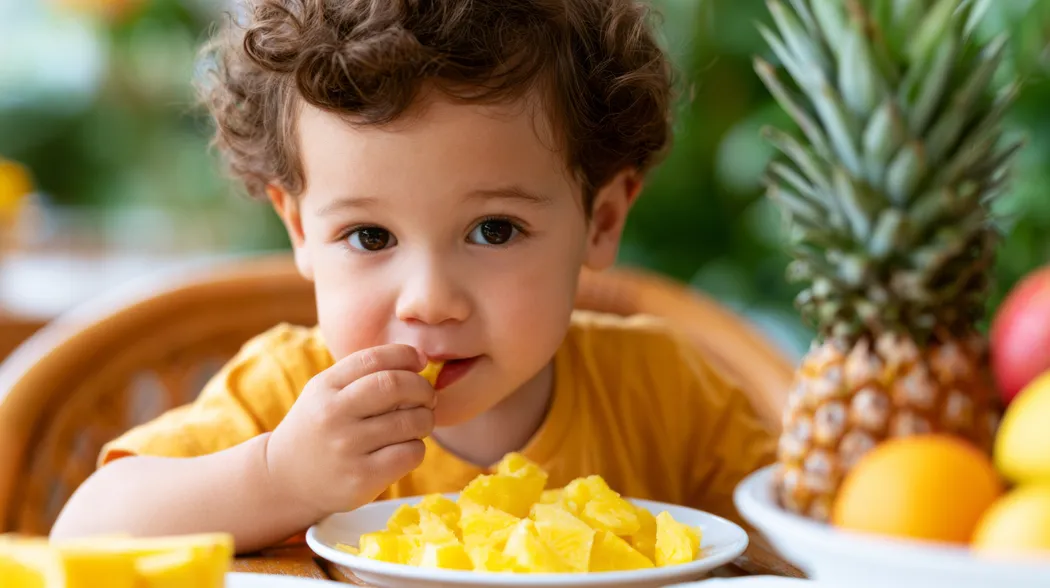
To ensure a safe dining experience, follow these preparation guidelines:

1. Choose Ripe Pineapple

Unripe pineapple can be more acidic and unpleasant to eat. Choose a pineapple that is fragrant at the stem end and slightly soft to the touch. Colour alone is not a reliable indicator of ripeness.

2. Remove the Core Completely

The centre core of a pineapple is woody, hard, and fibrous. Always cut away and discard the core, as babies may have difficulty chewing it safely.

3. Cook the Pineapple for Younger Babies

Steaming or gently cooking pineapple chunks in a little water before mashing or pureeing them softens the fruit and can make it easier for a young baby to manage.

4. Serve the Right Textures

  • 6 to 8 months: Serve as a smooth puree or mashed infant food.
  • 9 to 10 months: You can offer finely minced, cooked pineapple that your baby can easily manage.
  • 11+ months: You can begin offering tiny, soft, bite-sized pieces of ripe pineapple when your baby is developmentally ready.

By following these simple rules, you can help your baby eat pineapple safely and enjoyably.

Pineapple for Older Babies and Toddlers

As your baby transitions into late infancy and toddlerhood, their oral motor skills and feeding abilities mature rapidly.

Can I Give Pineapple to My 11-Month-Old Baby?

If you are asking, "Can I give pineapple to my 11 month old baby?", the answer is yes. At 11 months, many babies can handle small, thin, bite-sized pieces of very ripe pineapple. Ensure the pieces are soft and appropriately sized so they do not pose a choking risk.

Can I Give Pineapple to My 1-Year-Old Baby?

Reaching the one-year mark is a major milestone. Parents often ask: "Can I give pineapple to my 1 year old baby?" and "Can a 1-year-old baby eat pineapple?"

Yes. A 1 year baby can eat pineapple in small, thin wedges or soft, bite-sized pieces. At this age, your child may be able to manage fresh, ripe pineapple when it is prepared appropriately for their feeding skills.

Can Toddlers Eat Pineapple?

Once your baby officially becomes a toddler, you might wonder, can toddlers eat pineapple regularly? Yes. Pineapple can be a naturally sweet alternative to processed snacks.

Toddlers can enjoy appropriately prepared pineapple pieces, pineapple chunks in fruit salads, or pineapple blended into smoothies. It is also a fruit with high water content, making it a refreshing addition to a varied diet.

Potential Risks and Precautions

While pineapple is nutritious, there are a few precautions to keep in mind before adding it to your baby's diet.

  • Acidic Rashes: The natural acids in pineapple can sometimes cause mild skin irritation around the mouth where the fruit touches the skin. This is usually local irritation rather than an allergic reaction. Keeping the skin around the mouth clean and dry can help reduce irritation.
  • Diaper Rash: Some babies may experience skin irritation around the nappy area after eating acidic foods. If you notice irritation, temporarily reduce the amount you serve and monitor your baby.
  • Choking Hazard: Never give a baby large, round chunks of hard, raw pineapple. Always cut the fruit into age-appropriate sizes or offer a soft, cooked form.

Conclusion

In summary, is pineapple good for babies? Yes, it can be. When introduced at an appropriate stage and prepared safely, pineapple is a delicious, vitamin-rich fruit that can contribute to your baby's varied diet.

Whether you start with a gentle, cooked pineapple puree baby dish around 6 to 7 months, or offer soft, appropriately sized pieces to an older baby or toddler, this tropical fruit can be an enjoyable addition to complementary feeding. As always, consult your paediatrician if you have specific concerns about introducing new foods to your child’s diet.

FAQS

Can I give pineapple to my baby if they have sensitive skin?

Yes, but you should take a few precautions. Because pineapple is acidic, it can irritate sensitive skin upon contact. Try serving it cooked and blending it with mild foods such as yoghurt if these foods have already been introduced. Keeping the skin around your baby's mouth clean and dry can also help reduce irritation.

Can babies eat pineapple from a can?

While convenient, canned pineapple is often packed in sugary syrup or may contain added ingredients. If you want to use canned pineapple, choose a product packed in 100% natural fruit juice or water with no added sugar. Rinse the pieces thoroughly before serving. Fresh, ripe pineapple remains a simple option when available.

How can I tell if my baby is allergic to pineapple?

Pineapple is not considered one of the major common food allergens, but an allergic reaction is possible with any food. When introducing pineapple for the first time, offer it on its own so you can more easily identify a possible reaction. Watch for signs such as hives, swelling of the lips or tongue, vomiting, diarrhoea, or wheezing. If your baby has difficulty breathing or develops significant swelling, seek emergency medical care.

How do I store homemade pineapple puree?

You can store freshly made puree in a clean, airtight container in the refrigerator and use it promptly. For longer storage, spoon the puree into clean silicone ice cube trays, freeze them solid, and then transfer the cubes to a freezer-safe bag. Thaw frozen portions safely in the refrigerator before serving.

Does cooking pineapple ruin its nutrients?

Cooking pineapple can reduce some heat-sensitive vitamin C. However, cooking also makes the fruit softer and easier for younger babies to manage. For young infants, appropriately preparing the texture is an important part of safe feeding.

Apollo 247 Floating Action Button