logo
0

Pomegranate for Babies: Benefits, Safety and Feeding Guide

Learn when babies can eat pomegranate, its nutritional benefits, safe preparation methods, age-by-age feeding guidance, juice recommendations, and choking precautions.

article image

Dr. Mayank

Introducing your little one to the wonderful world of baby food is an exciting milestone. As a parent, you want to offer a wide variety of nutrient-rich fruits and vegetables to support your baby’s growing body. While scanning the produce aisle, those vibrant, ruby-red pomegranate seeds might catch your eye. You might naturally wonder: Can I give pomegranate to my baby?

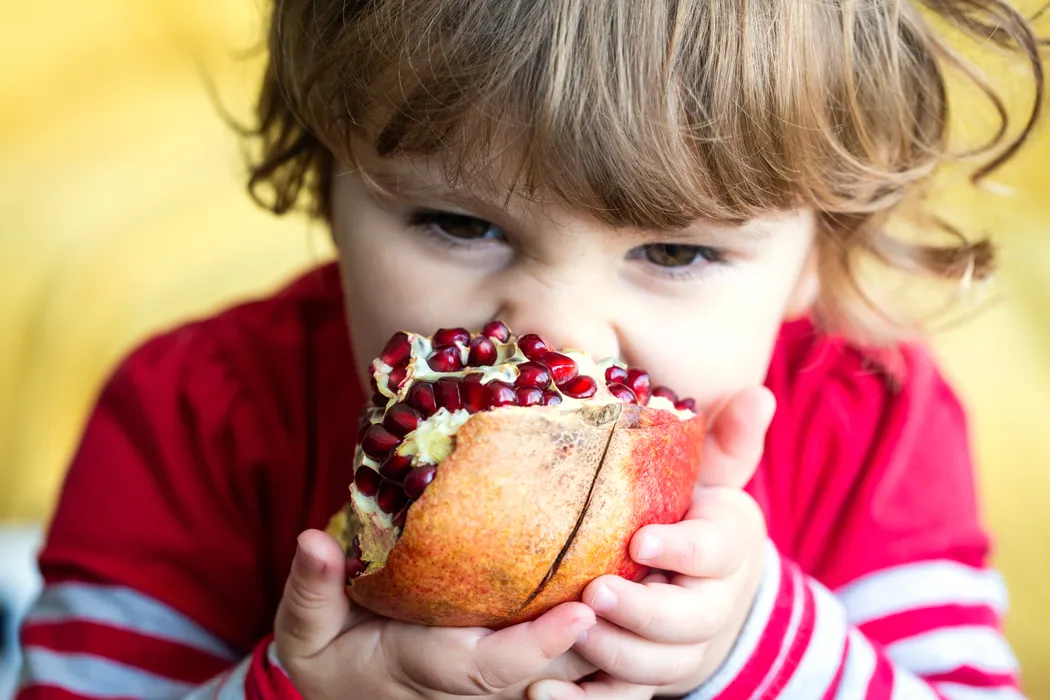
Pomegranates are widely celebrated as a nutritional powerhouse for adults, packed with antioxidants, vitamins, and minerals. However, when it comes to infants, their unique physical structure requires special attention. Whole pomegranate seeds, known as arils, are hard, round, and slippery, making them a significant choking hazard for young children.

The short answer is yes, you can introduce pomegranate to your baby—but you must prepare it in a safe, age-appropriate way. This comprehensive guide will cover everything you need to know about feeding pomegranate to your baby, including safety guidelines, nutritional benefits, and easy preparation tips.

Is Pomegranate Good for Babies?

Before introducing any new food, it is helpful to understand its nutritional value. Is pomegranate good for babies? Yes, when prepared safely, pomegranate can be a nutritious addition to a baby's diet. It offers a range of nutrients that can support your baby's growth and development.

Here is a look at the nutritional benefits of pomegranates:

  • Packed with Antioxidants: Pomegranates are rich in polyphenols, including punicalagins. These compounds have antioxidant properties.
  • Immune System Support: Pomegranates contain vitamin C, which supports normal immune function and helps the body absorb iron from plant-based foods.
  • Healthy Blood Clotting: This fruit provides vitamin K, which is involved in normal blood clotting and bone health.
  • Heart and Muscle Function: Pomegranates contain potassium, an important mineral that supports normal muscle and nerve function.
  • Hydration: The juicy pulp surrounding the seeds has a high water content, contributing to fluid intake as part of a varied diet.

So, is pomegranate good for babies? Yes. When introduced at the right time and prepared correctly, it can be a nutritious addition to their diet.

When Can Babies Have Pomegranate?

Because of the physical structure of pomegranates, the age at which your baby can eat them depends largely on how the fruit is prepared.

Can I Give Pomegranate to My 6 Month Old Baby?

As you begin the journey of complementary feeding, you might ask: can i give pomegranate to my 6 month old baby?

At 6 months old, babies are just learning how to swallow solid foods and do not yet have the chewing skills required to break down hard items. You should not give whole pomegranate seeds to a 6-month-old baby because they can pose a choking hazard.

However, you can introduce the flavour and nutrients of pomegranate to a 6-month-old by offering a completely smooth, strained pomegranate puree. Always ensure there are no hard seed fragments left in the food.

Can 1 Year Old Baby Eat Pomegranate?

As babies transition into toddlerhood, their chewing abilities improve significantly. But can 1 year old baby eat pomegranate seeds whole?

Whole, raw pomegranate seeds can still be difficult for young toddlers to manage safely. For a 1-year-old, the safer approach is to serve pomegranate in a crushed, pureed, or thoroughly blended form. You can also mash the arils and strain out the hard seed fragments, leaving the soft pulp and juice to mix into their meals.

Pomegranate Juice for Babies: Safety and Guidelines

Juice is often an easy way to extract the flavour of pomegranates, but there are important guidelines regarding juice consumption for infants.

Can I Give Pomegranate Juice to My Baby?

If you are wondering, can i give pomegranate juice to my baby, it is important to consider age. Fruit juice is generally not recommended for babies under 12 months unless specifically advised by a paediatrician.

For babies under one year, breast milk or infant formula should remain their primary source of hydration and nutrition. Introducing juice too early can displace more nutritious foods and drinks and may contribute to dental problems.

Once your baby reaches 12 months, if you choose to offer juice, keep the amount small and choose 100% pasteurised juice with no added sugar. Whole or pureed fruit is generally preferable because it provides dietary fibre.

Is Pomegranate Juice Good for Babies?

So, is pomegranate juice good for babies over the age of one? It can be offered occasionally in moderation, but whole or pureed fruit is generally a better choice.

Juicing removes much of the beneficial dietary fibre found in the fruit's pulp. If you do choose to offer juice, always ensure that it is pasteurised. Unpasteurised juice can carry harmful bacteria.

How to Prepare Safe Pomegranate Baby Food

Making your own pomegranate baby food is a practical way to introduce this fruit safely. Here are a few simple preparation methods:

1. Strained Pomegranate and Apple Puree (6+ Months)

Mixing pomegranate with a naturally sweet, smooth base like applesauce is a way to balance the tart flavour of the pomegranate.

  • Deseed the Pomegranate: Remove the arils from a fresh pomegranate.
  • Release the Juice: Place the arils into a blender and pulse gently to release the juice. Avoid blending so vigorously that the hard inner seeds are pulverised.
  • Strain: Pour the blended mixture through a fine-mesh sieve or cheesecloth, pressing down with a spoon to extract the liquid while keeping the hard seed fragments out.
  • Prepare the Apple: Peel, core, and steam one sweet apple until soft.
  • Blend: Blend the steamed apple with 1 to 2 tablespoons of freshly strained pomegranate juice until completely smooth. Let it cool before serving.

2. Pomegranate Oatmeal Swirl (8+ Months)

  • Prepare the Oatmeal: Prepare your baby’s usual warm oatmeal or infant cereal using breast milk, formula, or water.
  • Add Pomegranate: Swirl in 1 teaspoon of freshly squeezed, strained pomegranate juice.
  • Mix Thoroughly: Stir thoroughly to ensure the tart flavour is evenly distributed.

Safety Precautions and Choking Hazards

When considering the question, can i give pomegranate to my baby, safety must always come first. Keep these essential tips in mind:

  • Avoid the Choking Hazard: Do not give whole pomegranate seeds to young infants or toddlers. The hard, round, slippery seeds can be difficult to manage safely.
  • Watch for Allergic Reactions: Pomegranate allergies are uncommon, but reactions can occur. When introducing pomegranate for the first time, offer a small amount and monitor your baby for signs of a reaction, such as hives, swelling, vomiting, or wheezing. There is no universal requirement to follow a strict three-day waiting period for every new food.
  • Mind the Acidity: Pomegranates are moderately acidic. In some babies with sensitive skin or digestion, acidic fruits may cause irritation around the mouth or nappy area. If you notice persistent irritation or other concerning symptoms, pause the food and consult your paediatrician.
  • Prevent Staining: Pomegranate juice can stain clothing and high chairs easily. Consider using a silicone bib and keeping a damp cloth nearby during mealtime.

FAQS

Can I give pomegranate to my baby if they don't have teeth yet?

Yes, but only in a completely smooth, strained puree form. Teeth are not required to consume smooth purees. However, whole pomegranate seeds should not be given to a young baby, even if some teeth have erupted.

How do I choose a good pomegranate for baby food?

Look for pomegranates that feel heavy for their size, which can indicate that they contain plenty of juice. The skin should be firm and free from soft spots, mould, or deep cracks.

Can pomegranate help relieve my baby's constipation?

Whole pomegranate pulp contains dietary fibre, which supports normal bowel function. However, pomegranate juice contains little to no fibre. If your baby is constipated, speak with your paediatrician about appropriate feeding and hydration options.

Is store-bought pomegranate juice safe for my baby?

For babies over 12 months, if you choose to offer juice, select 100% pasteurised juice without added sugars. Avoid juice cocktails or products containing added sugars or artificial sweeteners. Babies under 12 months generally should not be given fruit juice unless specifically advised by a paediatrician.

Can pomegranate juice cause diaper rash?

Pomegranate is acidic and may occasionally contribute to skin irritation in some babies. If you notice redness around the nappy area after your baby consumes pomegranate, reduce or pause the food and monitor the irritation. If it persists or becomes severe, consult your paediatrician.

Apollo 247 Floating Action Button