logo
0

Prune Puree for Babies: Recipe & Constipation Relief

Discover how to make prune puree baby food to relieve constipation naturally. Learn the top benefits, safe feeding tips, and quick recipes for your baby.

article image

Dr. Ezhilrasan

Introducing solid foods to your baby is an exciting milestone, but it often comes with a few surprises. As your little one’s digestive system matures and transitions from a liquid-only diet, temporary constipation can occur. If you are starting your little one on solid foods, you might be looking for a nutrient-dense, gentle baby food to keep things moving smoothly. Prune puree baby food is a classic, time-tested choice that paediatricians and parents have relied on for generations.

Prunes, which are simply dried plums, are naturally sweet, packed with essential vitamins, and known for their ability to support healthy digestion. In this comprehensive guide, we will explore why prune puree baby meals are so beneficial, how to safely introduce them to your infant, and how to whip up a fresh batch in your own kitchen.

The Health Benefits of Prune Puree for Baby

When you begin introducing solids, choosing nutrient-dense foods is key to supporting your baby’s rapid growth. Preparing prune puree for baby meals delivers a wide array of vital nutrients that support everything from bone development to immune health.
Here is a look at what makes this purple fruit a nutritional powerhouse:

  • High in Dietary Fibre: Prunes contain both soluble and insoluble fibre. Fibre supports normal bowel function and can help maintain softer stools.
  • Rich in Essential Vitamins: Prunes provide vitamin A, which supports healthy vision and immune function, and vitamin K, which is involved in normal blood clotting and bone health.
  • Packed with Minerals: Your baby will benefit from potassium, which supports normal heart and muscle function, as well as trace amounts of iron and magnesium.
  • Loaded with Antioxidants: Prunes contain polyphenols, which have antioxidant properties and help protect cells from oxidative damage.

The nutritional profile of prunes puree for baby health is truly impressive. It provides a natural, whole-food source of energy without any of the added sugars or preservatives found in many processed, shelf-stable infant snacks.

Relieving Discomfort: Prune Puree Baby Constipation Remedies

One of the most common reasons parents search for prune baby food is to help ease a baby's digestive discomfort. When infants transition to solids, their bowel movements can become infrequent, firm, or difficult to pass.

Using prune puree baby constipation solutions can help because prunes contain sorbitol and dietary fibre. Sorbitol can draw water into the bowel, while fibre supports normal bowel function.

Instead of turning to over-the-counter medications or invasive treatments, addressing mild constipation with appropriate dietary changes may be helpful. If your baby has persistent constipation, significant pain, vomiting, blood in the stool, or other concerning symptoms, consult a paediatrician.

When Can Babies Have Prunes?

According to the World Health Organization (WHO) and the Centers for Disease Control and Prevention (CDC), solid foods can generally be introduced to infants around 6 months of age when they show appropriate developmental readiness. At this stage, babies can begin moving beyond an exclusive breast milk or formula diet.

Is introducing prunes puree for baby 6 months and older safe? Yes. Prunes can be introduced when your baby is ready for complementary foods.

Signs Your Baby Is Ready for Solids

  • Sitting: They can sit up with little to no support.
  • Head and Neck Control: They have good head and neck control.
  • Interest in Food: They show interest in what you are eating.
  • Tongue-Thrust Reflex: They have lost the tongue-thrust reflex, which automatically pushes food out of their mouth.

Once your paediatrician gives you the green light for solids, incorporating prunes puree for baby 6 months of age is a way to expand your baby's palate with a sweet, earthy flavour.

How to Make Prune Puree for Baby: A Step-by-Step Guide

Making homemade prune puree baby food is simple, cost-effective, and ensures that your child is getting fresh ingredients without unnecessary additives.

If you want to learn how to make prune puree for baby mixtures at home, follow this easy, step-by-step recipe.

Ingredients

  • 1 cup of high-quality, pitted dried prunes
  • 1 to 2 cups of filtered water for boiling or soaking
  • Optional: Liquid for blending, such as breast milk, prepared infant formula, or the leftover cooking water

Instructions

Step 1: Rinse and Inspect

Even though you bought pitted prunes, always check each one to ensure no fragments of pits remain. Rinse the prunes under clean, running water.

Step 2: Soften the Fruit

To blend the prunes into a smooth consistency, you must rehydrate them. You can do this in one of two ways:

  • The Simmer Method: Place the prunes in a small saucepan and cover them with water. Bring to a boil, then reduce the heat to low. Let them simmer for about 10 to 15 minutes, or until they are plump and tender.
  • The Soaking Method: If you prefer not to use heat, place the prunes in a bowl of boiling water, cover, and let them sit for 30 to 45 minutes until fully rehydrated.

Step 3: Blend to Perfection

Transfer the softened prunes to a food processor or high-speed blender. Add a small amount of the cooking liquid, breast milk, or formula. Blend until you achieve a smooth, uniform consistency. Add more liquid as needed to reach the desired thickness suitable for your baby’s stage of development.

Step 4: Cool and Serve

Allow the mixture to cool completely to an appropriate temperature before serving it to your baby.

Texture Variation: Soaked Prunes Mashed Baby Food

As your child grows and masters thicker textures, you can transition away from ultra-smooth purees. While some parents prefer smooth purees, soaked prunes mashed baby food is suitable for older babies. For infants around 8 months or older who are developmentally ready for thicker textures, simply take the rehydrated prunes and mash them thoroughly with a fork. This leaves a slight texture that encourages chewing and helps transition your baby to table foods.

How to Store and Serve Prunes Baby Food Safely

When you make prune puree baby food at home, you do not have the preservatives found in some commercial products. Therefore, proper food storage is essential to keep the food fresh and reduce the risk of harmful bacteria.
Refrigeration

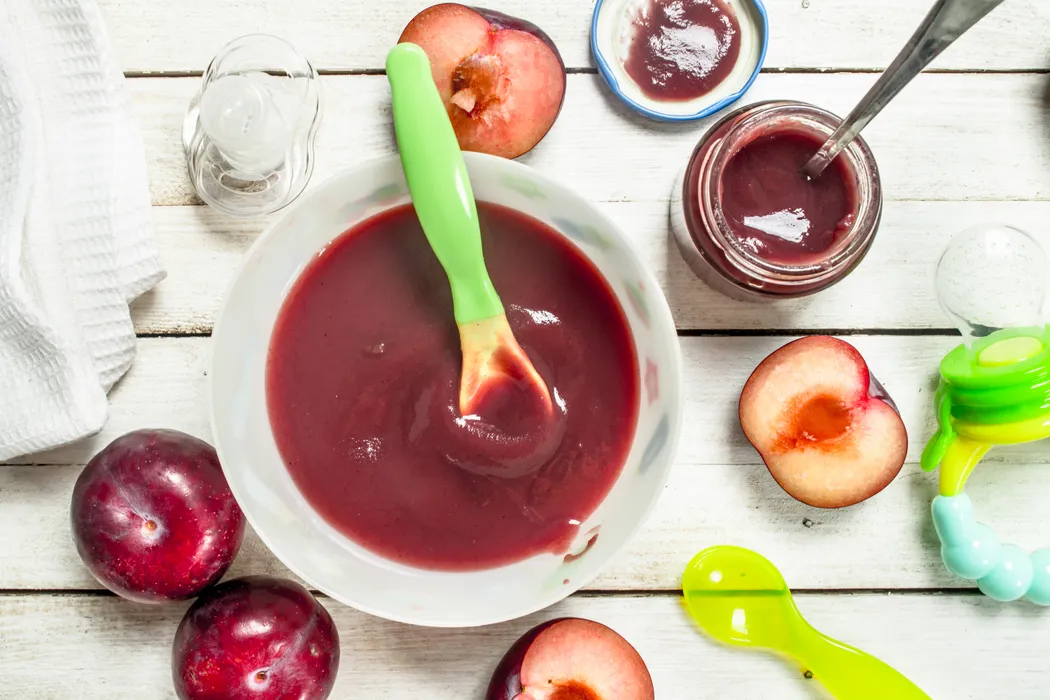
Store fresh prune puree in a clean, airtight container in the refrigerator and use it promptly.

Freezing

Because a single batch of prune puree can make several servings, freezing is a convenient option:

  1. Spoon the puree into clean silicone ice cube trays.
  2. Freeze the trays solid.
  3. Transfer the frozen prune cubes to a labelled, freezer-safe bag.
  4. Thaw a single portion overnight in the refrigerator before serving. Never refreeze thawed baby food.

Safe Serving Tips

  • Avoid "Double-Dipping": Do not feed your baby directly from the main storage container. Saliva from their spoon can introduce bacteria into the food. Always scoop a small portion into a separate serving bowl and discard any leftovers from that bowl.
  • Watch the Serving Size: Because prunes can loosen stools, start with a small amount and adjust according to your baby's response.
  • Mix and Match: Prune puree has a rich, deep flavour that pairs well with other simple purees. Try mixing it with apple puree, pear puree, oatmeal, or plain, unsweetened whole-milk yoghurt.

Potential Side Effects and Tips for Parents

While prunes are highly beneficial, too much can cause mild digestive distress. Because of their fibre and sorbitol content, feeding your baby too much prune puree can lead to diarrhoea, abdominal gas, and bloating.

If you notice your baby’s stool becoming too loose or if they seem unusually gassy, temporarily reduce the amount of prunes baby food you are serving.

When introducing any new food, offering it on its own can make it easier to identify a possible allergic reaction or digestive sensitivity. A rigid four-day waiting period is not required for every new food.

FAQS

How much prune puree should I give my baby for constipation?

For a baby who is at least 6 months old and experiencing mild constipation, start with a small amount of prune puree once a day. The appropriate quantity can vary according to age, diet, and the severity of constipation. You can gradually increase the amount if needed, while monitoring your baby's stools. If constipation persists or your baby seems unwell, speak with your paediatrician.

Can I mix prune puree with other baby foods?

Yes. Mixing prune puree with other foods is a great way to balance the flavour and introduce variety. It pairs well with infant oatmeal, pear puree, applesauce, banana mash, or plain yoghurt.

Are prunes safe for babies to eat every day?

Prunes can be included regularly in moderation if your baby tolerates them well. However, because they can loosen stools, reduce the amount if your baby develops diarrhoea, excessive gas, or discomfort.

Can I use store-bought prune baby food instead of homemade?

Yes. Store-bought prune baby food is a convenient, safe, and shelf-stable alternative. Just be sure to check the ingredient label and choose products without added sugars or unnecessary ingredients.

Does prune puree cause nappy rash?

It can contribute indirectly in some babies if it causes more frequent or loose stools. Frequent stools can irritate the skin around the nappy area. Change wet or dirty nappies promptly and use a protective barrier cream if needed.

Apollo 247 Floating Action Button