logo
0

Ragi Baby Food: Easy Porridge and Cereal Recipes

Learn how to make nutritious ragi baby food at home. Discover easy, healthy ragi porridge recipes for babies aged 6 months and older with our guide.


article image

Dr. Mayank

Introducing your baby to solid foods is a thrilling milestone. Around the age of six months, infants begin to need complementary foods alongside breast milk or formula to support their rapid growth and developmental needs. If you are looking for a nutrient-dense, allergen-friendly and traditional first food, ragi baby food (also known as finger millet or nachni) is an exceptional choice.

Packed with essential minerals, dietary fibre and amino acids, this ancient grain has been trusted by parents for generations. In this comprehensive guide, we will explore the remarkable health benefits of ragi, outline safety guidelines for its introduction, and share easy, step-by-step recipes for delicious homemade porridges and cereals.

Why Ragi Baby Food is the Ultimate Choice for Your Little One

Ragi (Eleusine coracana), widely known as finger millet, is a gluten-free cereal grain native to parts of Africa and Asia. When parents ask, is nachni good for babies or is ragi flour good for babies, paediatric nutritionists offer a resounding yes. Because of its outstanding nutritional profile, it is highly regarded as an ideal first food. The extensive ragi baby food benefits include:

  • Exceptional Calcium Content: Ragi contains more calcium than almost any other cereal grain. Calcium is critical for the healthy development of your baby’s rapidly growing bones and teeth.
  • Rich in Dietary Iron: Iron is crucial for cognitive development and preventing anaemia, especially as a baby's natural iron stores begin to deplete around six months of age.
  • Easy on the Digestive System: Ragi contains soluble fibre, which aids smooth digestion and helps prevent constipation, a common issue when infants transition to solid foods.
  • High-Quality Protein: It is rich in essential amino acids like lysine, methionine and threonine, which support muscle growth and tissue repair.
  • Gluten-Free and Low Allergenic Risk: Being naturally gluten-free, finger millet baby food is highly tolerated by most infants, making it a safe choice for their developing digestive tracts.

When Can You Introduce Ragi to Your Baby?

According to the World Health Organization (WHO) and the Centers for Disease Control and Prevention (CDC), exclusive breastfeeding or formula feeding is recommended for the first six months of life.

Can I Give Ragi to My 5-Month-Old Baby?

Parents often wonder, can I give ragi to my 5-month-old baby, or can I give ragi porridge to a 5-month-old baby? While some babies show signs of readiness slightly earlier than six months, you should always consult your paediatrician before introducing any solids, including ragi food for baby, prior to the six-month mark.

Starting at 6 Months and Beyond

For most healthy infants, six months is the ideal time to start. If you are asking yourself, can I give ragi to my 6-month-old baby or can we give ragi porridge to 6 months baby, the answer is absolutely.

Starting with a ragi porridge for 6 month baby is an excellent way to transition them to solids. At this stage, your baby’s digestive system is mature enough to process the complex carbohydrates found in baby ragi food.

As your child grows, you can easily adapt the texture and ingredients:

  • 6 Months: Simple, single-ingredient ragi porridge for a 6-month-old baby with a smooth, thin consistency.
  • 7 Months: Slightly thicker ragi porridge for 7 month baby or a ragi recipe for 7 month baby featuring mild fruit purees.
  • 8 Months and Older: Hearty ragi porridge for an 8-month baby or an 8-month baby ragi food blended with vegetables, as well as textured finger foods like a ragi dosa recipe for baby or a homemade ragi biscuits for baby recipe.

Homemade Vs. Store-Bought Ragi Powder

While convenient options like slurrp farm ragi cereal baby mixtures are available, making your own homemade ragi baby food allows you to ensure maximum freshness and zero preservatives.

You can make baby food ragi powder using either plain ragi grains or sprouted ragi.

Why Choose Sprouted Ragi?

If you have the time, utilising sprouted ragi powder baby food is highly beneficial. The process of sprouting (germination) reduces phytates, compounds that can bind to minerals and reduce their absorption. Consequently, a sprouted ragi porridge baby meal increases the bioavailability of crucial nutrients like iron and calcium. It also breaks down complex starches, making the sprouted ragi flour baby food even easier for your little one to digest.

How to Make Homemade Ragi Powder (Baby Cereal)

Preparing your own homemade ragi cereal baby powder at home is simple and cost-effective. Here is how to create a highly nutritious ragi powder recipe for baby feeding:

Ingredients

2 cups whole organic ragi grains (finger millet)

Instructions

  1. Wash Thoroughly: Rinse the ragi grains under running water several times to remove dirt, dust and debris.
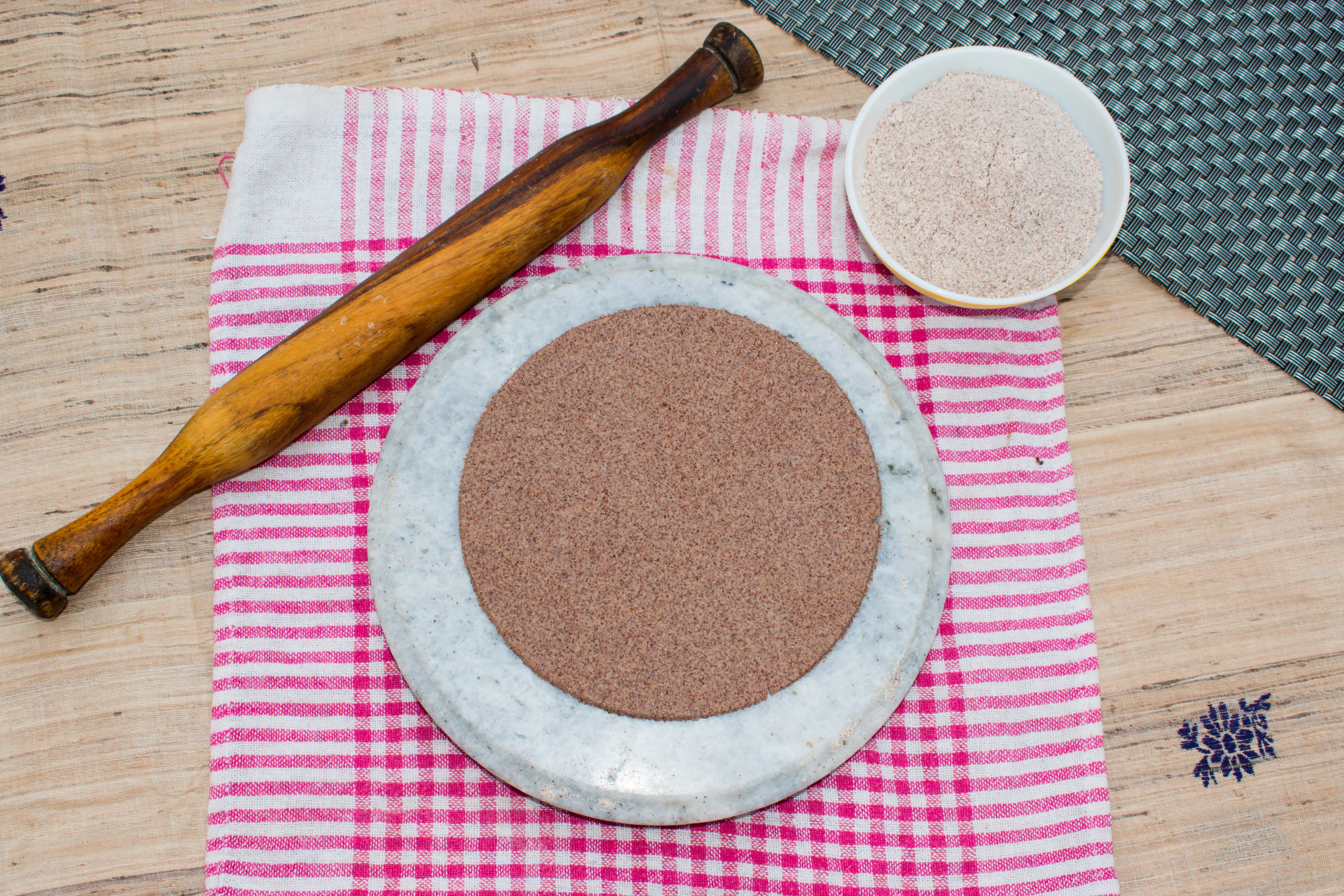
  2. Soak: Soak the washed ragi in clean water for 8 to 12 hours.
  3. Sprout (Optional but Recommended): Drain the water thoroughly. Wrap the soaked ragi in a clean, damp muslin or cotton cloth. Place it in a warm, dark corner of your kitchen for 12 to 24 hours. You will begin to see tiny white sprouts emerging.
  4. Dry: Spread the sprouted (or simply soaked and drained) ragi grains evenly on a clean sheet or plate. Let them sun-dry completely for a day until there is no remaining moisture.
  5. Roast: Heat a heavy-bottomed pan over low-medium heat. Dry roast the dried ragi grains, stirring continuously, for about 5 to 8 minutes until you smell a pleasant, nutty aroma.
  6. Grind: Allow the roasted grains to cool completely. Transfer them to a high-speed blender or grinder and pulse into a fine powder.
  7. Sieve and Store: Sieve the powder to remove any coarse outer husks. Store your freshly made homemade ragi powder baby food in an airtight container in a cool, dry place for up to a month, or in the refrigerator for up to three months.

4 Easy and Healthy Ragi Porridge Recipes for Babies

Now that you have your nutritious ragi flour baby food ready, here are four delicious ways to prepare it for your baby at different developmental stages.

Recipe 1: Classic Ragi Porridge (For 6 Months+)

This basic ragi recipe for 6 month baby is designed for beginners. It features a ragi porridge baby smooth texture that mimics the liquid consistency your baby is accustomed to.

Prep time: 5 mins
Cook time: 10 mins
Yield: 1 serving

Ingredients

  • 2 tablespoons sprouted ragi powder baby food (or regular homemade ragi powder)
  • 1 cup water (or a mix of water and breast milk/formula)
  • 1/2 teaspoon organic ghee (optional, for healthy fats)

Instructions

  1. Dissolve: In a small saucepan, whisk the ragi powder into the cold water until completely smooth, ensuring there are no lumps.
  2. Cook: Place the saucepan on low-medium heat. Stir continuously to prevent clumping or sticking to the bottom.
  3. Thicken: Cook the mixture for 8 to 10 minutes. The raw smell of the ragi will disappear, and the porridge will turn glossy and thicken.
  4. Adjust Consistency: For a 6-month-old baby ragi porridge, you want a ragi porridge baby thin consistency. If it becomes too thick, whisk in a little warm water.
  5. Finish: Turn off the heat. Stir in the ghee if using. Allow the finger millet porridge baby smooth mixture to cool to a lukewarm temperature. If desired, stir in breast milk or prepared formula just before feeding.

Recipe 2: Creamy Ragi Banana Porridge (For 7 Months+)

As your infant grows, you can introduce natural sweetness and potassium by making a ragi banana porridge for your baby.

Prep time: 5 mins
Cook time: 10 mins
Yield: 1 serving

Ingredients

  • 2 tablespoons ragi flour baby porridge
  • 1 cup water
  • 1/2 ripe banana (mashed completely smooth)
  • A pinch of cardamom powder (optional, for mild aroma)

Instructions

  1. Whisk: Combine the ragi flour and water in a saucepan, stirring until smooth.
  2. Simmer: Cook on low heat for about 8 minutes, stirring constantly until the mixture thickens.
  3. Add Banana: Whisk in the completely smooth mashed banana and cardamom powder. Cook for an additional 2 minutes to blend the flavours.
  4. Serve: Remove from heat, let it cool, and serve this comforting banana ragi porridge baby meal to your little one.

Recipe 3: Warm Apple Ragi Porridge (For 8 Months+)

The combination of apple and ragi is a fantastic flavour profile for an 8-month baby ragi porridge. The natural vitamin C in apples also enhances the absorption of iron from the ragi.

Prep time: 10 mins
Cook time: 12 mins
Yield: 1 serving

Ingredients

  • 2 tablespoons homemade ragi baby porridge powder
  • 1 cup water
  • 3 tablespoons fresh, smooth unsweetened apple puree
  • 1/2 teaspoon ghee

Instructions

  1. Mix: Dissolve the ragi powder in water inside a saucepan.
  2. Cook: Place on low heat and cook for 8 minutes, stirring continuously.
  3. Combine: Stir in the fresh apple puree and ghee. Cook for another 2 to 3 minutes until warm and integrated.
  4. Serve: Let the apple ragi porridge baby food cool down to lukewarm before serving.

Recipe 4: Savoury Ragi Vegetable Porridge (For 9 Months+)

Introduce savoury notes and essential vitamins with this nourishing vegetable blend.

Prep time: 10 mins
Cook time: 15 mins
Yield: 1 serving

Ingredients

  • 2 tablespoons ragi powder baby food
  • 1 cup water or mild homemade vegetable stock
  • 2 tablespoons finely pureed boiled vegetables (such as carrots, peas or sweet potato)
  • A tiny pinch of roasted cumin powder

Instructions

  1. Dissolve: Whisk the ragi powder into the water or vegetable stock.
  2. Simmer: Cook on low-medium heat for 8 to 10 minutes until glossy and cooked through.
  3. Blend: Stir in the pureed cooked vegetables and cumin powder. Simmer for 2 more minutes.
  4. Cool: Allow this ragi vegetable porridge baby food to cool before serving.

Important Safety Tips for Feeding Ragi to Babies

  • Introduce One Food at a Time: When introducing ragi for the first time, follow the "three-day rule". Serve it plain without adding other new fruits or vegetables, and watch closely for any signs of an allergic reaction or digestive discomfort.
  • Avoid Sugar, Salt and Honey: Do not add sugar or salt to baby food for infants under one year of age, as their kidneys are still developing. Never give honey to a baby under 12 months due to the risk of infant botulism.
  • Ensure Proper Texture: For beginners, make sure you prepare a ragi porridge baby smooth texture or ragi puree for baby with no lumps to prevent choking hazards.
  • Monitor Portions: If you are wondering how many times can I give ragi to my baby, starting with 2 to 3 tablespoons once a day is ideal. As your baby adapts, you can increase the portion size or serve it 2 to 3 times a week as part of a varied, balanced diet.

FAQS

Is ragi malt good for babies?

Yes, is ragi malt good for babies is a common question. Ragi malt (made from sprouted, roasted and ground ragi) is highly nutritious, easy to digest, and serves as an excellent source of energy, calcium and iron for growing infants.

Can I make ragi porridge using milk?

For babies under one year old, you should avoid using cow's milk as a primary drink or base. Instead, cook the porridge in water. Once it is cooked and cooled to a lukewarm temperature, you can stir in breast milk or prepared formula to achieve a creamy consistency.

What is the difference between ragi and nachni?

They are simply different regional names for the exact same grain. Ragi is the common term used in South India, while it is frequently referred to as nachni in Western and Northern India. Both refer to finger millet (Eleusine coracana).

How long can I store homemade ragi powder?

When stored in a clean, completely dry, airtight glass container, plain homemade ragi powder will stay fresh at room temperature for up to 4 weeks. Sprouted ragi powder is best stored in the refrigerator, where it can keep well for up to 3 months.

Why is my ragi porridge turning out lumpy?

Lumps usually form if ragi powder is added directly to hot water. To prevent this, always thoroughly whisk the ragi powder into cold or room-temperature water first until it is completely dissolved before turning on the heat.

Apollo 247 Floating Action Button