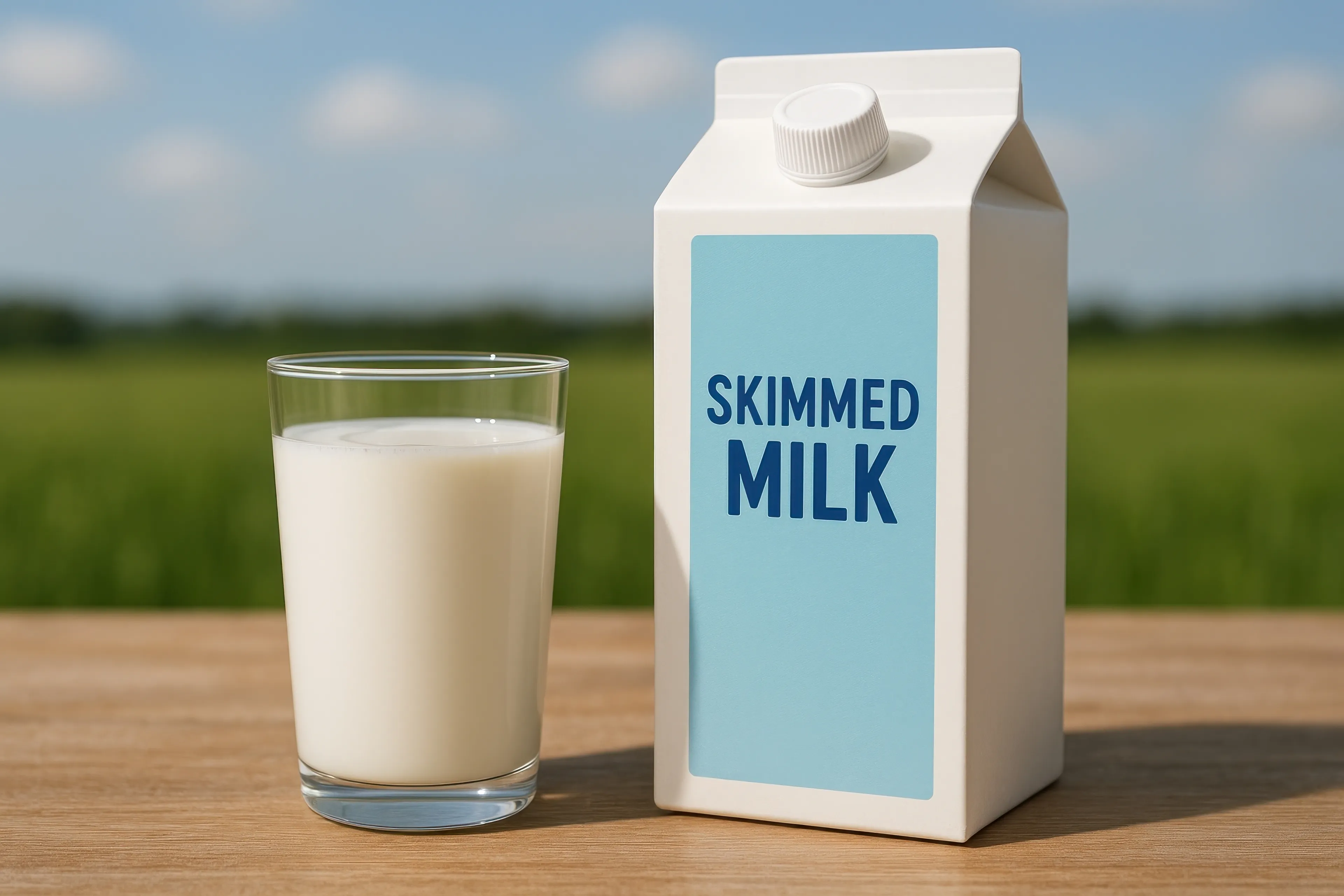
Learn about skimmed milk nutrition, benefits, fat and protein content, and whether skimmed milk is suitable for infants and young children.
Dr.J.T.Hema Prathima
Choosing the right type of milk can feel overwhelming, especially when labels like "skimmed," "toned," and "full cream" line the same refrigerator shelf. Skimmed milk has become a popular choice for adults watching their fat intake, but understanding what the fat-removal process actually does to nutrition, and whether this milk is appropriate for every member of your family, is worth knowing before you make the switch.
What Is Skimmed Milk?
Skimmed milk is cow's milk from which almost all fat has been removed, leaving a fat content of 0.1% to 0.5%. The process uses centrifugal separation: raw milk is spun at high speed so the cream rises and is drawn off. What remains is the protein-rich, watery base of milk with only traces of fat.
Among the low fat milk types available in India, skimmed milk sits at the lowest end of the fat spectrum. Toned milk retains about 3% fat, double-toned milk around 1.5%, and full cream milk 3.5% or more. Skimmed milk goes a step below even double-toned varieties, making it a distinct category rather than just a lighter version of regular milk.
Nutritional Content of Skimmed Milk
Removing fat changes the calorie count but leaves most other nutrients largely intact. Protein, calcium, and most B vitamins survive the skimming process well. The notable losses are fat-soluble vitamins A, D, E, and K, since these travel out with the cream. Many commercial brands compensate by fortifying skimmed milk with vitamins A and D, so always check your label.
Approximate values per 100 ml
Nutrient
Skimmed Milk
Whole Milk
Calories
\~35 kcal
\~61 kcal
Fat
0.1 to 0.5 g
3.2 to 3.5 g
Protein
\~3.4 g
\~3.2 g
Carbohydrate
\~4.8 g
\~4.8 g
Calcium
\~120 mg
\~120 mg
Vitamin D
Varies (if fortified)
Present in small amounts
Calcium content is essentially the same in both types because calcium binds to the protein and watery fraction, not the fat. Switching to skimmed milk does not compromise your calcium intake.
Health Benefits of Skimmed Milk
Here are the health benefits of skimmed milk:
Weight Management
The most straightforward skimmed milk benefit is a lower calorie load. A 250 ml glass delivers roughly 88 kcal compared to about 150 kcal from whole milk. For someone drinking two to three glasses a day, that difference adds up over weeks without sacrificing protein or calcium. This makes skimmed milk a practical option for adults who need a calorie deficit but still want dairy's nutritional value.
Heart Health
Saturated fat from full-fat dairy can raise LDL cholesterol in some people. Skimmed milk reduces saturated fat intake substantially, which is one reason cardiac nutrition guidance often suggests lower-fat dairy for individuals managing cholesterol or cardiovascular risk. It is not a treatment, but it can be a sensible dietary swap when advised by a doctor.
Protein-to-Calorie Ratio
Ounce for ounce, skimmed milk offers a slightly better protein-to-calorie ratio than whole milk. This is useful for people trying to meet protein targets without adding extra calories from fat, including adults managing weight or following a structured diet plan.
Comparing Milk Types: Skimmed vs Toned vs Full Cream
Choosing between milk types mostly comes down to fat content, calorie needs, and who is drinking it. The table below gives a quick overview of the main low fat milk types alongside full cream.
Milk Type
Fat Content
Best Suited For
Full cream
3.5%+
Young children (1 to 2 years), underweight individuals, those needing higher calories
Toned
\~3%
General adult population, a practical everyday choice
Double-toned
\~1.5%
Adults moderately reducing fat intake
Skimmed
0.1 to 0.5%
Adults managing weight, high cholesterol, or on specific medical advice
When comparing toned milk vs skimmed milk, the key difference is fat percentage and calorie density. Toned milk is made by blending whole milk with skimmed milk and water to standardize fat; skimmed milk results from removing virtually all fat. For most healthy adults, toned milk is a reasonable everyday option. Those with a specific clinical reason to restrict fat further may benefit from skimmed milk instead.
Is Skimmed Milk Suitable for Infants?
This is among the most common questions new parents ask, and the answer is clear: skimmed milk is not suitable for infants under 12 months. For babies in their first year, breast milk or an appropriate infant formula should be the primary source of nutrition. Cow's milk of any type is not recommended as the main drink before 12 months.
The reason is straightforward. Infants need fat for rapid brain development. The brain grows faster in the first two years of life than at any other point, and dietary fat, particularly long-chain fatty acids, supports myelin formation and neurological development. Skimmed milk, with almost no fat, cannot meet this need.
For toddlers aged 1 to 2 years, pediatric guidance generally recommends whole or full-fat milk rather than reduced-fat varieties. A 2-year-old's growing brain and body still rely heavily on fat as an energy source. From age 2 onward, a pediatrician or pediatric nutritionist can assess whether switching to a lower-fat milk makes sense based on the child's growth and overall diet. If you are a new parent working through early feeding and care decisions, these essential newborn care tips for new parents cover a range of practical first-year questions.
Never substitute skimmed milk for breast milk or formula during infancy. Speak with your pediatrician before making any change to your baby's milk source.
Contraindications and Who Should Avoid Skimmed Milk
Skimmed milk is safe for most healthy adults, but certain groups should use caution or avoid it:
People with lactose intolerance may experience bloating, gas, or diarrhea. Skimmed milk contains similar lactose levels to whole milk, so it is not a safe alternative for this group without further processing (such as lactase-treated milk).
Anyone with a confirmed milk protein allergy should avoid all cow's milk products, including skimmed milk.
Infants under 12 months must not receive skimmed milk as a primary drink.
Individuals with fat-soluble vitamin malabsorption conditions may find that skimmed milk's minimal fat content further limits absorption of vitamins A, D, E, and K.
People recovering from illness, surgery, or those who are underweight may need the higher calorie density of full cream or toned milk rather than skimmed.
If you have a chronic health condition or are on medication that affects fat or nutrient absorption, ask your doctor or registered dietitian before switching milk types.
Report adverse events or unexpected reactions to any food product to your healthcare provider or the relevant regulatory authority.
Conclusion
Skimmed milk can provide protein, calcium, and other nutrients, but removing most of the fat changes its nutritional profile compared with whole milk. While it may be suitable for some older children or adults depending on their nutritional needs, skimmed milk is generally not appropriate as the main milk drink for infants under 12 months. Babies need breast milk or an appropriate infant formula to meet their nutritional requirements during the first year. After 12 months, the choice of milk should consider the child's growth, overall diet, and individual nutritional needs. Parents should consult a paediatrician or qualified healthcare professional if they are unsure which milk is appropriate for their child.
Frequently Asked Questions
Is skimmed milk healthier than full cream milk?
Neither is universally healthier. Skimmed milk is better suited to adults managing weight or cholesterol, while full cream milk provides fat-soluble vitamins and calories that young children and underweight individuals need. The right choice depends on age, health status, and dietary goals.
Can pregnant women drink skimmed milk?
Yes, skimmed milk is generally safe during pregnancy and provides calcium and protein. However, pregnant women also need fat-soluble vitamins, particularly vitamin D, so choose a fortified brand and discuss your overall dairy intake with your obstetrician or dietitian.
Does skimmed milk help in weight loss?
It can support a calorie-controlled diet because it delivers protein and calcium with significantly fewer calories than whole milk. On its own it does not cause weight loss, but substituting it for full cream milk reduces overall calorie intake when other eating habits remain the same.
What is the difference between skimmed milk and skim milk powder?
Skimmed milk powder is liquid skimmed milk that has been dehydrated to remove almost all moisture. Both have very low fat content. The powder has a longer shelf life and higher nutrient concentration per gram, but reconstituted correctly it is nutritionally comparable to fresh skimmed milk.
Can toddlers switch to skimmed milk after age one?
Most pediatric guidance recommends full cream milk from age 1 to 2 years to support brain development. After age 2, a switch to lower-fat milk may be considered, but this should be guided by your child's pediatrician based on growth, appetite, and the rest of their diet.