logo
0

Starting Solids for Premature Babies: Complete Guide

Wondering when to start solid food for premature babies? Learn the developmental signs, chronological vs. corrected age guidelines, and safety tips.

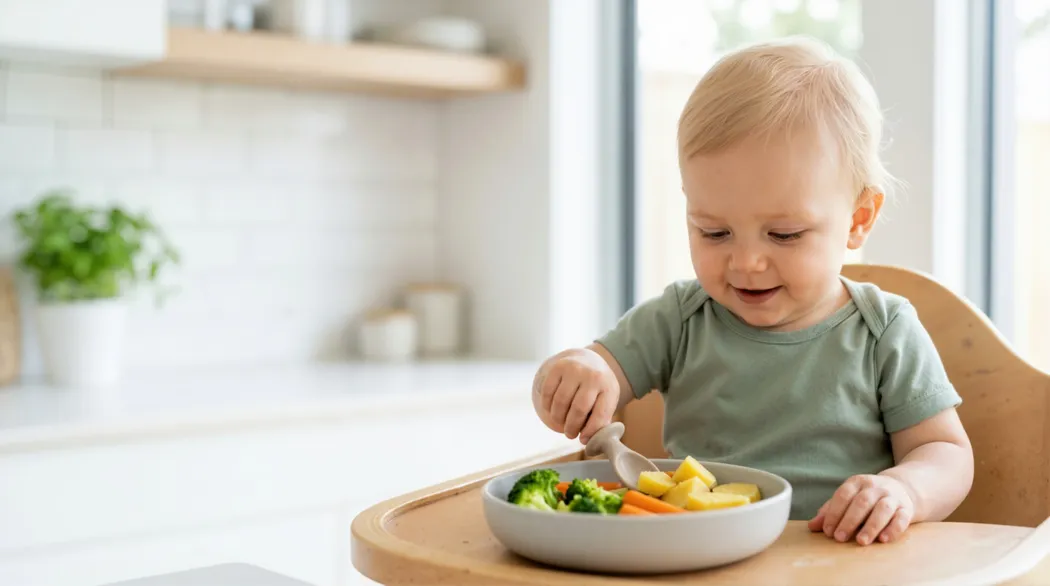
article image

Dr.Mayank

Bringing home a premature baby is a journey filled with unique milestones, triumphs, and plenty of learning curves. As your little one grows and grows, you might find yourself eagerly anticipating their next big step: exploring the world of real food. However, because preemies develop on their own timeline, determining when to start solid food for premature babies is not always straightforward.

Unlike full-term infants, premature babies need a bit of extra time and consideration before they are ready to swap breast milk or formula for purees and infant cereals. Introducing solids too early can lead to choking hazards or digestive issues, while starting too late can delay necessary sensory and motor development.

In this comprehensive guide, we will break down the science behind corrected age, highlight the physical signs of readiness, and provide safe, practical tips to help you and your baby navigate this exciting milestone.

Chronological Age vs. Corrected Age: The Golden Rule

To understand when to start solid food for premature babies, you first need to understand the difference between chronological age and corrected (or adjusted) age.

  • Chronological Age: This is the age calculated from the actual day your baby was born.
  • Corrected Age: This is the age your baby would be if they had been born on their original due date.

For example, if your baby is 6 months old chronological age but was born 2 months premature (at 32 weeks gestation), their corrected age is 4 months.

Medical experts, including the American Academy of Paediatrics (AAP) and the World Health Organisation (WHO), advise using corrected age when tracking developmental milestones—and starting solids is no exception. Because a preemie's digestive system, kidneys, and motor skills develop based on their biological maturity rather than their birth date, using corrected age helps prevent introducing solid foods before their bodies are physically ready to process them.

When to Start Solid Food for Premature Babies: The Typical Timeline

For full-term babies, the general recommendation is to introduce solid foods around 6 months of age. For premature infants, the window is slightly more flexible, but the foundation remains the same.

Generally, the ideal window for when to start solid food for premature babies is between 4 and 6 months of corrected age. In terms of actual, chronological age, this often aligns with 5 to 8 months after birth, depending on how early your baby was born.

Introducing solids prior to 4 months of corrected age is highly discouraged. Before this time, a baby’s gut lining is still maturing, and their kidneys are not yet equipped to handle the solute loads found in solid foods. Conversely, waiting too long past 6 months of corrected age can put your baby at risk for nutritional deficiencies, particularly in iron and zinc.

Developmental Signs: When to Start Solids for Premature Baby Success

While age math provides a helpful baseline, your baby’s physical readiness is the most critical factor. Knowing when to start solids for premature baby meals requires looking for specific developmental milestones. Every baby matures at their own pace, so look for these physical signs before offering that first spoonful:

1. Excellent Head and Neck Control
Your baby must be able to hold their head upright and steady without assistance. If their head slumps forward or wobbles, they cannot swallow safely, which greatly increases the risk of choking.

2. Ability to Sit Upright with Minimal Support
While your baby doesn’t need to sit completely unassisted in the middle of the floor, they should be able to sit upright and steady when placed in a highchair or supported infant seat. A stable posture is crucial for safe swallowing.

3. Loss of the Tongue-Thrust Reflex
Infants are born with an extrusion reflex, which causes them to automatically push any foreign objects out of their mouth with their tongue. This reflex helps protect them from choking. To transition to solids, this reflex must fade. If you place a tiny bit of puree on your baby’s tongue and they immediately push it back out, they are not quite ready.

4. Curiosity and Interest in Food
Does your baby watch you intensely while you eat? Do they reach for your fork or open their mouth when they see food coming? This cognitive interest shows that their brain is ready to explore new tastes and textures.

5. Ability to Bring Hands or Toys to Their Mouth
This milestone demonstrates the hand-eye-mouth coordination required to navigate feeding. If your baby can successfully guide a teething toy to their mouth, they are developing the motor planning needed to eat.

Why Timing is Vital: The Physiological Ready-Line

Understanding when to start solid food for premature babies is about more than just checking off a milestone; it is vital for their physiological health. Premature babies have unique internal needs that make proper timing highly important:

  • Gut Development: The gastrointestinal tract undergoes rapid maturation in the final weeks of pregnancy. Because preemies miss out on some of this in-utero time, their digestive systems need extra chronological weeks to produce the enzymes necessary to break down starch, proteins, and fats.
  • The Iron Deficit: During the third trimester of pregnancy, babies build up their internal stores of iron. Since premature babies miss a portion of this crucial window, they are born with significantly lower iron reserves. By 4 to 6 months of corrected age, these reserves begin to deplete, making the introduction of iron-rich solid foods highly beneficial.
  • Oral-Motor Skills: Sucking, swallowing, and breathing in a coordinated sequence is a highly complex physical task. Preemies often struggle with hypotonia (lower muscle tone). Giving them adequate time to build up oral-motor strength prevents negative associations with feeding, such as gagging or food aversion.

How to Safely Introduce First Foods to Your Preemie

Once your paediatrician has given you the green light and you have observed all the signs of readiness, you can begin your baby's culinary journey. Here is how to keep it safe, healthy, and stress-free:

  • Start with the Right Textures: Your baby’s first foods should be incredibly smooth and thin. You can mix purees with breast milk, formula, or water to achieve a runny, watery consistency. As your baby gets comfortable swallowing, you can gradually transition to thicker purees, mashed foods, and soft finger foods.
  • Prioritise Iron-Rich Foods: Because preemies run out of iron sooner than full-term babies, their first foods should actively replenish this nutrient. Excellent starting options include: Single-grain, iron-fortified infant cereals (such as oat or barley, mixed with breast milk or formula). Pureed meats (such as chicken or beef), which offer highly absorbable heme iron. Pureed legumes, such as well-cooked lentils or beans.
  • Introduce One Food at a Time: To easily identify any food allergies or sensitivities, introduce only one new single-ingredient food every 3 to 5 days. Watch for signs of an allergic reaction, which can include:
  1. Hives or skin rashes
  2. Swelling of the face, lips, or tongue.
  3. Vomiting or sudden diarrhoea.
  4. Difficulty breathing (seek immediate emergency medical care if this occurs).
  5. Introduce Highly Allergenic Foods Early

Modern pediatric research shows that introducing common allergens (like peanut butter, eggs, dairy, and soy) early—around 4 to 6 months of corrected age—can actually help prevent food allergies from developing. Always consult your paediatrician first, especially if your baby has severe eczema or a known food allergy. Ensure the allergen is presented in a completely safe, age-appropriate texture (for example, smooth peanut butter thinned out with warm water or breast milk—never thick or chunky).

Simple Troubleshooting Tips for Parents

Do not be discouraged if your first few feeding sessions do not go as planned. It is entirely normal for babies to spit out their first bites, grimace, or seem confused. Eating is a brand-new sensory experience.

  • Keep it fun and pressure-free: The goal of starting solids is exploration and practice, not consumption. Your baby will still get the vast majority of their nutrition from breast milk or formula.
  • Choose the right time: Offer solids when your baby is alert, calm, and slightly hungry, but not starving. A starving baby will be too frustrated to practice a new skill.
  • Follow their cues: If your baby turns their head away, closes their mouth, or cries, stop the feeding. Forcing them can create negative associations with mealtime. Try again in a few days.

FAQS

Can I start solids at 4 months chronological age if my baby seems hungry?

No, it is highly recommended to wait. At 4 months chronological age, a baby born prematurely is biologically much younger. Their digestive tract and kidneys are not mature enough to process solid food, and their swallowing mechanisms are not yet safe, which increases choking risks. Always calculate readiness using their corrected age.

What are the best first foods for a premature baby?

Iron-rich foods are ideal first choices for preemies due to their naturally low iron stores. Iron-fortified oat cereal, pureed meats (like beef or chicken), pureed tofu, and iron-fortified vegetable purees (like peas or sweet potato) are excellent options.

What should I do if my baby spits the food right back out?

This is very common. It usually means their tongue-thrust reflex is still active. If your baby pushes the food out with their tongue, they simply aren't developmentally ready yet. Take a break for a week or two, and then try again.

Do premature babies need extra iron supplements after starting solids?

Many premature babies are prescribed iron drops by their paediatricians from an early age. Once they start eating iron-rich solids, their iron needs may change. Do not stop or change any prescribed iron supplements without consulting your paediatrician first.

Can I try baby-led weaning (BLW) with my premature baby?

Baby-led weaning (skipping purees and going straight to soft finger foods) can be safe for some preemies, but it requires advanced motor skills. Because premature babies may experience delayed motor coordination, consult your paediatrician or a pediatric occupational therapist to ensure your baby has the postural support and chewing skills necessary to safely manage finger foods.

Apollo 247 Floating Action Button