logo
0

Spinach Puree Baby Guide: Benefits & Easy Recipes

Learn how to make a nutritious spinach puree baby food. Discover when to introduce spinach to baby, easy recipes, combinations, and expert safety tips.

article image

Dr.Kamran

Introducing your little one to the wonderful world of solid foods is an exciting milestone. As you transition your baby from a milk-only diet to a diverse array of fresh flavours, green leafy vegetables should definitely be on your radar. Among the best choices is spinach. Packed with essential vitamins, iron, and dietary fibre, a fresh spinach puree baby meal is a wonderful way to expand your infant's palate and support their rapid growth.

In this comprehensive guide, we will explore everything you need to know about preparing spinach for your infant. We will answer common safety questions, provide step-by-step cooking instructions, and share delicious, nutrient-dense recipe combinations that your little one will love.

Is Spinach Good for Babies?

First, let's address a common question: Is spinach good for babies?

The short answer is a resounding yes! Spinach is a nutritional powerhouse that provides a wide range of health benefits for a growing child. When you introduce this vibrantly green spinach baby food to your little one's diet, they benefit from:

  • Iron: Crucial for healthy brain development and preventing anaemia.
  • Calcium: Essential for building strong bones and teeth.
  • Vitamins A, C, and K: These vitamins support a robust immune system, promote healthy skin and vision, and assist with proper blood clotting.
  • Fibre: Helps maintain healthy digestion and prevents infant constipation.
  • Antioxidants: Protect cells from damage and support overall systemic health.

While spinach is highly nutritious, it is important to prepare and serve it correctly to ensure it is both safe and easily digestible for your baby's developing tummy.

When to Introduce Spinach to Baby

Parents often wonder when to introduce spinach to a baby safely.

According to major paediatric authorities, including the Centres for Disease Control and Prevention (CDC) and the World Health Organization (WHO), babies can begin eating solid foods around 6 months of age. An ideal spinach puree for babies 6 months of age or older is a fantastic way to introduce earthy greens.

A Note on Nitrates

You might have heard warnings about nitrates in leafy greens like spinach. Naturally occurring nitrates can sometimes be difficult for very young infants (under 3 months) to process, potentially leading to a rare condition called methemoglobinemia.

However, by the time your baby reaches 6 months, their digestive system and stomach acids are mature enough to process these nitrates safely. To be completely safe, always use fresh spinach, prepare it properly, and avoid serving spinach to infants younger than 6 months.

How to Make Spinach Puree for Baby

Making homemade baby food is much easier than it looks, and it ensures your child gets the freshest nutrients without added preservatives or sodium.

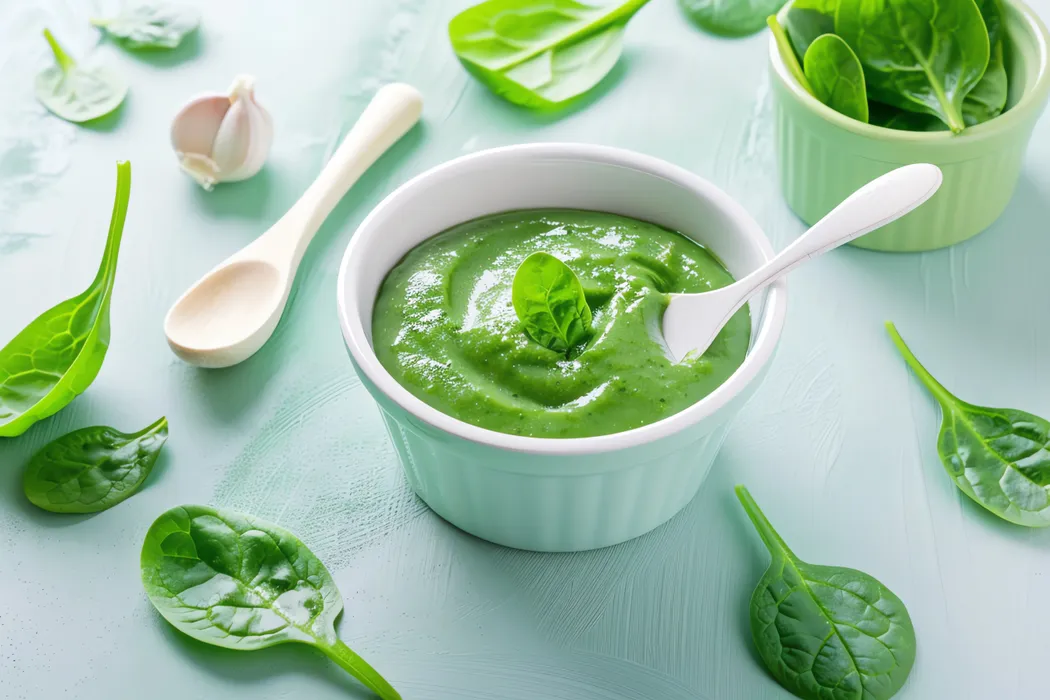
If you are wondering how to make spinach puree for a baby at home, follow this simple, step-by-step recipe. This method is designed to make the spinach puree baby food smooth and easy to swallow.

Simple Spinach Puree Recipe

Ingredients:

2 cups of fresh, organic baby spinach leaves (washed thoroughly)

1–2 tablespoons of breast milk, infant formula, or water (for blending)

Step-by-Step Instructions:

1. Clean the Spinach: Thoroughly rinse the spinach leaves under cold, running water to remove any lingering dirt or debris.

2. Steam the Leaves: Place a steamer basket inside a medium pot with a small amount of boiling water. Add the spinach leaves, cover, and steam for 3 to 5 minutes until the leaves are completely wilted and soft.

3. Cool Quickly: Transfer the steamed spinach immediately into a bowl of ice-cold water. This stops the cooking process and preserves the bright green colour and nutrients. Drain well.

4. Blend to Perfection: Place the cooked spinach into a high-powered blender or food processor. Add a splash of breast milk, formula, or clean water. Blend on high until you achieve a spinach puree baby-smooth consistency with absolutely no lumps.

5. Serve or Store: You can serve this fresh spinach puree baby food immediately once it cools to room temperature, or store the leftovers for later.

SPINACH PUREE QUICK FACT

Details

Ideal Age

6 months +

Prep Time

5 minutes

Cook Time

3–5 minutes

Storage (Fridge)

Up to 48 hours

Storage (Freezer)

Up to 3 months

Spinach Puree Combinations for Baby

While plain spinach is a great starter, some babies may find the slightly bitter, earthy taste of green vegetables a bit overwhelming at first. You can make the transition easier and more delicious by mixing spinach with sweet or creamy fruits and vegetables.

Creating a spinach combination baby food is a great way to introduce complex flavours and boost nutritional value. Try these time-tested, popular spinach baby food combinations:

1. Creamy Spinach Potato Puree

The mild taste of a spinach potato puree baby dish is highly appealing to infants. Potatoes add a smooth, comforting texture that tempers the strong flavour of the greens. To make this, simply steam equal parts spinach and peeled, diced potatoes, then blend them together. This classic spinach and potato mash baby food provides excellent carbohydrates for energy alongside the vitamins in the spinach.

2. Apple, Pear, and Spinach Puree

The natural sweetness of organic apples or pears pairs beautifully with leafy greens. Blending steamed sweet apples or pears with fresh spinach creates a delicious, naturally sweet spinach puree for baby that even picky eaters will love. The Vitamin C in the fruit also helps your baby's body absorb the non-heme iron present in the spinach!

3. Sweet Potato and Spinach Mash

Sweet potatoes are naturally sweet, creamy, and packed with beta-carotene. Mixing sweet potato mash with a little bit of spinach puree for 6 months baby meals makes for a colorful, antioxidant-rich dish that is highly satisfying.

In many cultures, spinach is introduced alongside wholesome lentils to create a protein-rich meal. In Indian households, spinach is commonly known as palak.

Preparing a palak puree for baby meals is an excellent variation. Once your baby has successfully tried basic single-ingredient purées and is around 7 to 8 months old, you can introduce easy-to-digest lentils (dal).

Spinach and Dal Recipes

  • Spinach Dal Baby Food: This comforting palak dal baby food helps introduce healthy plant-based proteins. To make it, pressure-cook yellow moong dal (split yellow lentils) until very soft, steam a handful of spinach, and blend them together.
  • Spinach Dal Baby Puree: This delicious spinach dal baby puree offers a thicker, more textured meal that helps your infant practice chewing and swallowing slightly more complex foods.
  • Spinach Dal Puree Baby Blend: For a velvety, easy-to-digest option, run the mixture through a fine-mesh strainer after blending to ensure a perfectly smooth finish.

Tips for a Happy Spinach Puree Baby Mealtime

When you first see your baby eating spinach puree, you might be treated to some highly amusing, messy facial expressions! Leafy greens have a very different texture and taste profile than milk or sweet fruits. Here are a few tips to make your feeding sessions a success:

  • Patience is Key: It can take up to 10 to 15 exposures to a new food before a baby learns to accept and enjoy it. If they spit it out, don't worry! Try again in a few days.
  • Ensure a Smooth Texture: For very young infants, make sure you blend the spinach baby food thoroughly. A coarse texture can trigger a sensitive gag reflex.
  • Practice the Three-Day Rule: When introducing spinach (or any new food) for the first time, serve it alone or with foods your baby has already tolerated for three consecutive days. This makes it easy to identify the culprit if your baby develops an allergic reaction or digestive upset.
  • Watch for Natural Changes: Don't be alarmed if your baby's stool turns a darker green colour after they eat spinach. This is completely normal and simply indicates that their body is processing the chlorophyll and dietary fibre.
Conclusion

Introducing spinach can be a nutritious way to help your baby explore new flavours, textures, and foods from around six months, when they are developmentally ready for solid foods. Whether you choose a smooth spinach puree, a spinach and potato blend, or a spinach and dal combination, spinach can provide useful nutrients as part of a varied complementary diet. By preparing and serving it safely, avoiding added salt and sugar, storing homemade baby food correctly, and gradually progressing to thicker textures, you can make spinach an enjoyable part of your baby’s feeding journey. Always follow your baby’s readiness and feeding cues, and consult your paediatrician if you have concerns about introducing spinach or other new foods.

FAQS

Can I use frozen spinach to make baby food?

Yes, you can use frozen spinach to make baby food, provided it does not contain added salt, sauces, or preservatives. Frozen spinach is often processed immediately after harvest, preserving its nutritional value. Simply thaw, steam gently, and blend.

Is spinach a common allergen for babies?

No, spinach is not considered one of the top allergen foods (such as peanuts, eggs, dairy, or wheat). However, any food can potentially cause an allergic reaction. Keep an eye out for signs of a food allergy, such as hives, vomiting, diarrhoea, or swelling, and consult your paediatrician immediately if these occur.

How long can I keep homemade spinach puree in the fridge?

Homemade spinach puree should be stored in an airtight container in the refrigerator and consumed within 24 to 48 hours. Because homemade baby food doesn't contain preservatives, it spoils much faster than store-bought options.

Can I freeze homemade spinach puree?

Absolutely! Spoon the freshly made puree into clean silicone ice cube trays and freeze until solid. Once frozen, transfer the cubes into a freezer-safe zip-top bag. These portion-sized spinach cubes can be kept in the freezer for up to 3 months. Thaw individual portions in the refrigerator overnight before warming and serving.

Can I add salt or sugar to my baby's spinach puree?

No, you should never add salt, sugar, or artificial sweeteners to baby food. An infant’s kidneys are not mature enough to process added sodium, and introducing sugar early can establish unhealthy taste preferences. Rely on natural ingredients, like sweet potato or apple, to sweeten the taste of greens.

Apollo 247 Floating Action Button