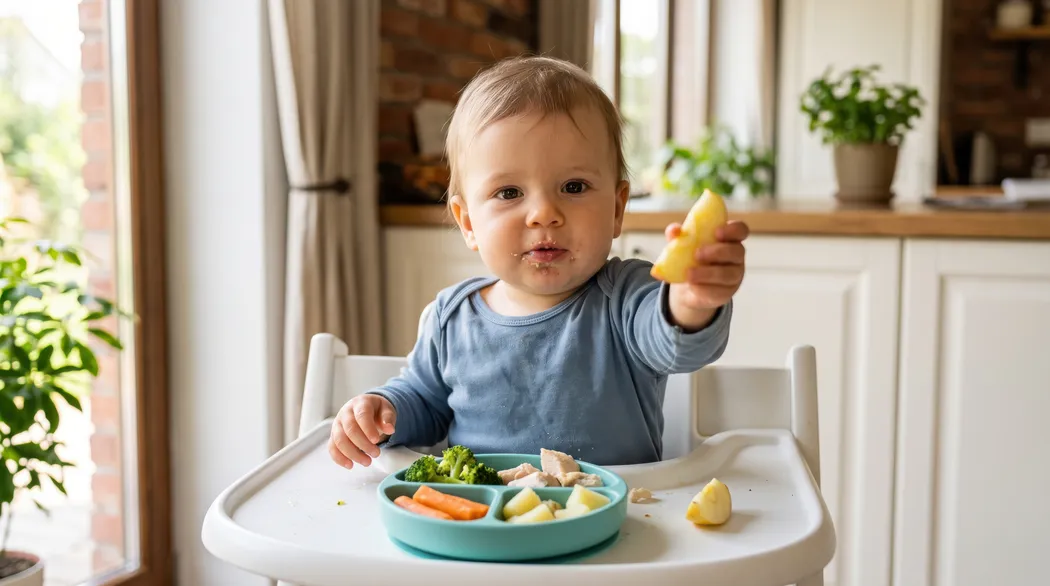
Toddler Food: Guide to Solids, Purees & First Foods
Toddler Food: Guide to Solids, Purees & First Foods
Learn how to introduce solids and purees to your baby safely. Discover readiness signs, healthy homemade recipes, choking hazards, and paediatric guidance.
Starting your baby on solid food is one of the most exciting milestones of early parenthood, and getting toddler food right from the very first bite can shape lifelong eating habits. Many parents feel uncertain about when to start, what to offer first, and whether homemade or store-bought options are safer. This guide walks you through everything, from the first spoonful of puree to building balanced meals for a growing toddler.
Most paediatric bodies, including the World Health Organization (WHO) and the Indian Academy of Pediatrics (IAP), recommend introducing complementary solid foods at around 6 months (180 days) of age, while continuing breastfeeding alongside.
Signs your baby is ready for solids:
Can sit up with minimal support and hold their head steady.
Shows interest in food by watching you eat or reaching toward your plate.
Has lost the tongue-thrust reflex and no longer automatically pushes food out of the mouth.
Opens the mouth when a spoon approaches.
Do not use age alone as your guide. A premature baby may need longer. Always check with your paediatrician before starting if you have any concerns about your child's development. For broader newborn care basics parents should also know, visit this guide on caring for your newborn.
Homemade Baby Food Purees: Recipes and Tips
Preparing food at home gives you full control over ingredients, freshness, and texture. The best first foods for babies are single-ingredient purees that are smooth, mild in flavour, and easy to digest. Homemade baby food recipes are also considerably less expensive than packaged alternatives.
Five Simple First-Food Purees
Dal water or moong dal puree: Cook yellow moong dal until very soft, blend with a little cooking water, and strain. A gentle protein source for early feeding.
Sweet potato puree: Steam or boil cubes, then blend until smooth. Naturally sweet, rich in beta-carotene, and easy on tiny tummies.
Banana mash: Press a ripe banana through a sieve or mash with a fork. Stir in a little expressed breast milk for a thinner consistency. No cooking needed.
Apple or pear puree: Peel, core, and steam the fruit until soft, then blend. A good source of fibre to support digestion.
Soft-cooked carrot puree: Steam until completely tender and blend with cooled boiled water. Introduce one vegetable at a time so you can spot any reactions early.
Rice and vegetable khichdi: Once your baby is comfortable with single ingredients, usually around 7 to 8 months, combine soft-cooked rice, moong dal, and one or two vegetables for a balanced, iron-containing meal.
Hygiene and Storage Rules
Cleanliness matters more with baby food purees than with almost any other cooking.
Hand hygiene: Wash hands thoroughly before preparing food. Equipment sterilisation: Sterilise blenders, spoons, and storage containers.
No added seasonings or honey: Add no salt, sugar, jaggery, or honey to any food for babies under 12 months. Honey carries a risk of infant botulism from Clostridium botulinum spores and must be strictly avoided before 12 months of age.
Refrigeration and freezing limits: Store prepared purees in small airtight portions in the refrigerator (at 4°C or below) for up to 48 hours, or freeze for up to one month.
Safe defrosting methods: Thaw frozen puree in the refrigerator overnight or in a bowl of warm water, never at room temperature.
Saliva contamination rule: Discard any leftover food that has been in contact with your baby's saliva, as bacteria from the mouth can multiply quickly.
Commercial Baby Food: What to Check on the Label
Store-bought baby food is a practical option for travel, busy days, or when fresh ingredients are hard to source. Commercial baby food is generally safe when produced by reputable companies, but label reading is essential. The commercial baby food vs homemade question is really about informed choice, not one being universally better than the other.
What to look for:
Age-appropriate stage labelling: Stage 1 for around 6 months, Stage 2 for 7 to 9 months, Stage 3 for 10 months onward
Ingredient order priority: A short ingredient list where the named fruit or vegetable appears first.
Clean formulation: No added sugar, salt, starch fillers, or artificial preservatives.
What to be cautious about:
Pouch sipping risks: Pouches are convenient but can encourage continuous sipping rather than spoon-feeding, which may slow oral motor skill development.
Misleading package claims: "Fruit flavoured" or "multigrain" labels do not always mean nutritious; always read the full ingredients panel carefully.
Packaging integrity: Always check that the seal is unbroken and the expiry date is strictly valid.
Many families use both homemade and commercial options, reserving homemade food for most meals and commercial pouches for days when time is short.
Toddler Food Nutrition: Building Balanced Meals
Once your child moves past the puree stage and into the toddler years, roughly 12 months onward, the goal shifts from introducing tastes to building a genuinely balanced diet. The best food for toddlers covers four key areas: iron, protein, healthy fat, and variety.
Key Nutrients and Where to Find Them
Nutrient
Why it matters
Good Indian sources
Iron
Brain development, prevents anaemia
Dal, ragi, leafy greens, egg yolk, meat
Protein
Growth and muscle development
Eggs, curd, paneer, dal, fish, chicken
Healthy fat
Brain growth and calorie density
Ghee, coconut, full-fat curd
Calcium
Bone and tooth strength
Dairy, ragi, sesame seeds
Because toddlers have limited gastric capacity, IAP and ICMR guidelines recommend offering three small, nutrient-dense meals and two to three healthy snacks spaced evenly through the day. Portion sizes are much smaller than adults expect: a tablespoon or two per food group at a sitting is completely normal at 12 months, gradually increasing through the second year.
Handling Picky Eating
Picky eating is almost universal among toddlers. A few strategies that genuinely help:
Repeated exposure: Offer the same food multiple times across different days before concluding your child dislikes it. Acceptance can sometimes take ten or more exposures.
Safe-food pairing: Serve one accepted food alongside one new food to reduce anxiety around the plate.
Consistent meal boundaries: Avoid replacing rejected meals with snacks, as this reinforces selective eating over time.
Foods to Avoid and Choking Hazards
Some foods are genuinely unsafe for babies and young toddlers, not just inconvenient. Knowing this list before you start introducing solids to your baby is important.
Foods to avoid under 12 months:
Honey: risk of infant botulism, a serious bacterial illness.
Cow's milk as a main drink: the high protein and mineral concentration creates an excessive renal solute load that strains immature infant kidneys, and its low bioavailability increases the risk of iron-deficiency anaemia; expressed breast milk or infant formula remains the primary drink until 12 months.
Added salt or sugar: Avoid added salt, refined sugar, or jaggery in any form to protect kidneys and prevent early sweet preferences.
Large, firm food pieces: Large pieces of raw or firm food that cannot be gummed easily.
Common choking hazards for toddlers:
Spherical fruits: Whole grapes, cherry tomatoes, and large berries (always halve or quarter them).
Whole nuts and seeds: Whole nuts and nut pieces (offer only as smooth nut butter or finely ground powder).
Hard raw produce: Raw carrot sticks or apple slices (steam until soft or grate finely).
Large meat chunks: Large, tough chunks of meat (shred or mince finely).
Hard snacks and confectionery: Hard-boiled sweets, marshmallows, or popcorn.
Always supervise mealtimes and ensure your child is sitting upright. Learning basic infant first aid, including back blows for choking, is something every caregiver should do before introducing solids.
Contraindications and When to Consult a Doctor
Certain situations call for medical guidance before or during the introduction of toddler food.
Speak to your paediatrician before starting solids if:
Premature birth: Your baby was born prematurely, as the developmental readiness timeline should be assessed using corrected gestational age.
Familial allergy history: There is a strong family history of severe food allergy, eczema, or asthma.
Pre-existing medical conditions: Your baby has been diagnosed with gastro-oesophageal reflux, a metabolic disorder, or swallowing difficulty.
Delayed developmental milestones: Your child is not showing essential readiness signs by 7 months of age.
See a doctor promptly if your baby shows any of the following after a new food:
Skin or facial reactions: Hives, acute redness, or swelling around the lips, mouth, or face.
Gastrointestinal distress: Persistent vomiting or significant diarrhoea after feeding.
Respiratory or systemic symptoms: Unusual fussiness, wheezing, breathing changes, or signs of lethargy.
Single-allergen introduction rule: Introduce common allergens including eggs, peanut products (as a smooth, thinned paste, never whole nuts), and fish one at a time with a 3- to 5-day window between each new food so any adverse reaction can be pinpointed clearly.
Adverse event reporting: Report any adverse reactions to your healthcare provider or the relevant regulatory authority, such as the Indian Pharmacopoeia Commission's Pharmacovigilance Programme.
Conclusion
Starting complementary feeding and transitioning to toddler meals is a crucial developmental milestone that establishes the foundation for lifelong nutritional health. By introducing smooth, single-ingredient purees around six months of age alongside continued breastfeeding or formula, parents can ensure essential developmental requirements, such as replenishing falling iron reserves, are met safely. Progressing gradually through textures, observing strict kitchen hygiene, and avoiding dangerous items like honey and whole cow's milk protects immature kidneys and prevents infection. Every child adapts at their own pace, so approaching mealtime with patience, repeated neutral exposures to new tastes, and a consistent routine fosters positive eating habits. Always partner with your paediatrician to review developmental readiness cues and tailor your child's weaning journey to their individual growth trajectory.
FAQS
What is the best first food for a 6-month-old baby?
Single-ingredient purees such as moong dal water, mashed banana, or steamed sweet potato are ideal first foods for babies at 6 months. They are easy to digest, mild in flavour, and allow you to identify any reactions quickly.
Can toddlers eat homemade food every day?
Yes, homemade baby food recipes prepared fresh each day are perfectly suitable and nutritionally sound as long as they include a variety of grains, lentils, vegetables, and protein sources. Variety across the week matters more than any single perfect meal.
How many meals should a toddler eat per day?
Most toddlers between 12 and 24 months do well with three small meals and two to three snacks per day. Portion sizes are small by adult standards, which is completely normal.
Is it safe to freeze homemade baby food?
Yes, freezing baby food purees in small ice-cube-tray portions and transferring them to airtight bags is a safe and convenient method. Use frozen portions within one month, and always thaw in the refrigerator or in warm water rather than at room temperature.
What foods help a toddler gain weight healthily?
Calorie-dense whole foods such as ghee added to khichdi, full-fat curd, mashed avocado, eggs, paneer, and well-cooked dal with rice are among the best foods for toddlers who need to build weight. Avoid relying on biscuits or sweet snacks, which add calories without useful nutrition.