apollo
0
  1. Home
  2. Medicine
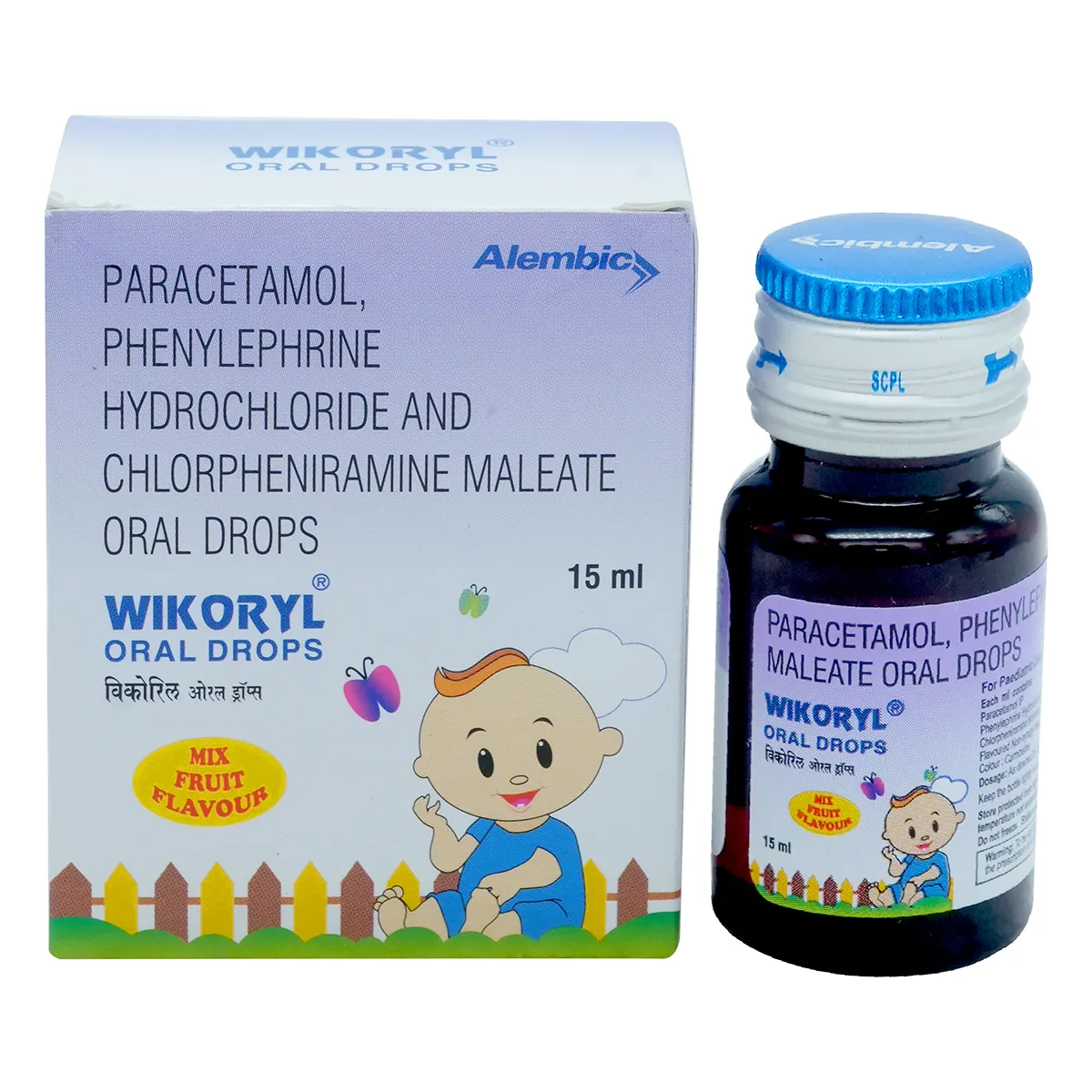
  3. Wikoryl Oral Drops 15 ml

Prescription drug
 Trailing icon
coupon
coupon
coupon
Extra 15% Off with Bank Offers
Written By Veda Maddala , M Pharmacy
Reviewed By Santoshini Reddy G , M Pharmacy

Wikoryl Oral Drops is a respiratory medicine mainly used to treat the common cold and allergies. This combination medicine works by blocking the action of histamine and thereby helps reduce symptoms like sneezing, watery eyes, or itchy/watery nose and throat. It may cause common side effects like drowsiness, sleepiness, nausea, fatigue, difficulty sleeping, and headache.

Read more

Manufacturer/Marketer :

Alembic Pharmaceuticals Ltd

Consume Type :

Oral

Expires on or after :

Return Policy :

Not Returnable

About Wikoryl Oral Drops

Wikoryl Oral Drops is primarily used to treat common cold symptoms and allergies like sneezing, runny/stuffy nose, fever, headache, body pains, congestion, or watery eyes. The common cold is a respiratory illness affecting the nose and throat. It is mostly caused by viruses known as rhinovirus.

Wikoryl Oral Drops is a combination of Paracetamol, Phenylephrine and Chlorpheniramine. Paracetamol works by inhibiting the production of prostaglandins, which are responsible for pain and fever. Phenylephrine works by shrinking the blood vessels in the nasal passage. Chlorpheniramine blocks the action of histamine, which is responsible for causing allergic reactions.

Some people may experience drowsiness, nervousness, headache, dizziness, insomnia (difficulty falling or staying asleep), blurred vision, constipation, and dry mouth. Most of these side effects of Wikoryl Oral Drops do not require medical attention and gradually resolve over time. However, if the side effects persist or worsen, please consult your doctor.

Take Wikoryl Oral Drops as prescribed. Your doctor will recommend how often you must take Wikoryl Oral Drops based on your medical condition. Swallow the medicine as the whole with a glass of water. Do not chew, break or crush the medicine.

Please tell your doctor if you are allergic to Wikoryl Oral Drops or any other medicines. If you are pregnant, it is advised to inform your doctor before using Wikoryl Oral Drops. Do not use Wikoryl Oral Drops if you are breastfeeding without a doctor’s advice, as it may be excreted in breast milk and cause harm to the baby.

Uses of Wikoryl Oral Drops

Wikoryl Oral Drops is used in the treatment of Common cold and Allergies. The detailed uses of Wikoryl Oral Drops are as follows:

  • Relief from Cold Symptoms: Wikoryl Oral Drops is widely used to ease symptoms of the common cold, including nasal congestion, sneezing, and a runny nose.
  • Alleviation of Allergic Rhinitis: Wikoryl Oral Drops effectively reduces symptoms of allergic rhinitis, offering relief from sinus pressure and itchy, watery eyes.
  • Management of Sinusitis: Wikoryl Oral Drops helps manage sinusitis by alleviating pain and reducing pressure in the sinuses.
  • Reduction of Fever: Wikoryl Oral Drops can lower fever, which often accompanies seasonal allergies or colds.
  • Pain Relief: Wikoryl Oral Drops provides relief from headaches and body aches commonly experienced during cold and flu seasons.

Have a query?

Directions for Use

  • Wikoryl Oral Drops can be taken with or without food as advised by your doctor. 
  • Follow your doctor's instructions on the dosage and timing of this medication. 
  • Swallow Wikoryl Oral Drops as a whole with a glass of water. 
  • Do not crush, break, or chew it.

Key Benefits

  • Wikoryl Oral Drops contains Paracetamol, Phenylephrine hydrochloride, and Chlorpheniramine maleate.
  • Paracetamol works by inhibiting the production of certain chemical messengers in the brain known as prostaglandins that are responsible for pain and fever.
  • Phenylephrine hydrochloride works by contracting and narrowing the blood vessels. Thereby, providing relief from congestion and decreasing mucus production.
  • Chlorpheniramine maleate works by blocking the action of histamine, a substance responsible for causing allergic reactions.
  • It helps to provide relief from symptoms of allergy such as sneezing, runny nose, watery eyes, itching, swelling, congestion or stiffness.

How Wikoryl Oral Drops Works

Wikoryl Oral Drops is a combination of three drugs: Paracetamol (mild analgesic and antipyretic), Phenylephrine hydrochloride (decongestant), and Chlorpheniramine maleate (antihistamine/antiallergic). Paracetamol works by inhibiting the production of certain chemical messengers in the brain known as prostaglandins, which are responsible for pain and fever. Phenylephrine hydrochloride works by shrinking the blood vessels in the nasal passage. Thereby providing relief from congestion and decreasing excess mucus production. Chlorpheniramine maleate works by blocking the action of histamine, a substance responsible for causing allergic reactions. It helps to provide relief from symptoms of allergy.

Storage

Store in a cool and dry place away from sunlight
Overcome Medication-Induced Nausea: A 9-Step Plan
  • Inform your doctor about the nausea and discuss possible alternatives to the medication or adjustments to the dosage.
  • Divide your daily food intake into smaller, more frequent meals to reduce nausea.
  • Opt for bland, easily digestible foods like crackers, toast, plain rice, bananas, and applesauce.
  • Avoid certain foods that can trigger nausea, such as fatty, greasy, spicy, and smelly foods.
  • Drink plenty of fluids, such as water, clear broth, or electrolyte-rich beverages like coconut water or sports drinks.
  • Use ginger (tea, ale, or candies) to help relieve nausea.
  • Get adequate rest and also avoid strenuous activities that can worsen nausea.
  • Talk to your doctor about taking anti-nausea medication if your nausea is severe.
  • Record when your nausea occurs, what triggers it, and what provides relief to help you identify patterns and manage your symptoms more effectively.
To prevent, manage, and treat Constipation caused by medication usage, follow these steps:
  • Preventing Vomiting (Before it Happens)
  • Take medication exactly as prescribed by your doctor. This can help minimize side effects, including vomiting.
  • Having a small meal before taking your medication can help reduce nausea and vomiting.
  • Talk to your doctor about taking anti-nausea medication along with your prescribed medication.
  • Managing Vomiting (If it Happens)
  • Try taking ginger in the form of tea, ale, or candy to help alleviate nausea and vomiting.
  • What to Do if Vomiting Persists
  • Consult your doctor if vomiting continues or worsens, consult the doctor for guidance on adjusting your medication or additional treatment.
  • Manage stress by practising deep breathing, yoga or meditation.
  • Participating in activities you enjoy, or exercising may also help manage agitation.
  • Get enough sleep. Maintain a regular sleep cycle.
  • Exercise regularly. Try physical activities like walking, running, or dancing.
Here are the 7 step-by-step strategies to manage the side effect of "inability to sleep" caused by medication usage:
  • Prepare for a restful night's sleep: Develop a calming pre-sleep routine, like reading or meditation, to help your body relax and prepare for sleep.
  • Create a sleep-conducive Environment: Make bedroom a sleep haven by ensuring it is quiet, dark and calm.
  • Follow a Sleep Schedule: Go to bed and get up at the same time every day to help regulate your body's internal clock and increase sleep quality.
  • Try relaxing techniques like deep breathing, mindfulness meditation and any others.
  • Limit stimulating activities before bedtime: Avoid stimulating activities before bedtime to improve sleep quality.
  • Monitor Progress: Keep track of your sleep patterns to identify areas for improvement.
  • Consult a doctor if needed: If these steps don't improve your sleep, consult a doctor for further guidance and therapy.
Here are the steps to cope with constipation as a side effect of medication:
  • Inform your doctor about your constipation symptoms. They may adjust your medication or advise alternative treatments.
  • Stay hydrated by drinking sufficient of water (at least 8-10 glasses a day) to help soften stool and promote bowel movements.
  • Increase fibre intake by eating foods high in fibre, such as fruits, whole grains, vegetables and legumes, to help bulk up the stool.
  • Establish a bowel routine by trying to go to the bathroom at the same time each day to train your bowels.
  • Engaging in regular exercise, like walking or yoga, can support in bowel movement stimulation.
  • Consult your doctor if constipation persists, and discuss alternative treatments or adjustments to your medication.

What if I have taken an overdose of Wikoryl Oral Drops

Avoid exceeding the recommended dose as it could lead to an overdose. Symptoms of overdose may include nausea, vomiting, loss of appetite, stomach pain, confusion, weakness or sweating. If you experience these symptoms or suspect you have taken an overdose, seek immediate medical attention.

Drug Warnings

  • If you are allergic to Wikoryl Oral Drops or any other medicines, please tell your doctor. 
  • If you are pregnant, it is advised to inform your doctor before using Wikoryl Oral Drops. 
  • Do not use Wikoryl Oral Drops if you are breastfeeding without a doctor’s advice, as it may be excreted in breast milk and cause harm to the baby. 
  • Wikoryl Oral Drops is not recommended for children below 4 years. 
  • Please do not take more than the prescribed dose of Wikoryl Oral Drops as it may cause liver damage.  
  • If you have high blood pressure, diabetes, glaucoma, hyperthyroidism, chronic bronchitis, asthma, chronic obstructive pulmonary disease (COPD), blockage in the stomach or intestines, enlarged prostate gland, pheochromocytoma, kidney, liver, heart or urinary problems, inform your doctor before taking Wikoryl Oral Drops.

Drug-Drug Interactions

verifiedApollotooltip

Drug-Drug Interactions

Login/Sign Up

How does the drug interact with Wikoryl Oral Drops 15 ml:
Co-administration of Selegiline with Wikoryl Oral Drops 15 ml together can raise blood pressure.

How to manage the interaction:
Taking Selegiline with Wikoryl Oral Drops 15 ml is not recommended, it can be taken together if prescribed by a doctor. However, consult a doctor immediately if you experience any symptoms such as severe headache, blurred vision, confusion, fits, chest pain, nausea or vomiting, sudden numbness or weakness (especially on one side of the body), speech difficulties, fever, sweating, lightheadedness, and/or fainting Do not discontinue any medications without consulting a doctor.
How does the drug interact with Wikoryl Oral Drops 15 ml:
Taking Tranylcypromine with Wikoryl Oral Drops 15 ml can increase the risk of high blood pressure.

How to manage the interaction:
Taking Tranylcypromine with Wikoryl Oral Drops 15 ml is not recommended, but can be taken together if prescribed by a doctor. However, consult a doctor if you experience severe headache, blurred vision, confusion, seizures, chest pain, nausea or vomiting, sudden numbness or weakness (especially on one side of the body), speech difficulties, fever, sweating, lightheadedness, and fainting Do not discontinue any medications without consulting a doctor.
How does the drug interact with Wikoryl Oral Drops 15 ml:
Taking Furazolidone with Wikoryl Oral Drops 15 ml can cause an increase in high blood pressure.

How to manage the interaction:
Taking Furazolidone with Wikoryl Oral Drops 15 ml is not recommended, it can be taken if prescribed by the doctor. However, if you experience sudden and severe headache, blurred vision, confusion, seizures, chest pain, nausea or vomiting, sweating, lightheadedness, fainting, sudden numbness or weakness (especially on one side of the body), speech difficulties, fever, consult the doctor immediately. It is advised to use Wikoryl Oral Drops 15 ml only after 14 days of stopping Furazolidone.
How does the drug interact with Wikoryl Oral Drops 15 ml:
Taking Wikoryl Oral Drops 15 ml with Propofol may lead to increased levels of Wikoryl Oral Drops 15 ml leading to side effects like high blood pressure.

How to manage the interaction:
Taking Wikoryl Oral Drops 15 ml with Propofol is not recommended, but it can be taken if prescribed by the doctor. Do not discontinue the medications without consulting a doctor.
How does the drug interact with Wikoryl Oral Drops 15 ml:
Co-administration of Wikoryl Oral Drops 15 ml with Sevoflurane can increase the levels of Wikoryl Oral Drops 15 ml and lead to side effects.

How to manage the interaction:
Taking Wikoryl Oral Drops 15 ml with Sevoflurane is not recommended, it can be taken if prescribed by the doctor. Do not discontinue the medications without consulting a doctor.
How does the drug interact with Wikoryl Oral Drops 15 ml:
Taking Wikoryl Oral Drops 15 ml and Potassium chloride (in tablet or capsule form) together can increase the risk of stomach ulcers, bleeding, and gastrointestinal injury.

How to manage the interaction:
Taking Wikoryl Oral Drops 15 ml with Potassium chloride it not recommended as it can lead to an interaction, it can be taken if your doctor has prescribed it. However, if you experience any symptoms such as severe stomach pain, bloating, lightheadedness or dizziness, nausea, vomiting (especially with blood), decreased hunger, or dark, tarry stools, consult the doctor. Do not discontinue any medications without a doctor's advice.
ChlorpheniraminePotassium citrate
Critical
How does the drug interact with Wikoryl Oral Drops 15 ml:
Taking Wikoryl Oral Drops 15 ml and Potassium citrate (in tablet or capsule form) together can increase the risk of stomach ulcers, bleeding, and gastrointestinal injury.

How to manage the interaction:
Taking Wikoryl Oral Drops 15 ml with Potassium citrate is not recommended as it can lead to an interaction, it can be taken if prescribed by the doctor. However, if you experience any symptoms such as severe stomach pain, bloating, lightheadedness or dizziness, nausea, vomiting (especially with blood), decreased hunger, or dark, tarry stools, consult the doctor immediately. Do not discontinue any medications without a doctor's advice.
How does the drug interact with Wikoryl Oral Drops 15 ml:
Co-administration of ketamine and Wikoryl Oral Drops 15 ml may decrease the effectiveness of Ketamine which could result in a higher blood level.

How to manage the interaction:
Although taking Ketamine and Wikoryl Oral Drops 15 ml together can evidently cause an interaction, it can be taken if a doctor has suggested it. If you're feeling very sleepy or having trouble breathing, it's important to contact your doctor right away. Do not stop using any medications without a doctor's advice.
ParacetamolMipomersen
Severe
How does the drug interact with Wikoryl Oral Drops 15 ml:
Co-administration of Mipomersen with Wikoryl Oral Drops 15 ml may increase the risk or severity of liver injury.

How to manage the interaction:
There may be a possibility of interaction between Wikoryl Oral Drops 15 ml and Mipomersen, but it can be taken if prescribed by a doctor. Do not stop using any medications without talking to a doctor.
How does the drug interact with Wikoryl Oral Drops 15 ml:
Co-administration of Wikoryl Oral Drops 15 ml may decrease the excretion rate of Oxazepam which could result in a higher serum level.

How to manage the interaction:
Although there is a possible interaction between Oxazepam and Wikoryl Oral Drops 15 ml, you can take these medicines together if prescribed by a doctor. Do not stop using any medications without a doctor's advice.

Drug-Food Interactions

verifiedApollotooltip
No Drug - Food interactions found in our database. Some may be unknown. Consult your doctor for what to avoid during medication.

Drug-Food Interactions

Login/Sign Up

Diet & Lifestyle Advise

  • Wash your hands with soap and water regularly to prevent the spread of germs.
  • Eat plenty of foods rich in good bacteria, like yoghurt, to improve overall health.
  • Drink plenty of fluids to avoid dehydration.
  • Gargle with salt water for relief from a sore throat.
  • Avoid consumption of alcohol with Wikoryl Oral Drops as it may cause tiredness, drowsiness, or lack of concentration.

Habit Forming

No

Therapeutic Class

[ANTIALLERGIC]

All Substitutes & Brand Comparisons

bannner image

Alcohol

Safe if prescribed

Avoid consumption of alcohol with Wikoryl Oral Drops as it may increase the risk of liver damage and cause increased drowsiness, dizziness or difficulty in concentrating. Please consult a doctor before consuming alcohol with Wikoryl Oral Drops.

bannner image

Pregnancy

Consult your doctor

The safety of Wikoryl Oral Drops in pregnant women is unknown. Therefore, it is given to pregnant women only if the doctor thinks the benefits outweigh the risks.

bannner image

Breast Feeding

Consult your doctor

Wikoryl Oral Drops may be excreted in breast milk and harm the baby. It may also slow milk production, so it is better to contact a doctor before a lactating mother takes it.

bannner image

Driving

Safe if prescribed

Wikoryl Oral Drops may cause blurred vision or impair thinking in some people. Therefore, drive only if you are alert after taking Wikoryl Oral Drops.

bannner image

Liver

Consult your doctor

Take Wikoryl Oral Drops with caution, especially if you have a history of liver disease. Your doctor may adjust the dose as required.

bannner image

Kidney

Consult your doctor

Take Wikoryl Oral Drops with caution, especially if you have a history of kidney disease. Your doctor may adjust the dose as needed.

bannner image

Children

Safe if prescribed

Wikoryl Oral Drops is not recommended for children below four years of age. However, please consult a doctor before giving Wikoryl Oral Drops to children.

bannner image

Heart

Wikoryl Oral Drops should be taken with caution in patients with heart problems. Please inform your doctor if you have any pre-existing heart problems before using Wikoryl Oral Drops.

bannner image

Geriatrics

Consult your doctor

Wikoryl Oral Drops should be given with caution in elderly patients due to an increased risk of side effects. Seek medical advice if you have any concerns.

FAQs

Wikoryl Oral Drops is used to treat symptoms of the common cold and allergies like sneezing, runny/stuffy nose, fever, headache, body pains, congestion, or watery eyes.

Wikoryl Oral Drops contains Paracetamol, Phenylephrine hydrochloride, and Chlorpheniramine maleate. Paracetamol works by inhibiting the production of certain chemical messengers in the brain known as prostaglandins that are responsible for pain and fever. Phenylephrine hydrochloride works by contracting and narrowing the blood vessels. Thereby providing relief from congestion and decreasing mucus production. Chlorpheniramine maleate works by blocking the action of histamine, a substance responsible for causing allergic reactions.

Wikoryl Oral Drops contains paracetamol, which acts as a mild pain killer (analgesic) and fever reducer (antipyretic). It works by inhibiting the production of certain chemical messengers in the brain known as prostaglandins, which are responsible for pain and fever.

Wikoryl Oral Drops may cause drowsiness. It is not necessary for everyone taking Wikoryl Oral Drops to experience this side effect. Therefore, avoid driving or operating heavy machinery if you feel drowsy after taking Wikoryl Oral Drops.

It is not recommended to take Wikoryl Oral Drops with Cetirizine, as co-administration of these two medicines may increase sedation and can cause drowsiness, dizziness, and difficulty concentrating. However, please consult a doctor before taking Wikoryl Oral Drops with other medicines.

You are not recommended to stop taking Wikoryl Oral Drops without consulting your doctor as it may worsen the condition or cause recurring symptoms. Therefore, take Wikoryl Oral Drops for as long as your doctor has prescribed it, and if you experience any difficulty while taking Wikoryl Oral Drops, please consult your doctor.

Do not use Wikoryl Oral Drops if you have used an MAO inhibitor in the past 14 days, like isocarboxazid, linezolid, phenelzine, rasagiline, selegiline, or tranylcypromine. Tell your doctor before taking Wikoryl Oral Drops if you have nausea, stomach pain, itchy skin, loss of appetite, dark urine, clay-coloured stools, or jaundice (yellowing of your skin or eyes). In rare cases, paracetamol present in Wikoryl Oral Drops may cause a severe skin allergic reaction. So, if you observe any skin blisters or redness or rash, stop taking Wikoryl Oral Drops and contact your doctor.

No, Wikoryl Oral Drops contains a decongestant ingredient called Phenylephrine hydrochloride, which may raise blood pressure, especially in people who already have high blood pressure (hypertension). If your blood pressure stays high after taking Wikoryl Oral Drops, please consult your doctor.

You should take Wikoryl Oral Drops at the recommended dose and duration or as prescribed by your doctor.

No, Wikoryl Oral Drops may be excreted in breast milk and could harm the baby. It may also reduce milk production. Therefore, it is best to consult a doctor before a lactating mother takes it.

Yes, Wikoryl Oral Drops contains a decongestant and an antihistamine, which can help relieve the symptoms of a blocked nose. The decongestant works to reduce nasal congestion, and the antihistamine helps with any allergy symptoms you may have. However, please consult your doctor before using Wikoryl Oral Drops to ensure it is right for you.

No, do not take Wikoryl Oral Drops for more than seven days in a row (for adults) or five days (for children over 4) without consulting your doctor. Using Wikoryl Oral Drops for a longer time may cause side effects.

Wikoryl Oral Drops is a medication commonly used to relieve symptoms of a cough and cold. However, it does not directly target the cough itself. It may help with some associated symptoms, such as sneezing, runny or stuffy nose, fever, headache, body pains, congestion, or watery eyes. Please consult your doctor for the medications effective for managing a cough.

Wikoryl Oral Drops is composed of Chlorpheniramine maleate, Paracetamol, and Phenylephrine hydrochloride, which are primarily used to treat common cold symptoms, allergies, and fever.

Wikoryl Oral Drops is not an antibiotic. It contains a combination of a decongestant, antihistamine, and antipyretic. It does not target bacterial infections like an antibiotic would.

Wikoryl Oral Drops is generally safe when used as directed by your doctor, especially for short-term use in people with common cold symptoms and allergies. However, you should inform your doctor if you have high blood pressure, diabetes, glaucoma, overactive thyroid (hyperthyroidism), chronic bronchitis, asthma, chronic obstructive pulmonary disease (COPD), an enlarged prostate, or any kidney, liver, heart, or urinary problems, before using Wikoryl Oral Drops.

Wikoryl Oral Drops may potentially harm your liver if taken in excessive doses or for a long time, especially if you have pre-existing liver problems. Please consult your doctor before using Wikoryl Oral Drops, as your doctor may adjust the dosage if necessary.

Wikoryl Oral Drops should be stored in a cool and dry place, away from direct sunlight and moisture. Keep it out of reach of children.

Country of origin

India

Manufacturer/Marketer address

Alembic Road, Vadodara - 390 003, Gujarat,INDIA
Other Info - WIK0013

Disclaimer

While we strive to provide complete, accurate, and expert-reviewed content on our 'Platform', we make no warranties or representations and disclaim all responsibility and liability for the completeness, accuracy, or reliability of the aforementioned content. The content on our platform is for informative purposes only, and may not cover all clinical/non-clinical aspects. Reliance on any information and subsequent action or inaction is solely at the user's risk, and we do not assume any responsibility for the same. The content on the Platform should not be considered or used as a substitute for professional and qualified medical advice. Please consult your doctor for any query pertaining to medicines, tests and/or diseases, as we support, and do not replace the doctor-patient relationship.

Author Details

Doctor imageWe provide you with authentic, trustworthy and relevant information

whatsapp Floating Button
Buy Now
Add to Cart