
Welcome User
Login/Sign Up

Login/Sign Up
₹149
(Inclusive of all Taxes)
₹110 with coupons & bank offers*
Get Free delivery (₹99) with
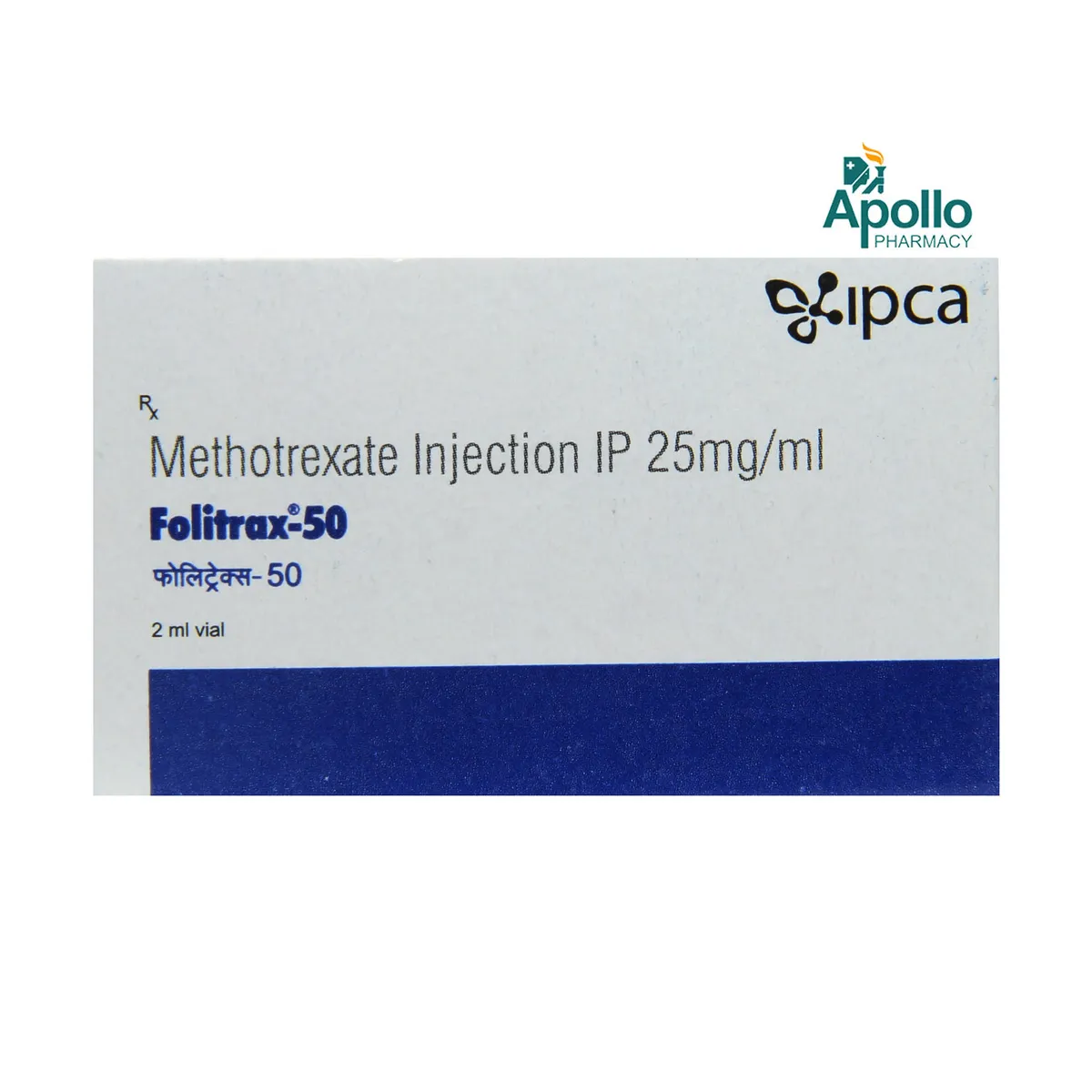
ஃபோலிட்ராக்ஸ்-50 இன்ஜெக்ஷன் 2 மிலி 'ஆன்டி-மெட்டபோலைட்டுகள் மற்றும் இம்யூனோசப்ரசன்ட்ஸ்' எனப்படும் மருந்துகளின் வகையைச் சேர்ந்தது. இது பாலியார்டிகுலர் ஜூவனைல் ருமட்டாய்டு ஆர்த்ரைடிஸ் மற்றும் கடுமையான சொரியாசிஸ் உட்பட தீவிர ருமட்டாய்டு ஆர்த்ரைடிஸ் சிகிச்சைக்குப் பயன்படுத்தப்படுகிறது.
ஃபோலிட்ராக்ஸ்-50 இன்ஜெக்ஷன் 2 மிலி மார்பகப் புற்றுநோய், கர்ப்பப்பை வாய்ப் புற்றுநோய், சிறுநீர்ப்பைப் புற்றுநோய், கருப்பை புற்றுநோய், விதைப்பை புற்றுநோய், நுரையீரல் புற்றுநோய், தலை மற்றும் கழுத்துப் புற்றுநோய், மைக்கோசிஸ் ஃபங்கோய்ட்ஸ் (ஒரு வகை இரத்தப் புற்றுநோய்), எலும்புப் புற்றுநோய் மற்றும் மேம்பட்ட நிலை நான்-ஹாட்ஜ்கின்ஸ் லிம்போமாஸ் (நிணநீர் மண்டலத்தில் தொடங்கும் புற்றுநோய்) போன்ற புற்றுநோய்களுக்கும் சிகிச்சையளிக்கப் பயன்படுத்தப்படுகிறது.
ஃபோலிட்ராக்ஸ்-50 இன்ஜெக்ஷன் 2 மிலி 'மெத்தோட்ரெக்ஸேட்' கொண்டுள்ளது. இது மூட்டு திசுக்களில் வீக்கத்தை ஏற்படுத்தும் நோயெதிர்ப்பு மண்டலத்தின் செயல்முறைகளைத் தடுப்பதன் மூலம் செயல்படுகிறது. இது வலி மற்றும் வீக்கத்தைக் குறைக்கிறது மற்றும் காலப்போக்கில் மூட்டு சேதம் மற்றும் நோயின் முன்னேற்றத்தைத் தாமதப்படுத்துகிறது.
ஃபோலிட்ராக்ஸ்-50 இன்ஜெக்ஷன் 2 மிலி புற்றுநோய் செல்கள் வளர்வதைத் தடுத்து நிறுத்துகிறது, இதன் மூலம் புற்றுநோய்க்கு சிகிச்சையளிக்க உதவுகிறது. ஃபோலிட்ராக்ஸ்-50 இன்ஜெக்ஷன் 2 மிலி சொரியாசிஸை ஏற்படுத்தும் அதிகப்படியான நோயெதிர்ப்பு மண்டலத்தை அடக்குவதன் மூலம் சொரியாசிஸுக்கு சிகிச்சையளிக்கிறது.
சில சமயங்களில், ஃபோலிட்ராக்ஸ்-50 இன்ஜெக்ஷன் 2 மிலி குமட்டல், வாந்தி, வயிற்றுப்போக்கு, அசாதாரண சோர்வு, தலைச்சுற்றல், தலைவலி, பசியின்மை, நோய்த்தொற்றுகளுக்கு குறைந்த எதிர்ப்பு சக்தி மற்றும் கூச்ச உணர்வு போன்ற பக்க விளைவுகளை ஏற்படுத்தலாம். இந்த பக்க விளைவுகளில் ஏதேனும் தொடர்ந்து ஏற்பட்டால் உங்கள் மருத்துவரிடம் பேசுங்கள்.
நீங்கள் கர்ப்பமாக இருந்தால் அல்லது தாய்ப்பால் கொடுத்தால் ஃபோலிட்ராக்ஸ்-50 இன்ஜெக்ஷன் 2 மிலி எடுக்க வேண்டாம். எந்தவொரு விரும்பத்தகாத பக்க விளைவுகளையும் தவிர்க்க உங்கள் மருந்துகள் மற்றும் உடல்நிலை குறித்து உங்கள் மருத்துவரிடம் தெரிவிக்கவும்.
ஃபோலிட்ராக்ஸ்-50 இன்ஜெக்ஷன் 2 மிலி, தன்னுடல் தாக்க நோய்கள் மற்றும் சில வகையான புற்றுநோய்களுக்கு சிகிச்சையளிக்கப் பயன்படுகிறது. ஃபோலிட்ராக்ஸ்-50 இன்ஜெக்ஷன் 2 மிலி-யின் விரிவான பயன்கள் பின்வருமாறு:
பாதுகாப்பற்றது
ஃபோலிட்ராக்ஸ்-50 இன்ஜெக்ஷன் 2 மில்லி எடுத்துக்கொள்ளும்போது மது அருந்துவதைத் தவிர்க்குமாறு உங்களுக்குப் பரிந்துரைக்கப்படுகிறது.
பாதுகாப்பற்றது
ஃபோலிட்ராக்ஸ்-50 இன்ஜெக்ஷன் 2 மிலி கடுமையான பிறப்பு குறைபாடுகளை ஏற்படுத்தலாம். நீங்கள் கர்ப்பமாக இருக்கும்போது ஃபோலிட்ராக்ஸ்-50 இன்ஜெக்ஷன் 2 மிலி எடுத்துக்கொள்ள பரிந்துரைக்கப்படுவதில்லை.
பாதுகாப்பற்றது
ஃபோலிட்ராக்ஸ்-50 இன்ஜெக்ஷன் 2 மிலி தாய்ப்பாலில் கலக்கிறது. ஃபோலிட்ராக்ஸ்-50 இன்ஜெக்ஷன் 2 மிலி சிகிச்சையின் போது மற்றும் கடைசி டோஸுக்குப் பிறகு குறைந்தது 1 வாரத்திற்கு தாய்ப்பால் கொடுப்பதைத் தவிர்க்கவும்.
கவனம்
ஃபோலிட்ராக்ஸ்-50 இன்ஜெக்ஷன் 2 மிலி தலைச்சுற்றல் மற்றும் சோர்வை ஏற்படுத்தலாம்; ஃபோலிட்ராக்ஸ்-50 இன்ஜெக்ஷன் 2 மிலி உங்களை எவ்வாறு பாதிக்கிறது என்பதை நீங்கள் அறியும் வரை வாகனம் ஓட்டவோ அல்லது கனரக இயந்திரங்களை இயக்கவோ வேண்டாம்.
கவனம்
ஃபோலிட்ராக்ஸ்-50 இன்ஜெக்ஷன் 2 மில்லி பெறுவதற்கு முன் உங்களுக்கு கல்லீரல் பாதிப்பு இருந்தால் உங்கள் மருத்துவரை அணுகவும்.
கவனம்
ஃபோலிட்ராக்ஸ்-50 இன்ஜெக்ஷன் 2 மில்லி பெறுவதற்கு முன் உங்களுக்கு சிறுநீரகக் குறைபாடு இருந்தால் உங்கள் மருத்துவரை அணுகவும்.
கவனம்
குழந்தைகளில் பாலியார்டிகுலர்-கோர்ஸ் ஜூவனைல் ருமாட்டாய்டு ஆர்த்ரைடிஸ் மற்றும் புற்றுநோய் கீமோதெரபியில் ஃபோலிட்ராக்ஸ்-50 இன்ஜெக்ஷன் 2 மில்லியின் செயல்திறன் மற்றும் பாதுகாப்பு நிறுவப்பட்டுள்ளது. குழந்தைகளில் ஃபோலிட்ராக்ஸ்-50 இன்ஜெக்ஷன் 2 மில்லி பயன்படுத்துவது குறித்து உங்களுக்கு ஏதேனும் கவலைகள் இருந்தால், உங்கள் மருத்துவரை அணுகவும்.
கவனம்
ஃபோலிட்ராக்ஸ்-50 இன்ஜெக்ஷன் 2 மிலி இதய நோயாளிகளுக்குப் பயன்படுத்தப்படலாம் மற்றும் இருதய நன்மைகளையும் வழங்கலாம். இருப்பினும், சாத்தியமான பக்க விளைவுகள் மற்றும் மருந்து இடைவினைகள் காரணமாக இது மருத்துவ மேற்பார்வையின் கீழ் செலுத்தப்பட வேண்டும்.
கவனம்
ஃபோலிட்ராக்ஸ்-50 இன்ஜெக்ஷன் 2 மில்லி வயதான நோயாளிகளுக்குப் பயன்படுத்தலாம், ஆனால் கல்லீரல் நச்சுத்தன்மை மற்றும் எலும்பு மஜ்ஜை அடக்குதல் போன்ற பக்க விளைவுகளுக்கு அதிக உணர்திறன் காரணமாக எச்சரிக்கையுடன் பயன்படுத்த வேண்டும். பாதுகாப்பான பயன்பாட்டை உறுதிப்படுத்த வழக்கமான கண்காணிப்பு மற்றும் டோஸ் சரிசெய்தல் அவசியம்.
கீல்வாதம்:
சோரியாசிஸ்:
புற்றுநோய்:
Have a query?
ஃபோலிட்ராக்ஸ்-50 இன்ஜெக்ஷன் 2 மிலி வேலை செய்யத் தொடங்கும் நேரம்: ஃபோலிட்ராக்ஸ்-50 இன்ஜெக்ஷன் 2 மிலி பொதுவாக செலுத்தப்பட்ட 30 முதல் 60 நிமிடங்களுக்குள் அதன் செயல்பாட்டைக் காட்டுகிறது.
ஃபோலிட்ராக்ஸ்-50 இன்ஜெக்ஷன் 2 மிலி-யின் விளைவுகள் நீடிக்கும் நேரம்: ஃபோலிட்ராக்ஸ்-50 இன்ஜெக்ஷன் 2 மிலி-யின் விளைவு குறைந்த டோஸில் 9 முதல் 30 மணிநேரமும், அதிக டோஸில் 24 முதல் 45 மணிநேரமும் நீடிக்கும்.
Login/Sign Up
Login/Sign Up
Disclaimer


