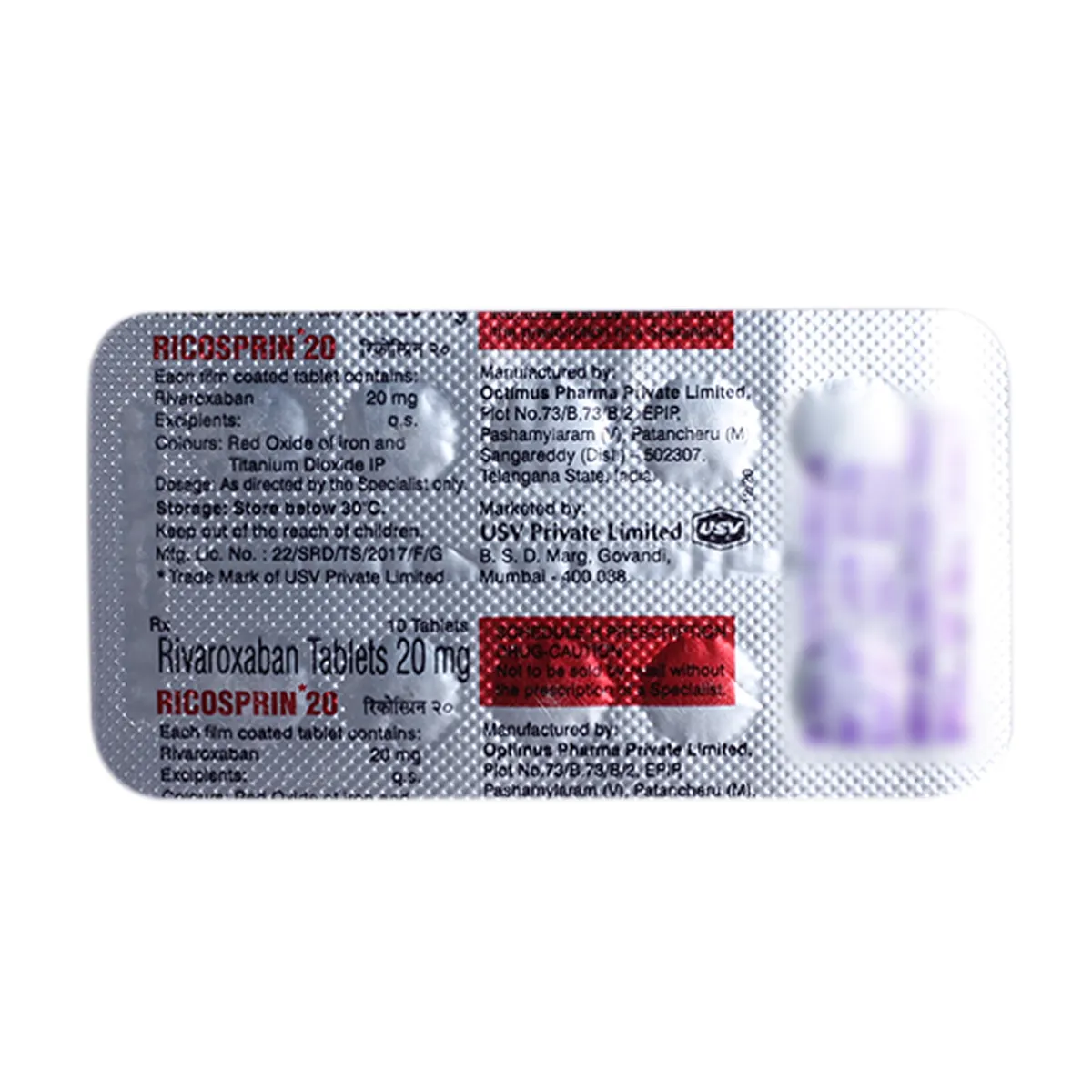
How does the drug interact with Ricosprin 20 Tablet:
Co-administration of Meloxicam and Ricosprin 20 Tablet can increase the blood levels of Ricosprin 20 Tablet and increase the risk of bleeding.
How to manage the interaction:
Co-administration of Meloxicam and Ricosprin 20 Tablet can lead to an interaction, it can be taken if advised by a doctor. However, if you experience any symptoms like unusual bleeding or bruising, dizziness, lightheadedness, red or black, tarry stools, coughing up or vomiting fresh or dried blood that looks like coffee grounds, severe headache, and weakness, consult the doctor immediately. Do not stop using any medications without a doctor's advice.
How does the drug interact with Ricosprin 20 Tablet:
Coadministration of piroxicam and Ricosprin 20 Tablet can increase the risk of bleeding problems.
How to manage the interaction:
Co-administration of piroxicam and Ricosprin 20 Tablet can lead to an interaction, it can be taken if advised by a doctor. However, if you experience any symptoms like unusual bleeding or bruising, dizziness, lightheadedness, red or black, tarry stools, coughing up or vomiting fresh or dried blood that looks like coffee grounds, severe headache, and weakness, consult the doctor immediately. Do not stop using any medications without a doctor's advice.
How does the drug interact with Ricosprin 20 Tablet:
Taking ticagrelor with Ricosprin 20 Tablet can increase the risk or severity of bleeding problems.
How to manage the interaction:
Taking Ricosprin 20 Tablet with Ticagrelor together can possibly result in an interaction, it can be taken if your doctor has advised it. However, if you notice any unusual bleeding or bruising, dizziness, lightheadedness, red or black tarry stools, coughing up or vomiting blood, severe headache, and weakness, you should contact your doctor immediately. Do not stop using any medications without consulting your doctor.
How does the drug interact with Ricosprin 20 Tablet:
The combined use of Dalteparin and Ricosprin 20 Tablet can increase the risk of bleeding.
How to manage the interaction:
Co-administration of Dalteparin and Ricosprin 20 Tablet can lead to an interaction, it can be taken if advised by your doctor. However, if you experience any symptoms like unusual bleeding or bruising, dizziness, lightheadedness, red or black, tarry stools, coughing up or vomiting fresh or dried blood that looks like coffee grounds, severe headache, and weakness, consult the doctor immediately. Do not stop using any medications without a doctor's advice.
How does the drug interact with Ricosprin 20 Tablet:
Taking Ricosprin 20 Tablet with rifampicin can decrease the blood levels of Ricosprin 20 Tablet, which may make the medication less effective.
How to manage the interaction:
Although there is an interaction between Ricosprin 20 Tablet and rifampicin, they can be taken together if prescribed by a doctor. However, if you experience any unusual symptoms, contact a doctor immediately. Do not discontinue any medications without consulting a doctor.
How does the drug interact with Ricosprin 20 Tablet:
Co-administration of Voriconazole and Ricosprin 20 Tablet can increase the blood levels of Ricosprin 20 Tablet and increase the risk of bleeding.
How to manage the interaction:
Co-administration of Voriconazole and Ricosprin 20 Tablet can lead to an interaction, it can be taken if advised by a doctor. However, if you experience dizziness, red or black, tarry stools, severe headache, and weakness, consult the doctor immediately. Do not stop using any medications without a doctor's advice.
How does the drug interact with Ricosprin 20 Tablet:
The combined use of Rifapentine and Ricosprin 20 Tablet may reduce the blood levels of Ricosprin 20 Tablet, which may increase the risk or severity of bleeding problems.
How to manage the interaction:
Co-administration of Rifapentine and Ricosprin 20 Tablet can lead to an interaction, it can be taken if advised by your doctor. However, if you notice any unusual bleeding or bruising, other signs of bleeding, dizziness, lightheadedness, red or black tarry stools, coughing up or vomiting blood, severe headache, and weakness, you should contact your doctor immediately. Do not stop using any medications without first talking to your doctor.
How does the drug interact with Ricosprin 20 Tablet:
Co-administration of Bivalirudin and Ricosprin 20 Tablet can increase the risk of unusual bleeding.
How to manage the interaction:
Co-administration of bivalirudin and Ricosprin 20 Tablet can lead to an interaction, it can be taken if advised by your doctor. However, if you experience any symptoms like unusual bleeding or bruising, dizziness, lightheadedness, red or black stools, coughing or vomiting fresh or dried blood that looks like coffee grounds, severe headache, and weakness, consult the doctor immediately. Do not stop using any medications without a doctor's advice.
How does the drug interact with Ricosprin 20 Tablet:
Coadministration of Ketoconazole and Ricosprin 20 Tablet can increase the blood levels of Ricosprin 20 Tablet and increase the risk of bleeding complications.
How to manage the interaction:
Taking ketoconazole and Ricosprin 20 Tablet together can lead to an interaction, it can be taken if advised by a doctor. However, if you experience any symptoms like unusual bleeding or bruising, dizziness, lightheadedness, red or black, tarry stools, coughing up or vomiting fresh or dried blood that looks like coffee grounds, severe headache, and weakness, consult the doctor immediately. Do not stop using any medications without a doctor's advice.
How does the drug interact with Ricosprin 20 Tablet:
Co-administration of Aspirin and Ricosprin 20 Tablet can increase the risk of unusual bleeding.
How to manage the interaction:
Although Co-administration of Aspirin and Ricosprin 20 Tablet can lead to an interaction, they can be taken together if advised by a doctor. However, if you experience unusual bleeding or bruising, dizziness, lightheadedness, red or black, tarry stools, coughing up or vomiting fresh or dried blood that looks like coffee grounds, severe headache, and weakness, consult the doctor. Do not stop using any medications without a doctor's advice.